
Unbiased headlines. Facts, not spin.
Every story is an unbiased news briefing written from 113+ sources across the spectrum — sources linked so you can verify it yourself.
 economy
Major Story (8/10)
Event date: September 16, 2026
economy
Major Story (8/10)
Event date: September 16, 2026
Trump Declares National Emergency Over Chinese Equipment in U.S. Power Grid as AI Data Centers Drive Electricity Demand
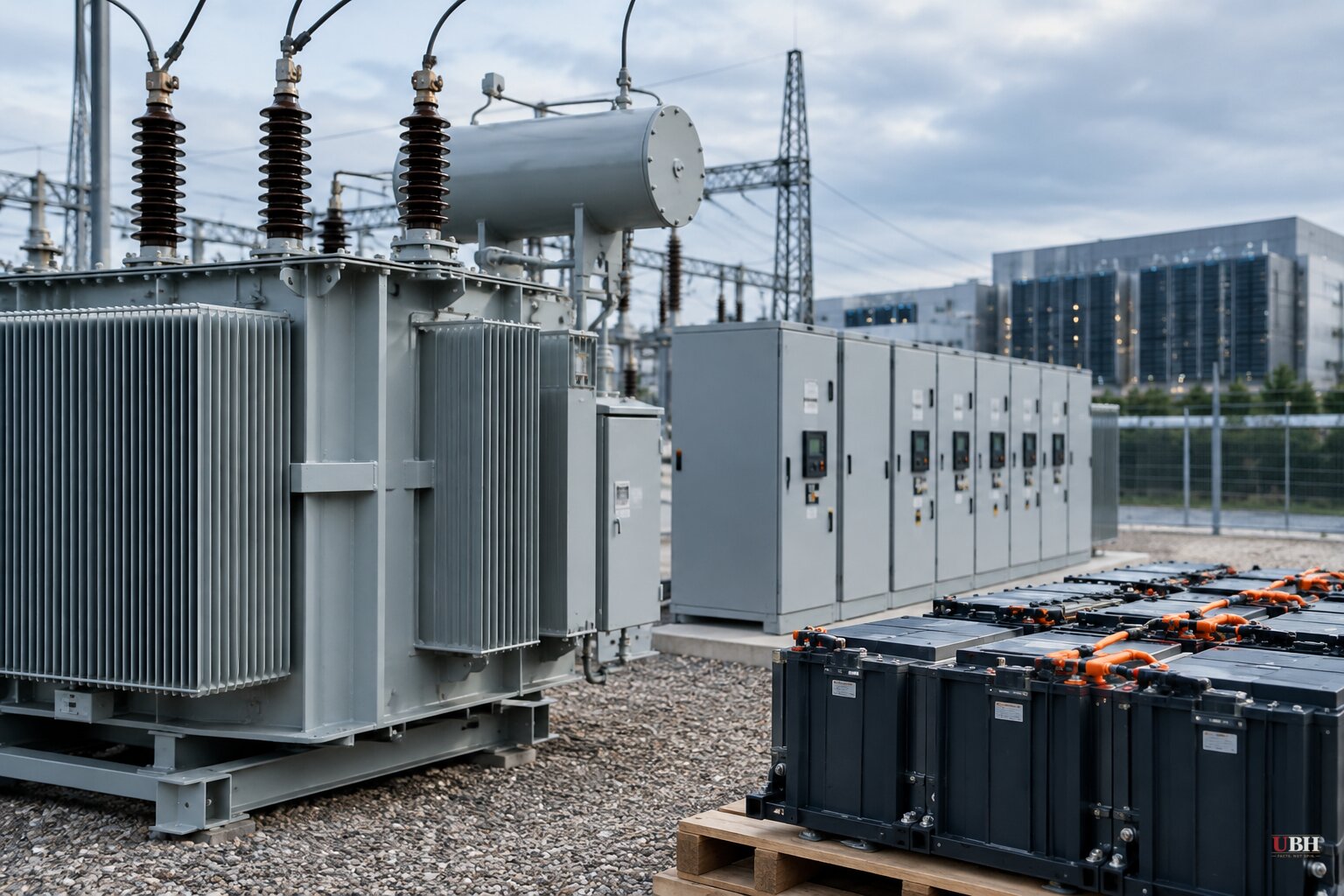
President Trump last week signed an executive order declaring a national emergency over foreign-made equipment in the bulk-power system, according to CNBC reporting cited by Breitbart. The order gives the Energy Department authority to prohibit or place conditions on transactions involving equipment that powers the electric grid and data centers.
"Since my first term, the threat to the United States regarding foreign supply of bulk-power system electric equipment has become even more acute," Trump said in a statement tied to the order. He added that the growth of AI, advanced manufacturing and defense production has "increased the Nation's dependence on abundant, reliable electricity and magnified the consequences of a successful attack or supply disruption."
The order builds on an April presidential determination naming transformers, transmission lines, substations, high-voltage circuit breakers and power control electronics as essential to national defense, per Breitbart's reporting.
How Deep the Dependence Runs
Chinese suppliers hold a significant share of the hardware that keeps American data centers running. Yury Dvorkin, an associate professor at Johns Hopkins University, told CNBC that China's share of certain transformer and switchgear categories runs near 30%, and that China accounts for over 40% of U.S. battery imports. Dvorkin said the exposure runs deeper than finished equipment, pointing to copper, electrical steel and battery cathode materials sourced upstream.
Ben Boucher, a senior supply chain analyst at Wood Mackenzie, said substation transformers are a particular chokepoint because hyperscalers typically keep them on site to step down transmission voltage for data centers. Laveena Iyer, a senior analyst at The Economist Group, told CNBC that scrutiny of China's role in U.S. power infrastructure has grown sharply over the past eight months, a shift from earlier attention that focused almost entirely on AI chips and computing hardware.
Some manufacturers are already responding. Hitachi Energy announced a $1 billion investment in September 2025 to expand U.S. grid equipment manufacturing, according to Breitbart.
The Grid Strain Is Global, Not Just American
The AI buildout is straining power systems well beyond U.S. borders. Thailand's Energy Policy and Planning Office projects electricity demand will grow 5.3% in 2026, the fastest pace in nine years, driven by electronics manufacturing and data center construction, according to the Business Times Singapore. The Thai government has halted dozens of pending data center projects while it writes new rules on their electricity and water use.
S&P Global Ratings, in its Q3 2026 Asia-Pacific outlook reported by The Star (Malaysia), said AI-driven technology exports are offsetting energy-cost shocks for economies with large tech manufacturing bases, including Malaysia, South Korea, Taiwan, Singapore and Thailand. S&P's Asia-Pacific chief economist Louis Kuijs said the AI export boom is outweighing the drag from higher energy costs in those markets, while economies like India, Japan and the Philippines are seeing growth forecasts cut because energy stress dominates instead.
China, meanwhile, has taken a different regulatory approach at home. A 2025 Chinese policy requires new AI data centers in regions with significant computing infrastructure to run on at least 80% renewable energy, according to Eco-Business, part of a broader "east data, west compute" strategy shifting heavy computing loads to the wind- and solar-rich west of the country.
The Climate Counterargument
Greenpeace East Asia argues the AI boom is being used as cover to lock in new fossil fuel infrastructure rather than clean power. At the Gastech 2026 summit in Bangkok, Greenpeace campaigner Yeonho Yang said tech giants including Nvidia, Microsoft and Google "claim to be climate leaders" while their suppliers and data center hosts build gas plants to meet AI power demand. Greenpeace Thailand's Manun Wongmasoh said Southeast Asian communities are already facing flood and heat impacts while utilities lock energy systems into decades of gas contracts.
Global data center capital spending is projected to top $700 billion in 2026, per Greenpeace's citation. If that buildout runs on gas for the next 30 years, it changes the emissions math regardless of any company's stated net-zero pledge. But Greenpeace's own reporting acknowledges the alternative isn't simple either. Thailand and other Southeast Asian grids still rely mainly on incentives and voluntary procurement rather than binding clean-energy mandates, and smaller economies like Cambodia, Laos and Myanmar lack the grid infrastructure to absorb renewables at the pace AI demand requires, according to Eco-Business. Replacing gas with wind and solar at data-center scale is a capacity problem, not just a policy choice.
What Happens Next
The Energy Department now has to write the rules implementing Trump's order, deciding which specific transactions involving Chinese-made grid equipment get blocked or conditioned. No timeline for that rulemaking has been announced. Meanwhile, U.S. Treasury yields are climbing, with the two-year note auctioning at 4.787%, the highest since 2024 according to Dow Jones Newswires, a sign investors are bracing for further Fed tightening just as electricity-hungry AI infrastructure spending accelerates. Richmond Fed President Thomas Barkin warned last week that one rate hike may not be enough to tame inflation if new cost pressures, including energy, keep building.
Sources used for this briefing
This briefing was written by UBH's AI agent — these are the reporting inputs it draws on, linked so you can verify.


