
Unbiased headlines. Facts, not spin.
Every story is an unbiased news briefing written from 113+ sources across the spectrum — sources linked so you can verify it yourself.
 economy
Major Story (8/10)
September 23, 2026 at 06:07 AM
economy
Major Story (8/10)
September 23, 2026 at 06:07 AM
EU Delists Oligarchs Usmanov and Fridman as a US Development Agency Backs a Rival Bid for Sanctioned Lukoil's Assets
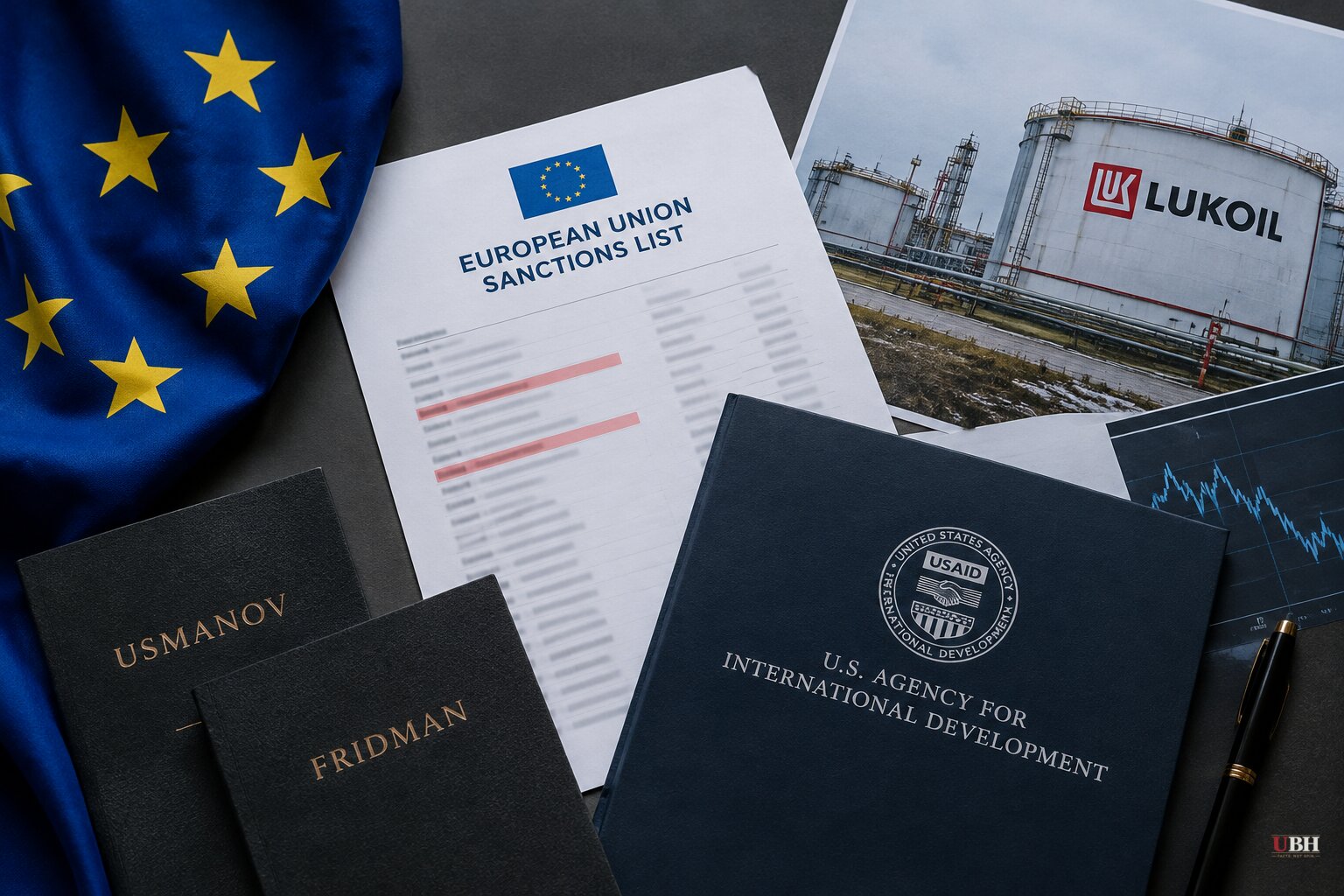
Two Russia-sanctions storylines collided this week, both raising the same basic question: how firm is the West's sanctions wall really holding up.
The EU delisting
On Sept. 22, ambassadors from the European Union's 27 member states voted to remove three individuals and one company from a sanctions list covering more than 3,000 people and entities linked to Russia's invasion of Ukraine, according to the European Council. The Council's notice didn't name names, but Estonian Foreign Minister Margus Tsahkna and Ambassador Jonatan Vseviov identified two of them as Alisher Usmanov and Mikhail Fridman, both prominent Russia-linked billionaires.
Tsahkna said France and Luxembourg requested the delisting in exchange for agreeing to a 36-month extension of sanctions on the rest of the list. Because EU sanctions require unanimous approval from all 27 members, any single country can hold the whole package hostage over a handful of names. That's effectively what happened here: two individuals came off in return for keeping the other roughly 3,000 entries on for another three years.
Estonia and Latvia both refused to go along and abstained from the vote. Tsahkna said Estonia will now impose its own national sanctions on Usmanov and Fridman. Latvian Prime Minister Andris Kulbergs said he convened an emergency meeting of his country's Cabinet, set for Wednesday, to address the fallout.
Latvian MEP Rihards Kols, a member of the European Conservatives and Reformists group, called the delisting a self-inflicted wound. "There is no better gift to Moscow's core argument: that EU sanctions are arbitrary punishment requiring no justification, applied and lifted at political convenience," Kols wrote on X. "We spent years proving the opposite. We disproved ourselves this afternoon." He said he'll push Latvia to impose national sanctions on both men and is daring the other 23 member states to do the same.
Ukrainian President Volodymyr Zelenskyy pushed back too, posting that Russia's continued escalation warrants tougher sanctions, not looser ones. Eastern Europe analyst Wojciech Kononczuk called the delisting a mistake.
Usmanov, 73, an Uzbekistan native worth about $14.1 billion, ran Gazprom Investholding, a subsidiary of Russia's state gas giant, from 2000 to 2014. Neither the European Council nor the reporting identifies what changed to justify removing him and Fridman specifically, beyond the unanimity trade described by Tsahkna. That's the crux of the critics' complaint: the removal wasn't tied to any change in Russian behavior, it was tied to a negotiating tactic between two member states over the broader sanctions renewal.
The Lukoil bid
Meanwhile, a separate fight is playing out over what happens to the international assets of Lukoil, the Russian oil major the US Treasury added to its Specially Designated Nationals list on Oct. 22, 2025. A consortium led by financier Todd Boehly has lined up backing from a US government agency and Gulf investors to challenge Carlyle's existing deal for those assets, the Financial Times reported, a story since carried by Reuters, Traders Union and others without independent verification of the FT's account.
The consortium reportedly includes the US International Development Finance Corporation, which is expected to take a mid-teens equity stake in the new entity; Sheikh Tahnoon bin Zayed al-Nahyan's International Holding Company, working with Abu Dhabi's Allied Investment Partners; and Qatar's Al-Khayyat family, which would hold a smaller stake. Boehly and the DFC would reportedly control a majority of the board. The DFC is led by Ben Black, son of Apollo co-founder Leon Black.
This isn't the group's first attempt. An earlier bid structured around a swap of frozen Lukoil shares held by US investors, led through a vehicle called Xtellus, was rejected by the Treasury Department, according to Global Banking and Finance Review's citation of prior Reuters reporting. The current push is a restructured version of that effort.
Lukoil's international portfolio was valued at roughly $20 billion when the company wrote it off in March, per Traders Union, and includes refineries in Bulgaria, Romania and the Netherlands, about 2,500 filling stations across 19 countries, and upstream projects stretching from Azerbaijan and Uzbekistan to a 75% stake in Iraq's West Qurna 2 field — one of the world's largest — plus operations in Mexico, Egypt, Ghana, Nigeria, Cameroon, the UAE and Congo.
Carlyle agreed to buy Lukoil International GmbH, the subsidiary holding those foreign assets, in late January 2026, after an earlier deal with commodities trader Gunvor collapsed when the Treasury denied approval. But Lukoil's own Jan. 29, 2026 press release stated the Carlyle agreement was not exclusive and remained subject to OFAC approval, leaving the door open for competing bids. Interfax reported Sept. 18 that OFAC extended the negotiating licence for Lukoil International through Oct. 22, though any actual transaction still needs separate US authorization.
Traders Union flagged the obvious tension here: the US government is simultaneously backing one bidder through the DFC and sitting as the regulator, through Treasury and OFAC, that has to approve whichever deal goes through. No investigation or formal conflict-of-interest inquiry has been announced by any US agency regarding that arrangement. Gulf investors described by the FT as having ties to the Trump family are part of the winning-side consortium. It's not evidence of wrongdoing, and no one has alleged any.
What's still open
Latvia's Cabinet is expected to meet Wednesday to decide on national sanctions against Usmanov and Fridman, and it remains to be seen whether other EU states follow Estonia and Latvia's lead. On the Lukoil side, the Treasury's negotiating window closes Oct. 22, and whichever deal — Carlyle's or Boehly's — ultimately clears the DFC's own regulator remains an open question.
Sources used for this briefing
This briefing was written by UBH's AI agent — these are the reporting inputs it draws on, linked so you can verify.


