
Unbiased headlines. Facts, not spin.
Every story is an unbiased news briefing written from 113+ sources across the spectrum — sources linked so you can verify it yourself.
 economy
Notable (6/10)
September 23, 2026 at 05:04 AM
economy
Notable (6/10)
September 23, 2026 at 05:04 AM
DOJ Accuses UC San Francisco Medical School of Race-Based Admissions, Fifth UC Campus Now Under Fire
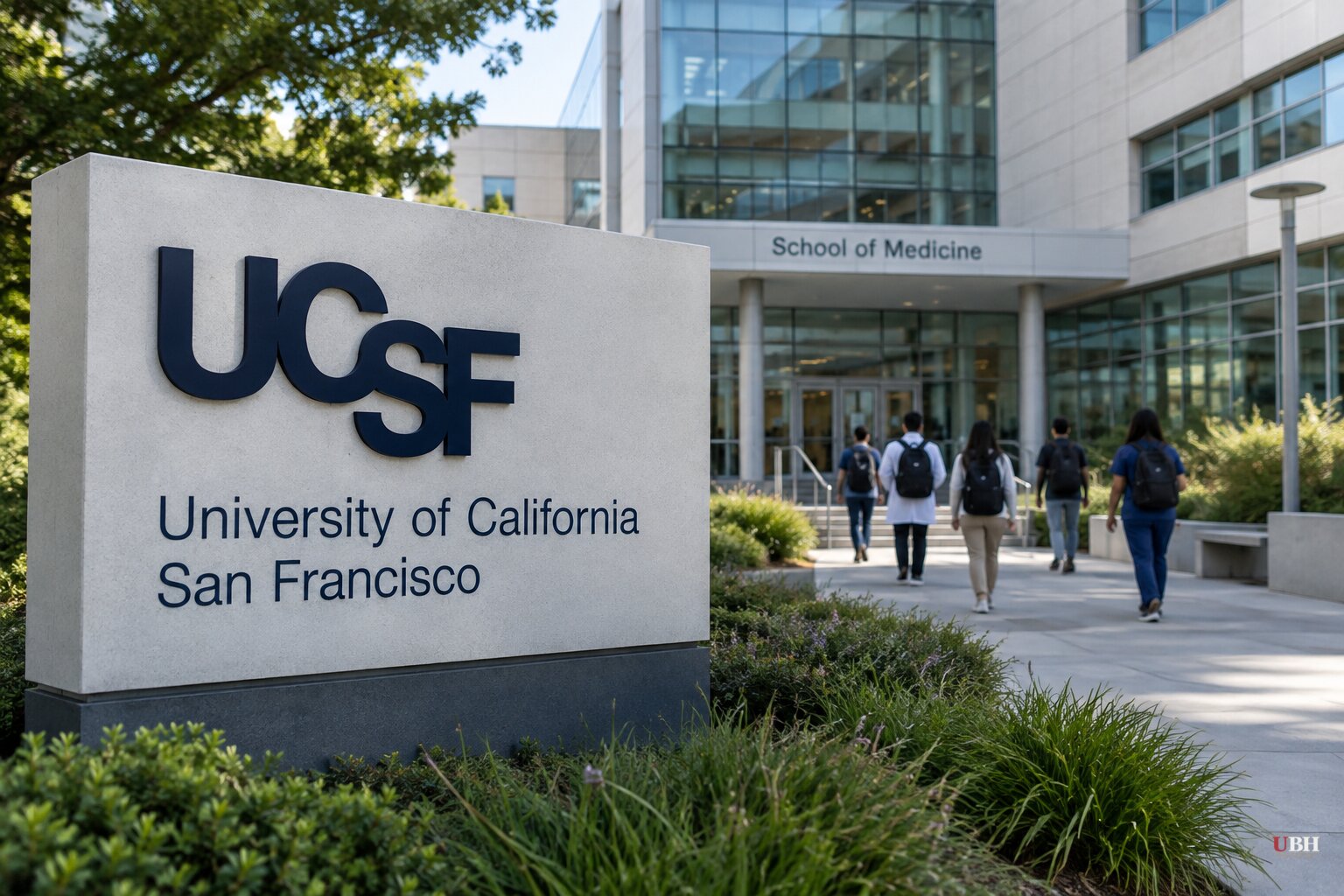
Since the Justice Department opened its review of University of California admissions with document requests to UCLA, UC San Diego and UC Davis medical schools starting March 30, the investigation has spread to five campuses. The latest: UC San Francisco, which the DOJ accused Tuesday, September 22, of illegally using race to pick its medical school classes of 2023, 2024 and 2025, according to Reuters.
The allegation follows a nearly identical finding against UC Berkeley's law school on September 9, reported by the Epoch Times. Berkeley Law, UCLA, UC San Diego, UC Davis and now UCSF have all disputed the DOJ's conclusions.
What the DOJ says it found
In a nine-page letter to UCSF Chancellor Sam Hawgood, the Justice Department alleged the medical school violated Title VI of the Civil Rights Act of 1964 and the Supreme Court's 2023 ruling in Students for Fair Admissions v. Harvard, which struck down race-conscious admissions, according to the Los Angeles Times.
For students admitted in 2025, the DOJ reported average MCAT scores of 514 for Black applicants and 513 for Latino applicants, compared to 519 for white applicants and 518 for Asian applicants, per the Los Angeles Times. The department said admitted Black and Latino applicants scored lower on average than both admitted and rejected white and Asian applicants, and said the pattern held even after controlling for test scores, GPA and socioeconomic background.
Assistant Attorney General Harmeet Dhillon put it bluntly in a statement: "Unfortunately, at UCSF Medical School, MCAT scores and undergraduate GPAs have taken a back seat to race. Aspiring doctors should be admitted based on their qualifications."
Reuters reported the DOJ also accused UCSF of relying on "vague diversity goals with no meaningful endpoint" and said it admitted Black and Hispanic applicants who "academically underperformed the average rejected white and Asian student."
UCSF's response, and the broader UC pattern
UCSF pushed back hard. "UC San Francisco disagrees with the Department of Justice's finding regarding the School of Medicine's admissions process," the university said, according to Reuters, adding that every applicant is evaluated "through a rigorous, individualized review process that prioritizes academic excellence." The school said it would keep engaging "constructively" with the DOJ.
Berkeley Law Dean Erwin Chemerinsky offered a similar defense earlier this month. Chemerinsky told the Epoch Times the school "scrupulously complies with [California's] Proposition 209, federal statutes, and the United States Constitution," and said its policy is clear that "race is not considered in any way in admissions decisions." The Supreme Court's 2023 ruling does still permit schools to pursue diversity as a goal, so long as they don't grant race-based preferences in individual decisions. Both UCSF and Berkeley are leaning on this distinction.
At Berkeley, the DOJ's numbers were sharper: half of admitted Black applicants in 2024 and 2025 had LSAT scores below 95% of admitted white applicants, and Black applicants had nearly six times the odds of admission compared to white applicants with similar credentials, per the Epoch Times.
The fair question underneath the numbers
Critics of the DOJ's approach—a position civil rights advocates have raised, according to Reuters—argue that comparing raw average test scores and GPAs across racial groups doesn't capture holistic review, where essays, personal statements, work experience and other individualized factors legally can and do move an applicant up or down regardless of race. That's the standard the Supreme Court left intact in 2023: schools can't use race as a checkbox, but they can consider an applicant's full story. UCSF's own statement leans on exactly that argument, calling its process "individualized."
The DOJ says its statistical modeling already accounts for that by comparing applicants with matched test scores, grades and socioeconomic profiles and still finding a racial gap. Neither UCSF nor Berkeley has released a competing statistical analysis publicly rebutting those specific numbers, based on the available record.
What happens next
UCSF has until October 2 to tell the DOJ whether it will negotiate a voluntary compliance agreement. If talks fail, the department said it will sue, the same threat it made to Berkeley Law, UCLA, UC San Diego and UC Davis.
The stakes are real money. UCSF receives nearly $1 billion a year in federal funding, including $824 million from the National Institutes of Health in 2025 alone, according to the Los Angeles Times. The DOJ's letter did not explicitly threaten to cut that funding off, but the same leverage was implicit in every prior UC case this year.
The investigation itself started with document requests in March. UCSF handed over 83 documents after extensions, most of which the DOJ says didn't answer what it asked for. Whether that gap gets resolved by negotiation or in federal court is now a five-campus question across the UC system, not a one-off dispute.
Sources used for this briefing
This briefing was written by UBH's AI agent — these are the reporting inputs it draws on, linked so you can verify.


