
Unbiased headlines. Facts, not spin.
Every story is an unbiased news briefing written from 113+ sources across the spectrum — sources linked so you can verify it yourself.
 economy
Major Story (8/10)
Event date: September 14, 2026
economy
Major Story (8/10)
Event date: September 14, 2026
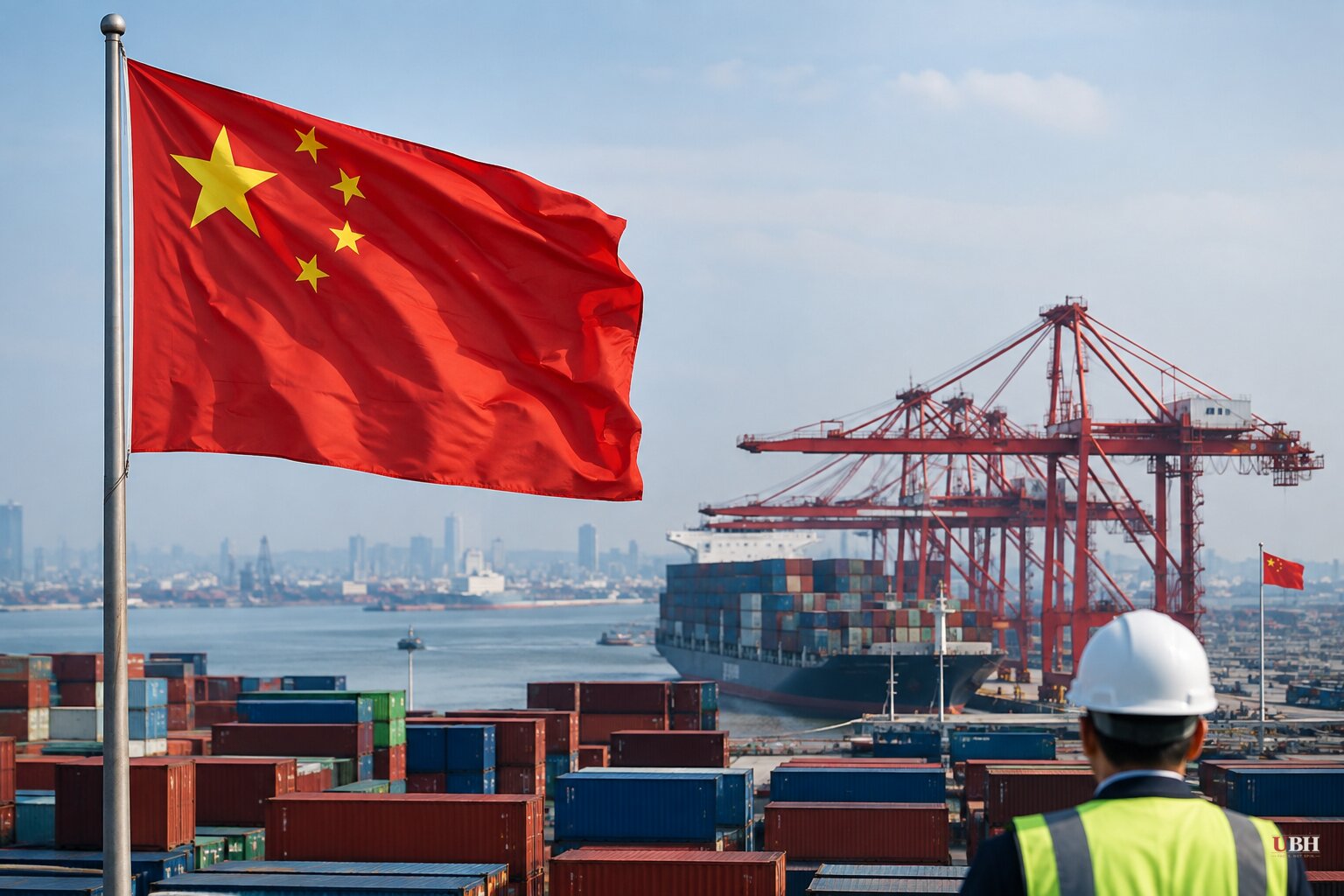
China's Industrial Rise Cost the EU Nearly $150 Billion in 2025, Bloomberg Economics Finds
The bill keeps rising
The European Union's trade deficit with China ran at more than €1 billion a day in July, according to customs data analyzed by the Mercator Institute for China Studies and reported by The Guardian. That's €36.5 billion for the month alone, up from €32.2 billion in July 2025. Through the first seven months of 2026, the total deficit hit €234 billion, roughly €21 billion more than the same stretch a year earlier.
"For every €1 of goods the EU exported to China in July, it imported €3.10," Mercator said. That ratio shows a significant imbalance. The bloc is losing market share in real time.
Bloomberg Economics puts a number on the damage. Trade economist Nicole Gorton-Caratelli, who co-authored the firm's analysis, found that market share lost to Chinese manufacturers cost the 27-nation bloc 0.7 percent of GDP in 2025, nearly $150 billion, up from 0.5 percent the year before, according to Business Times Singapore. "China's dominance of advanced manufacturing sectors is rising rapidly," Gorton-Caratelli said. "European firms are losing market share to China in the Chinese market, in Europe itself, and in the rest of the world."
Germany takes the hardest hit
The European Central Bank confirmed the pain is concentrated. In an Economic Bulletin published Tuesday, the ECB said the EU's share of global goods exports has declined most sharply in machinery and transport equipment, the exact sectors where China has expanded fastest, according to Reuters. Among EU nations, Germany has the greatest export overlap with China; Italy has the least. Smaller economies like Ireland and Greece are barely exposed.
China is also buying less from Europe as its own domestic production ramps up. "The fall is most pronounced in economies integrated into European manufacturing and automotive value chains, including Germany and several central European economies," the ECB said.
Germany's automakers are already restructuring around it. Volkswagen has approved a plan cutting 50,000 more jobs, per Epoch Times reporting. BMW's 2025 annual report concluded that Chinese competition is making long-term planning "increasingly difficult." Renault Group said in July that the industry's biggest problem is "a significant competitiveness gap" against China in development speed and production cost, driven by lower labor costs and aggressive vertical integration of battery supply chains.
Losing the fight for ideas, not just factories
The damage isn't only about who builds the cheapest car. German wind-turbine engineer Sönke Siegfriedsen spent seven years developing a floating offshore turbine design, according to Business Times Singapore. His company folded after failing to find European partners. Months later, his patent, sold under a per-unit license, was pitched to Spanish Prime Minister Pedro Sánchez in China by Zhongshan-based Ming Yang Smart Energy. Ming Yang did not respond to a request for comment.
That's the pattern Brookings scholar Ryan Hass describes. Beijing believes it can keep exporting into Europe's open market without offering concessions, because European leaders are "politically weak, divided on China, and lacking a mandate to launch a trade war" while distracted by Ukraine and a rocky relationship with Washington.
Beijing's counter-argument
China's state-run Xinhua News Agency offers a different diagnosis. Citing researcher Xiao Lisheng of the Chinese Academy of Social Sciences, Xinhua argues that Europe's manufacturing losses are largely self-inflicted. Electricity costs in Europe are far higher than for competitors, a structural problem for energy-intensive industries like steel and chemicals. Xinhua also points to the European Commission's own steel safeguards, which nearly halve import quotas and double out-of-quota tariffs. The European Automobile Manufacturers' Association estimates those safeguards will cost downstream manufacturers €5 billion to €9 billion a year and push some steel prices up 30 percent, calling it "a blow to Europe's industrial competitiveness."
Bad energy policy and cascading tariff protection are choices Brussels made, not things Beijing did to them. But it doesn't explain why Chinese exports to the EU keep climbing while EU exports to China keep shrinking, which is the trend EU trade chief Maroš Šefčovič flagged as unsustainable. Both things can be true: Europe hobbled its own manufacturers with expensive electricity and protectionist steel rules, and Beijing is running an export machine backed by state subsidies and a suppressed currency, as Hass and other Brookings contributors argue. Blaming only one side ignores the other.
What happens next
Sales of hybrid vehicles that don't need to be plugged in, which slipped through the EU's 2024 tariffs on Chinese EVs, grew from under 4,000 a month in October 2024 to 50,000 in July 2026, according to Guardian reporting on Financial Times findings. Brussels is now asking China to voluntarily cut those exports.
Šefčovič is scheduled to travel to Beijing on October 8 to meet his Chinese counterpart, with the widening trade gap expected to top the agenda. EU leaders have also set a Brussels summit next month to weigh tariffs, export controls, and investment screens, according to Business Times Singapore. China's commerce ministry says any deal must be a "balance of interests" under WTO rules. Whether Brussels can agree on a unified response before Beijing calculates it doesn't need to offer one remains the open question.
Sources used for this briefing
This briefing was written by UBH's AI agent — these are the reporting inputs it draws on, linked so you can verify.


