
Unbiased headlines. Facts, not spin.
Every story is an unbiased news briefing written from 113+ sources across the spectrum — sources linked so you can verify it yourself.
 economy
Major Story (8/10)
September 22, 2026 at 08:40 PM
economy
Major Story (8/10)
September 22, 2026 at 08:40 PM
US Proposes $10 Billion Fund to Rebuild Gulf Oil Sites and Route Around Strait of Hormuz
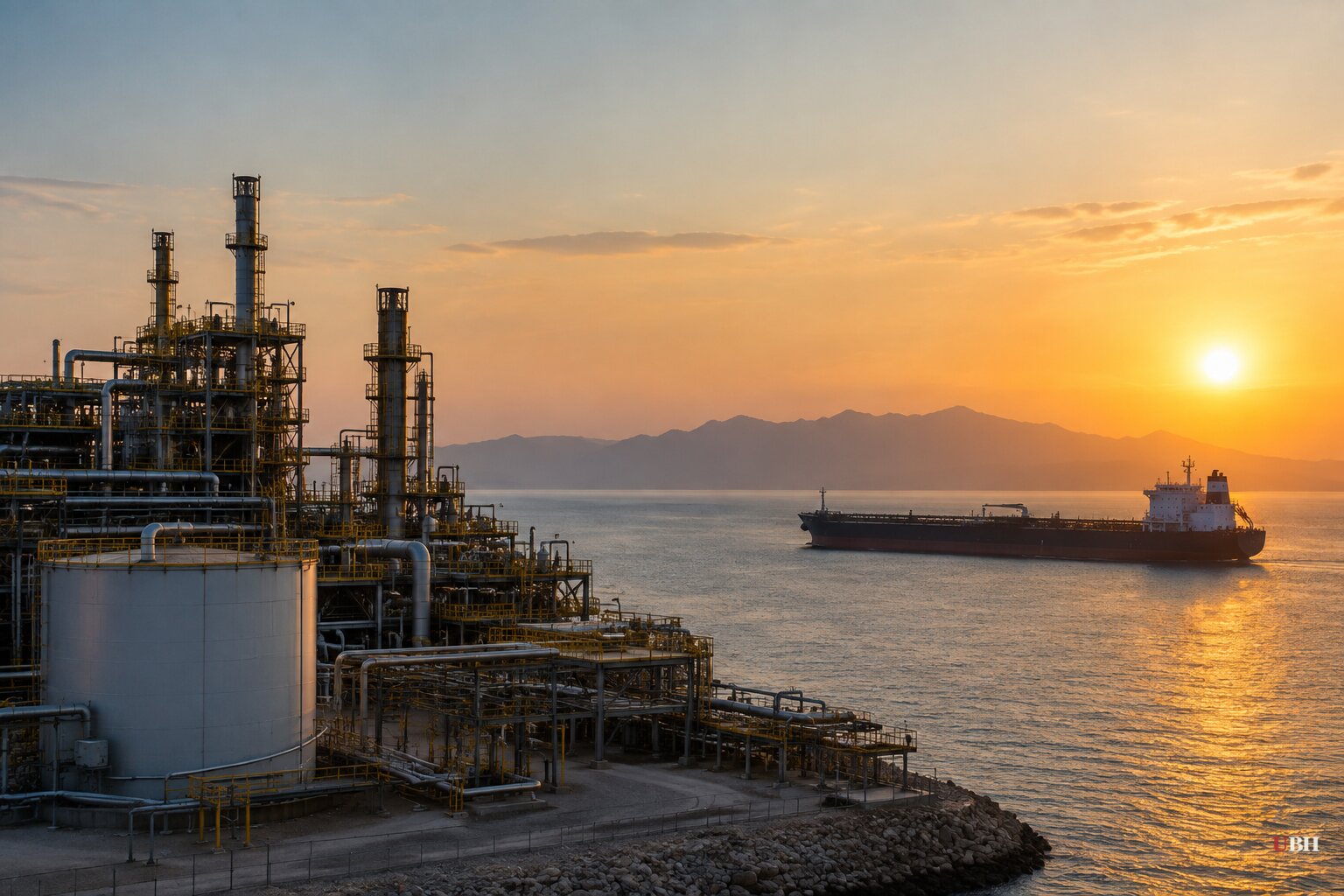
Since the U.S.-Israeli military campaign against Iran began in late February, the conflict has run past the seven-month mark, and the bill for rebuilding what's been hit is now landing on Washington's desk.
The Trump administration has proposed a $10 billion fund, called the Partnership for Allied Trust and Construction (PACT), to rebuild energy infrastructure damaged in the war and fund new export routes that reduce the region's dependence on the Strait of Hormuz. The Wall Street Journal, citing U.S. and Middle Eastern officials and documents it reviewed, reported that Washington would put in $5 billion and is asking eight countries, Saudi Arabia, the UAE, Qatar, Bahrain, Kuwait, Oman, Iraq and Jordan, to match it collectively.
The fund would be run by the U.S. International Development Finance Corporation, a federal agency that mixes private capital with foreign-policy goals. Nothing is signed. It remains a proposal under negotiation, and it's not clear all eight countries will actually put money in.
Repeated Iranian missile and drone strikes since late February have hit refineries, pipelines and export terminals across the Gulf. Analysts and officials estimate repairs could run into the tens of billions of dollars, according to the Journal. Saudi Arabia has already restarted its East-West pipeline to the Red Sea port of Yanbu, one of the few existing routes that bypasses Hormuz entirely.
Skepticism from the region itself
Not everyone in the Gulf is sold. Officials cited by outlets tracked through Ground News warned that rebuilding energy infrastructure while the war is still active risks creating new targets for Iranian strikes. Some Middle East officials went further, telling the Journal the initiative looks like Washington's attempt to cast the Strait of Hormuz as a less consequential route and project unity against Iran, rather than a purely economic rebuild.
That skepticism cuts against President Trump's own framing. Speaking at the White House, Trump told reporters "the Hormuz Strait is not what it used to be," pointing to new pipelines and an overland truck route through Syria as evidence Iran's leverage over the waterway is fading. "Iran is going to end up, if they don't get smart, really smart, with a Hormuz Strait that's not very necessary anymore," he said.
But CENTCOM commander Admiral Brad Cooper said over the weekend that oil and LNG shipments through Hormuz actually hit their highest level in six months over the past two weeks, according to AzerNews. The administration's public case for building around Hormuz is that it's becoming irrelevant, while its own military says traffic through the strait is currently rebounding, not collapsing.
The Gulf's own hedge
The bigger complication is diplomatic, not financial. At the United Nations General Assembly, Qatari Prime Minister Sheikh Mohammed bin Abdulrahman Al Thani called the war a "wake-up call" and said Gulf states "must, as a region, act responsibly together and ensure we have good relations with Iran," according to reporting picked up by Banking News Greece citing the Financial Times. UAE presidential adviser Anwar Gargash said talks between Tehran and Washington are "not really progressing" and called for direct Arab-Iran dialogue on top of anything the U.S. negotiates.
The same eight governments being asked to write checks for a fund built around isolating Iran's chokepoint are also publicly pursuing a "regional security framework" with Tehran, in Al Thani's words, because the war exposed how exposed they are to Iranian strikes regardless of the U.S. security umbrella. Gulf states aren't wrong to hedge. A country sitting across the water from Iran has to plan for the day American attention moves elsewhere. That doesn't make the PACT fund a bad idea, but it does mean the partners footing half the bill have one foot out the door on the broader confrontation strategy the fund is meant to support.
The war's economic fallout is already domestic. Diesel hit a record national average of $5.85 a gallon on Friday, according to an Associated Press analysis reported by Fox News, with freight companies, farmers and delivery networks passing costs through to consumers. Produce, meat and other perishables are the first goods likely to get more expensive because they run on diesel-powered transport and farm equipment, the AP found.
A $5 billion U.S. commitment to a fund that hasn't been finalized, paired with a war Trump himself has said won't get a resolution decision until after the midterms, leaves real open questions. Will Congress need to sign off on DFC's contribution? Will all eight Gulf partners actually put up their share, or will some quietly slow-walk it while they pursue direct talks with Tehran? And if Hormuz traffic is already recovering, as Admiral Cooper says, how urgent is a multibillion-dollar bypass really meant to be?
Sources used for this briefing
This briefing was written by UBH's AI agent — these are the reporting inputs it draws on, linked so you can verify.


