
Unbiased headlines. Facts, not spin.
Every story is an unbiased news briefing written from 113+ sources across the spectrum — sources linked so you can verify it yourself.
 economy
Major Story (7/10)
Event date: September 21, 2026
economy
Major Story (7/10)
Event date: September 21, 2026
CDU Locked Out of State Parliament for First Time Ever as Merz Vows to Keep Borrowing and Reforming
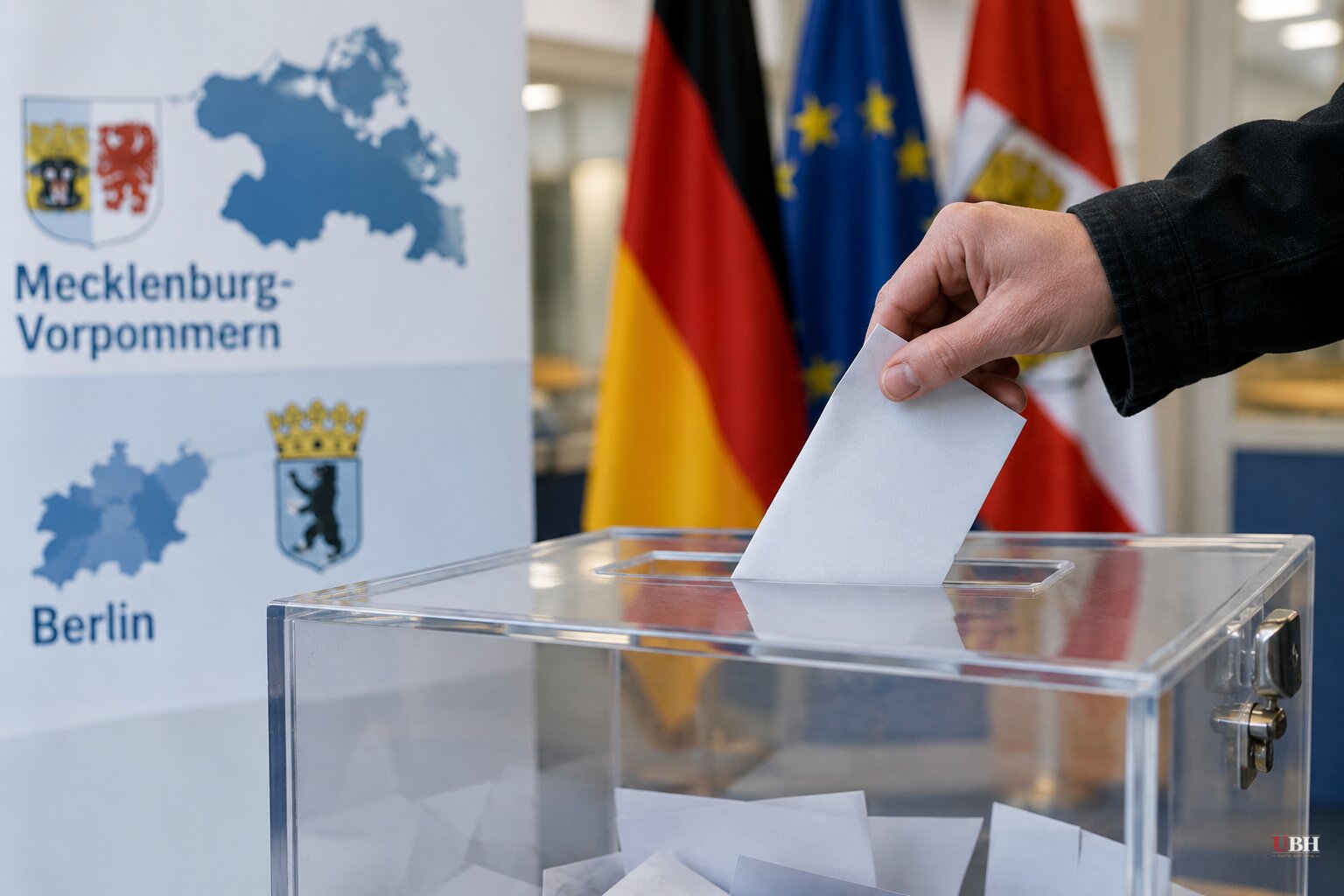
Since the CDU's rout in Saxony-Anhalt on September 6, Chancellor Friedrich Merz's government has been bleeding support fast. Sunday's votes in Mecklenburg-Western Pomerania and Berlin made it worse.
In Mecklenburg-Western Pomerania, the CDU pulled just 4.9% of the vote, according to exit polls reported by ARD and carried by The Associated Press. That's below the 5% threshold needed to enter a state parliament at all. It's the first time in the party's postwar history that has happened, according to The Media Line. The Alternative for Germany (AfD) won the state outright with roughly 38%, edging out the Social Democrats (SPD) at around 35%, per NPR and The Independent. AfD isn't expected to find coalition partners, so SPD governor Manuela Schwesig is projected to stay in office by building a coalition of her own, according to CT Public.
In Berlin, the far-left Die Linke finished first with between 24.5% and 25.7% of the vote depending on the count cited, roughly double its result from the last election, according to The Media Line. The CDU came in second at 19-20%. The AfD placed third at around 16%, its best-ever showing in the capital.
Merz called the results a "disaster" but ruled out resigning. "What needs to be done now requires backbone, steadfastness, and patience," he said in a statement quoted by The Independent and NPR, both drawing on AP reporting. He described his reform agenda as "the antidote to the poison of authoritarianism." AfD co-leaders Alice Weidel and Tino Chrupalla immediately called for him to go, with Weidel telling ARD that "Friedrich Merz is the wrong chancellor for the CDU, and he is dragging the party down with him," per CT Public.
The pressure had been building. Eight CDU state premiers, including North Rhine-Westphalia's Hendrik Wüst and Bavaria's Markus Söder, issued a joint statement of support for Merz before the vote, warning that "Germany's political landscape needs stability" amid far-right gains elsewhere in Europe, according to The Guardian. Merz skipped this year's UN General Assembly session in New York to stay in Berlin for the fallout, a decision The Guardian reported was framed by a government official as necessity, not retreat.
Die Linke's coalition math gets complicated
Die Linke's Berlin win isn't a clean mandate. Lead candidate Elif Eralp, whose parents fled Turkey's 1980 coup, is trying to build a coalition with the SPD and Greens, according to The Media Line. Her signature policy is bringing large corporate landlords into public ownership, building on a 2021 Berlin referendum that backed expropriation and could touch more than 200,000 apartments. Die Linke's relationship with pro-Palestinian activists and unresolved allegations of antisemitism within parts of the party have become a live issue in coalition talks, according to The Media Line. That's a real complication for the incoming government, not a settled fact about the party as a whole. No charges or formal findings were cited in that reporting.
The debt fight underneath it all
Merz took office 16 months ago promising fiscal discipline. Within days, according to figures cited by ZeroHedge, his government pushed through a constitutional change exempting defense spending above 1% of GDP from Germany's debt brake and created a €500 billion infrastructure fund. Germany's national debt is on track to rise from 63.5% of GDP to 68%, with new borrowing exceeding 5% of GDP next year. ZeroHedge frames this in heavily loaded terms, calling Germany a country in the grip of "climate fanaticism" run by "degrowth ideologues." That's commentary, not reporting, and readers should treat it as such. But the underlying debt numbers track with what other outlets have reported about Merz's spending shift, and the political cost is now visible in the exit polls.
Greek Finance Minister Kyriakos Pierrakakis, who also chairs the Eurogroup, told Handelsblatt this week that painful fiscal reforms pay off politically and economically over time. A comment ZeroHedge cast as a pointed reversal of roles from the Greek debt crisis a decade and a half ago, when German officials lectured Athens on austerity. Pierrakakis didn't call out Merz by name in the excerpt reported, but the timing comes days after Germany's worst state election result in party history.
Merz has ruled out resigning and rejected pulling back on his reform package. Whether the eight state premiers who publicly backed him before Sunday's vote hold that line now that the results are in remains the open question in Berlin.
Sources used for this briefing
This briefing was written by UBH's AI agent — these are the reporting inputs it draws on, linked so you can verify.


