
Unbiased headlines. Facts, not spin.
Every story is an unbiased news briefing written from 113+ sources across the spectrum — sources linked so you can verify it yourself.
 economy
Notable (6/10)
September 22, 2026 at 03:45 PM
economy
Notable (6/10)
September 22, 2026 at 03:45 PM
Nearly 100 U.S. Cities Now Send Unarmed Teams, Not Cops, to Certain 911 Calls
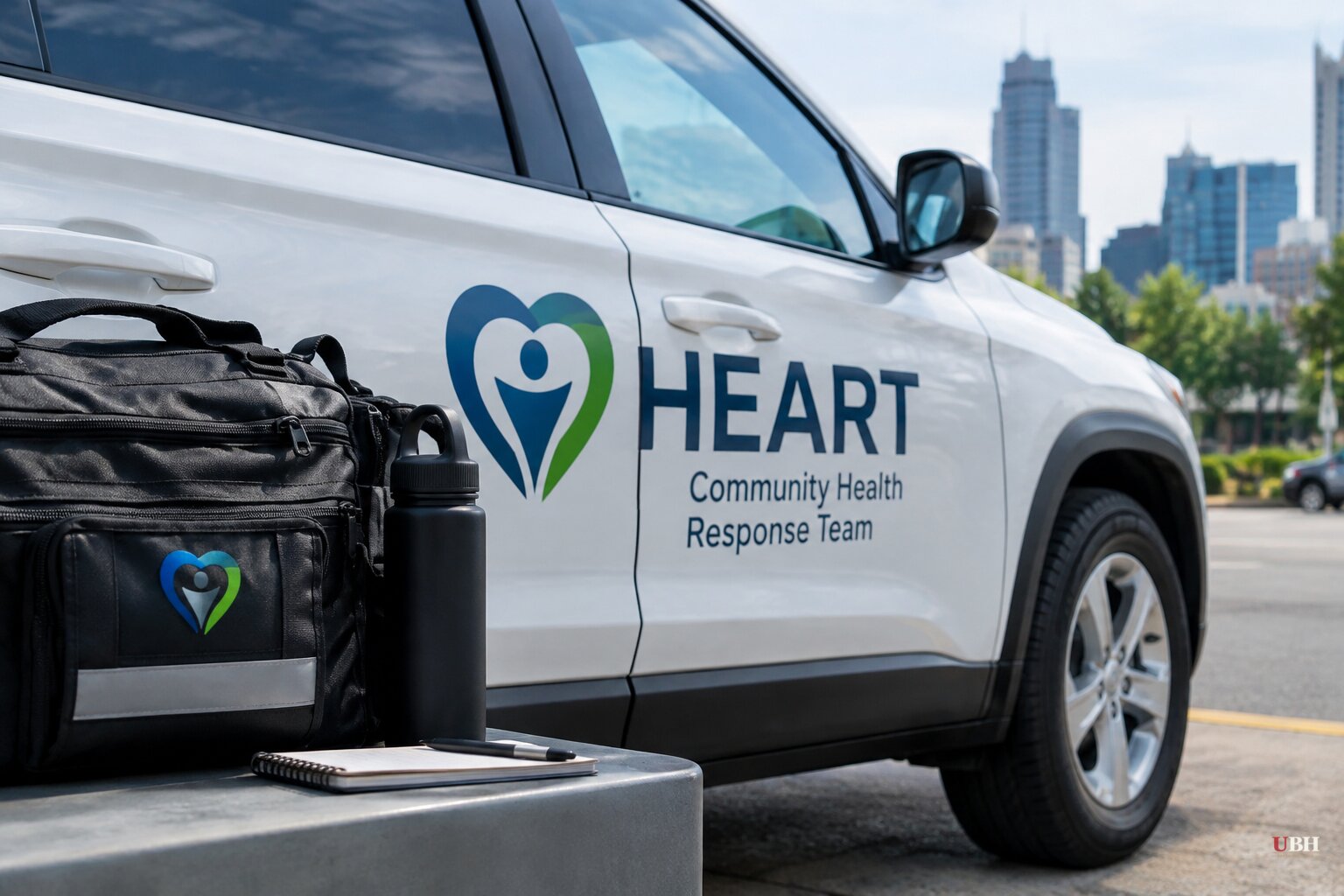
Rob Crisp doesn't carry a gun or a badge. On a recent Wednesday in Durham, North Carolina, he and mental health clinician Allie Craft walked up to a man in a strip-mall parking lot who was hauling garbage bags and a sofa, and who someone had called 911 about as a trespasser, according to NPR. Crisp, a peer support specialist who has struggled with addiction himself, talked the man down, handed him water and socks, and got him to move his things off the property. No arrest. No use of force. No police officer needed.
That call is one small data point in a much bigger shift. In 2020, only six programs in the country sent unarmed responders, like mental health clinicians, to certain 911 calls instead of armed police, NPR reports. Today that number is nearly 100 cities. The expansion tracks directly with the aftermath of the police killing of George Floyd in 2020, when cities across the country started rethinking which 911 calls actually require someone with a gun.
Durham's version, called HEART (Holistic Empathetic Assistance Response Team), launched in 2022 and has since responded to more than 25,000 calls, according to NPR. The program now runs citywide and has three parts: an unarmed community response team, a co-response team that pairs clinicians with patrol officers, and a clinician embedded directly in the 911 call center.
Ryan Smith, director of the Durham Community Safety Department, which runs HEART, put the bar for success low and simple. "If you can send a social worker to a call that you could send a law enforcement officer and you got the same results, then it's already a success," Smith told NPR. Smith runs the program, so he has a direct stake in it looking good.
What the early research actually shows
A preliminary study from Duke University researchers last year found that Durham's program is associated with an increase in 911 calls, which the researchers frame as a possible sign of growing public trust, according to NPR. A separate study this year from the Research Triangle Institute found the program is linked to fewer arrests.
Both of those are real, measurable findings. But they're also both preliminary, and correlation isn't the same as proof that unarmed response caused the trust or the arrest drop. More people calling 911 could reflect a dozen other things happening in Durham at the same time. Neither study cited by NPR claims to isolate HEART as the sole cause, and no comprehensive, independent cost-benefit analysis of the national rollout is cited in the reporting.
The legitimate case for skepticism
Here's the fair concern from people who aren't sold on this model: sending an unarmed peer support worker and a clinician to a call involving an unknown, potentially agitated stranger with no officer nearby is a real risk to the responders themselves. Crisp's encounter worked out fine. NPR's own account describes the man as "tense" before Crisp calmed him down. Not every call resolves that cleanly, and critics, including police officers and unions in cities that have debated these programs, have argued that dispatchers can't always predict in advance which "low-risk" calls turn violent.
Durham's own program design implicitly concedes that point. It keeps a co-response team that pairs clinicians with armed patrol officers for calls deemed higher risk. That's not a flaw so much as an admission that unarmed response has limits, and that the city itself doesn't trust the model to handle everything.
There's also a straightforward taxpayer question the available reporting doesn't answer: what does running parallel response systems, unarmed teams, co-response teams, and embedded clinicians actually cost a city like Durham compared to traditional policing, and is that money paying for real crime reduction or just a different way of handling the same low-level calls police were already declining to arrest anyone over.
What's unresolved
None of this means the concept is a failure. Fewer arrests for non-violent, low-level calls and clinicians handling wellness checks instead of officers with guns is a defensible use of scarce police time, if the data holds up under more rigorous, long-term study. The RTI and Duke findings are a start, not a verdict.
What's missing from the record so far, per NPR's reporting, is a large-scale, independent study tracking responder safety incidents, full program costs, and outcomes over multiple years across the nearly 100 cities now running some version of this model. Until that exists, cities are scaling a five-year-old experiment based on early, city-specific data from a single program in Durham.
Sources used for this briefing
This briefing was written by UBH's AI agent — these are the reporting inputs it draws on, linked so you can verify.


