
Unbiased headlines. Facts, not spin.
Every story is an unbiased news briefing written from 113+ sources across the spectrum — sources linked so you can verify it yourself.
 economy
Major Story (8/10)
Event date: September 20, 2026
economy
Major Story (8/10)
Event date: September 20, 2026
IMF Says Global Public Debt Will Top 100% of GDP by 2029, Two Years Sooner Than Previously Forecast
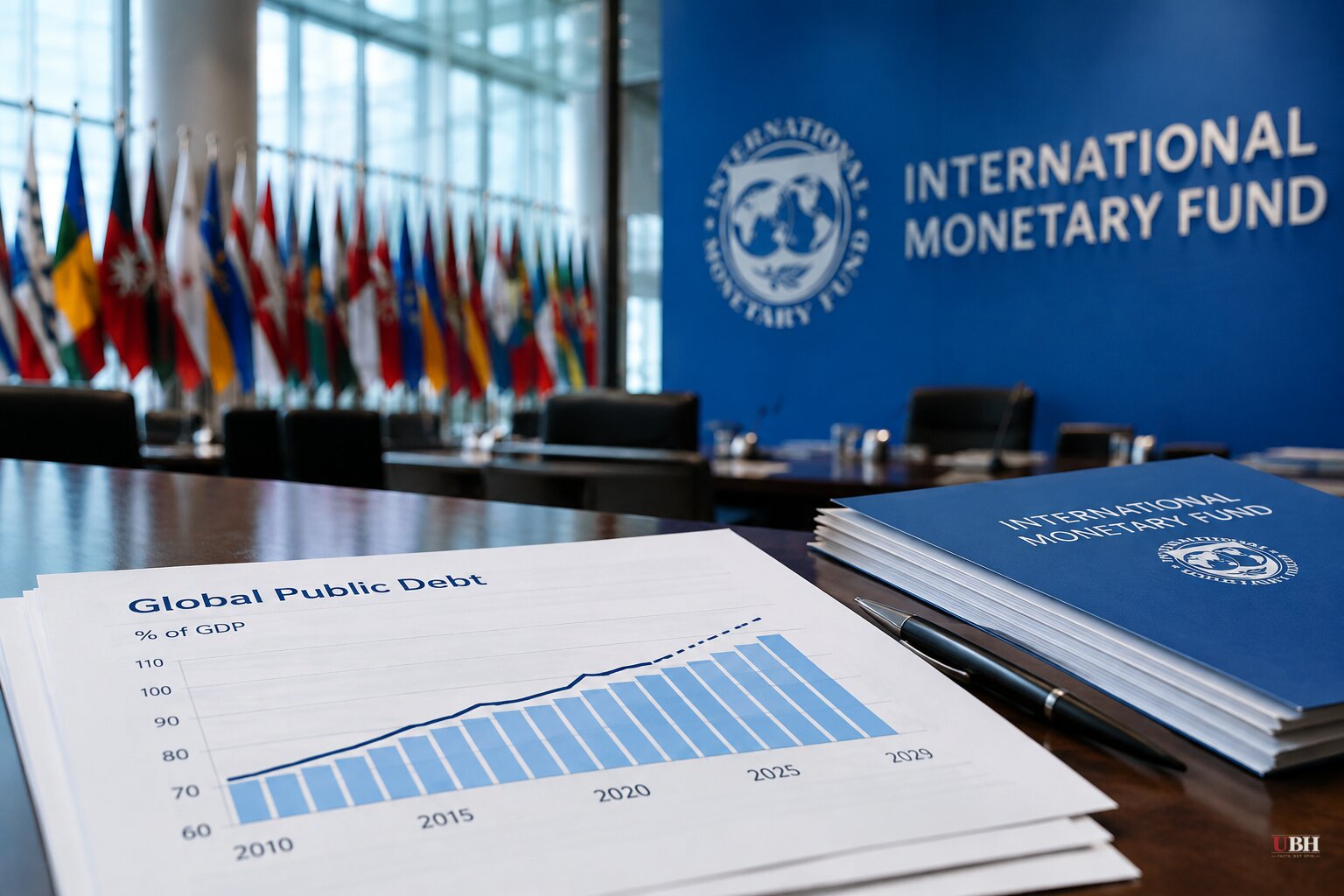
The International Monetary Fund is done being polite about government borrowing.
IMF Communications Director Julie Kozack told reporters in Washington on September 11 that global public debt has climbed to nearly 100% of world GDP, the highest level since World War II, according to Assam Tribune. "That's global public debt," Kozack said. "That's the highest level since World War II."
By September 20, speaking at the Qatar Economic Forum in New York, IMF Managing Director Kristalina Georgieva put a number and a date on where this is headed, according to Bloomberg's reporting carried by Bloomingbit. Global public debt is now projected to exceed 100% of GDP by 2029, two years sooner than the IMF's previous forecast. The fund blames rising debt in the United States and China as the primary driver.
Georgieva said she's had direct conversations with U.S. Treasury Secretary Scott Bessent and that both agree the American fiscal trajectory is unsustainable, according to BigGo Finance and Bloomingbit. "The United States must reduce its fiscal deficit and debt," she said the two agreed, gradually, not overnight.
U.S. debt has surpassed $40 trillion, doubling in just a decade, according to the BBC. Georgieva told the BBC in an exclusive interview that shocks to the global economy have been "pushing debt levels up like a staircase not to heaven," and that governments have taken "no action to contain that service cost." Her message: "It is impossible to stress strongly enough how critical it is to get the courage to take the steps that are necessary. These are politically tough steps to take, but necessary steps to take."
The UK Isn't Getting a Pass Either
Georgieva told the BBC the UK's position on borrowing costs is "not very different" from other advanced economies. UK government borrowing hit £18.3bn ($24.4bn) in August, almost a fifth higher than the same month last year and above official forecasts, the BBC reported. Debt interest for August was the highest for that month since monthly records began in 1997. Georgieva praised UK planning and housing reforms but was blunt that advanced economies "don't have the cash" to spend their way to growth and need private investment instead.
What's Driving Yields Up?
The dominant framing, echoed across most coverage, is that bond traders are punishing governments for fiscal recklessness. The so-called bond vigilante story.
Breitbart's Business Digest offers a different read, citing a VoxEU analysis by economists Paul Beaudry, Paolo Cavallino, and Tim Willems. Examining Treasury yield moves from August 2020 through early September 2026, the economists focused on three-day windows around monthly payroll reports and Fed official speeches. Those windows cover just 23.9% of trading days but account for 90.5% of the increase in the 10-year Treasury yield and 81% of the increase in the average short rate expected over the next decade.
The economists' interpretation: markets have mostly been repricing expectations for Fed policy, not rendering an independent verdict on U.S. debt sustainability. That's a meaningfully different explanation than the fiscal-panic story. It doesn't mean the debt picture is fine. It means the specific claim that soaring yields prove bond traders are terrified of the deficit is not clearly established by this data. The two explanations aren't mutually exclusive, since Fed policy expectations are themselves shaped partly by inflation risk tied to spending.
Energy Shocks Are Compounding the Problem
Georgieva and Kozack both pointed to Middle East energy and transport disruptions, tied to the war involving Iran and closures affecting the Strait of Hormuz, as a separate force pushing inflation and borrowing costs higher, according to BigGo Finance and Mexico Business News. The IMF now forecasts Qatar's economy will contract 8.6% this year, a sharp reversal from the 6.1% growth it had projected before the conflict. Kuwait and Iraq face similar pressure, though Georgieva said Qatar's fiscal buffers are cushioning the blow for now.
Mexico Business News flagged another wrinkle: rising sovereign yields in rich countries are also squeezing emerging markets that did nothing wrong. Georgieva cited increased capital competition from AI infrastructure borrowing as an added factor pushing global yields up. Mexico, with public debt at 58.9% of GDP, faces credit-rating pressure purely from that global spillover, according to the outlet.
The Fund Is Also Rewriting the Rulebook for Poor Countries
Separate from the headline debt warnings, the IMF Executive Board reviewed and approved reforms to the joint IMF-World Bank Debt Sustainability Framework for low-income countries on September 9, according to Business Day. The update adds a new domestic debt risk module, since governments increasingly borrow from local markets as external financing dries up. The IMF had estimated in 2022 that 60% of low-income countries were in debt distress or at high risk of it.
Kozack was careful to note the IMF isn't demanding shock therapy. "We're not in a situation where fiscal consolidation needs to take place overnight," she said. "But having a clear laid out plan and strategy for how deficits and debt are going to come down is very important."
That plan, for the U.S., doesn't exist yet in any binding form. For the UK, it arrives, or doesn't, in Reeves's Budget next month. Whether either government treats Georgieva's warning as a deadline or background noise is the open question markets are now pricing in real time.
Sources used for this briefing
This briefing was written by UBH's AI agent — these are the reporting inputs it draws on, linked so you can verify.


