
Unbiased headlines. Facts, not spin.
Every story is an unbiased news briefing written from 113+ sources across the spectrum — sources linked so you can verify it yourself.
 economy
Notable (5/10)
September 23, 2026 at 02:32 AM
economy
Notable (5/10)
September 23, 2026 at 02:32 AM
US Coast Guard Unloads $57 Million in Seized Cocaine as Spain Admits It Can't Stop Its Own Drug Speedboats
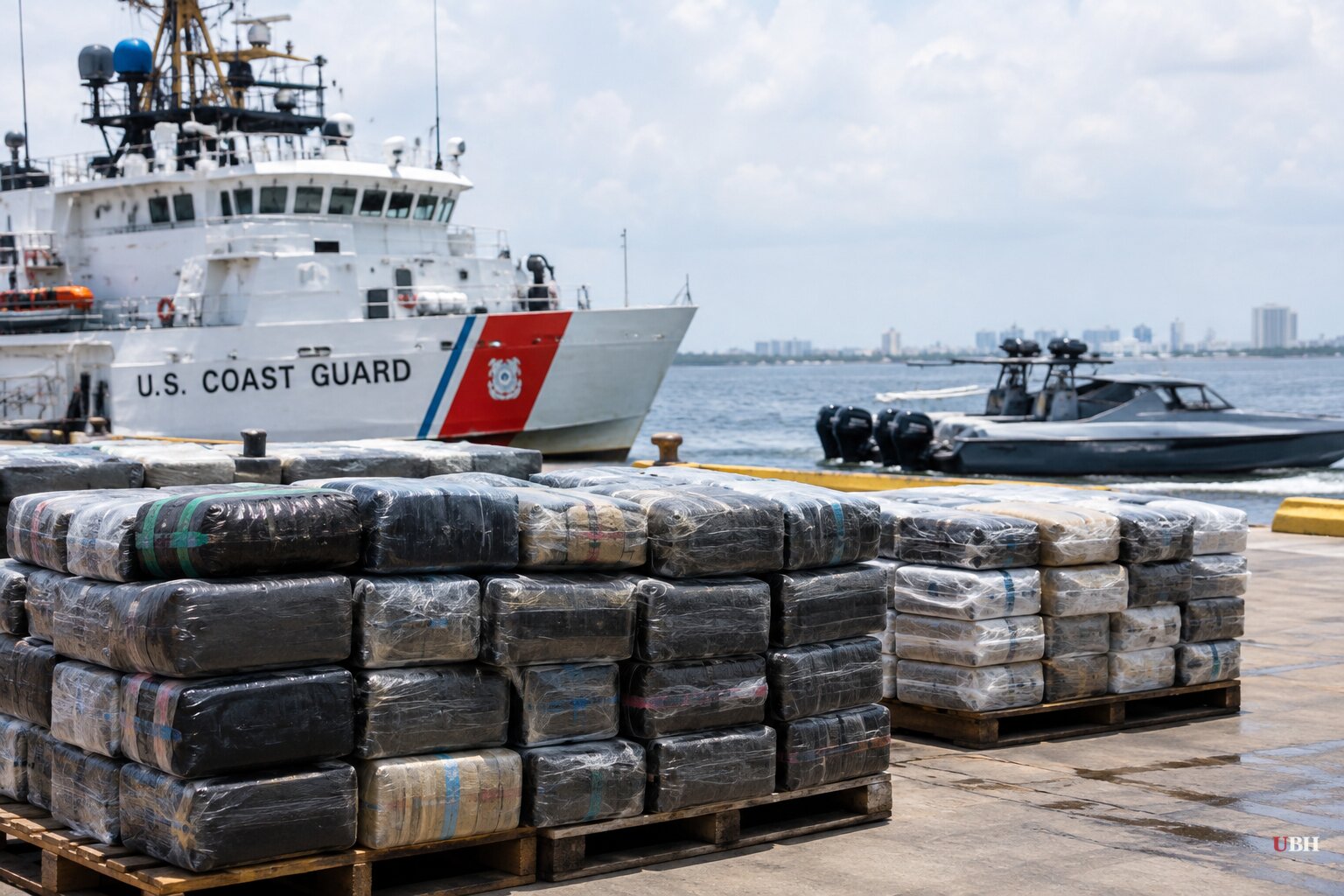
The global cocaine pipeline runs through two very different enforcement postures right now, and neither side is winning outright.
In Port Everglades, Florida, the Coast Guard on Monday, September 21, offloaded roughly 7,250 pounds of cocaine and 2,082 pounds of marijuana seized by crews of the Cutters Escanaba and Richard Dixon, according to a Coast Guard statement. The agency put the combined street value at about $57 million. Petty Officer 1st Class Douglas Strong, a boatswain's mate on the Escanaba, called it "a textbook team effort that ensured over 2,000 pounds of illicit narcotics never made it into our communities."
That same week, the Joint Interagency Task Force South, working with the Netherlands and the Dominican Republic, intercepted another vessel and seized 24 bales of cocaine while detaining three people, the task force said in a September 21 post on X.
The Trump administration's 2026 National Drug Control Strategy, released in May, names the Caribbean a "critical transshipment zone" for cocaine moving from South America to the U.S. and Europe, singling out Puerto Rico and the U.S. Virgin Islands as staging points because of the region's "thousands of islands and vast maritime expanses."
The Lethal-Force Question
Washington's Caribbean strategy has gone beyond boarding boats. A U.N. special rapporteur said in a September 15 briefing note that U.S. military strikes on suspected drug-trafficking vessels in the Caribbean and Pacific killed at least 223 people between September 2025 and August 2026. The rapporteur called the strikes a violation of "the human right to life" that "plausibly constitute crimes against humanity" and disputed any self-defense justification, according to Epoch Times' reporting.
That's a serious allegation from a U.N.-appointed monitor, not a criminal charge or a court finding, and no U.S. official response to the rapporteur's specific claim appears in the available reporting. Supporters of the strikes would argue traffickers moving multi-ton cocaine shipments by sea are armed, organized, and operating outside any law enforcement's reach, which is exactly the justification the administration has used for treating cartels as terrorist-style threats. Critics counter that killing suspects without capture or trial sets a precedent no court has sanctioned. Both things can be true at once, and neither has been resolved by any tribunal.
Spain Admits It's Overwhelmed
Across the Atlantic, Spanish authorities aren't debating lethal force. They're debating whether they have any control at all.
According to the Wall Street Journal reporting carried by LiveMint, Spain's narcolanchas, four-engine speedboats built in clandestine Portuguese workshops and smuggled into Spain by truck or river, can hit 60 knots and haul up to four tons of cocaine. They're designed to slam through rough water and, when confronted, to be used as weapons against the smaller Civil Guard inflatables sent to intercept them.
Juan Luján, who heads Spanish police's organized-crime unit on the Costa del Sol, said security forces have effectively ceded control of Spain's coastal waters. "You can't allow hundreds of drug traffickers' boats to roam around a port or a bay in plain sight," he said, describing families swimming near active offload sites.
The human cost is real on Spain's side too. Francisca María Gómez Pantoja, whose son was a civil guard killed in a drug boat attack, told the Journal she watches the speedboats pass by her home. "The speedboats enter whenever they want. They drop off the drugs and leave," she said.
Lisardo Capote, who runs customs surveillance in Campo de Gibraltar, put it bluntly: "We can see them. The problem is stopping them." Ruggero Scatturo of the Global Initiative Against Transnational Organized Crime described the smugglers as "experienced seafarers, with skills and high salaries" running what he called "an established system of trafficking."
The Canary Islands have become the other front. Spain's Guardia Civil seized 3,360 kilograms of cocaine in 139 packages off Gran Canaria after chasing down a rigid inflatable boat about 70 miles offshore, according to Maritime Executive. Five crew members, armed with an assault rifle and a light machine gun, were arrested and face charges including drug trafficking and membership in a criminal organization.
That bust follows a much larger one in May, when Spanish police intercepted a cargo ship near the Canary Islands carrying 45 tonnes of cocaine valued at more than $812 million, one of the largest maritime drug seizures on record. A month later, Spanish National Police arrested 48 people and seized 3.8 tonnes of cocaine while dismantling a network that used 11 high-speed boats for at-sea pickups.
Possessing a narco-speedboat in Spain now carries a five-year prison sentence, and buying 100-liter diesel jerrycans, long assumed to fuel these boats, is itself a crime. None of it has stopped the boats from running.
The open question isn't whether the cocaine is moving. Both continents' seizure numbers prove it is. It's whether U.S. lethal strikes hold up to the legal scrutiny the U.N. rapporteur is now demanding, and whether Spain's coast guard ever gets the boats and budget to match vessels built to outrun them.
Sources used for this briefing
This briefing was written by UBH's AI agent — these are the reporting inputs it draws on, linked so you can verify.


