
Unbiased headlines. Facts, not spin.
Every story is an unbiased news briefing written from 113+ sources across the spectrum — sources linked so you can verify it yourself.
 economy
Major Story (8/10)
Event date: September 15, 2026
economy
Major Story (8/10)
Event date: September 15, 2026
Meta Agrees to Pay Up to $17.1 Billion Over Youth Mental Health Claims, Admits No Wrongdoing
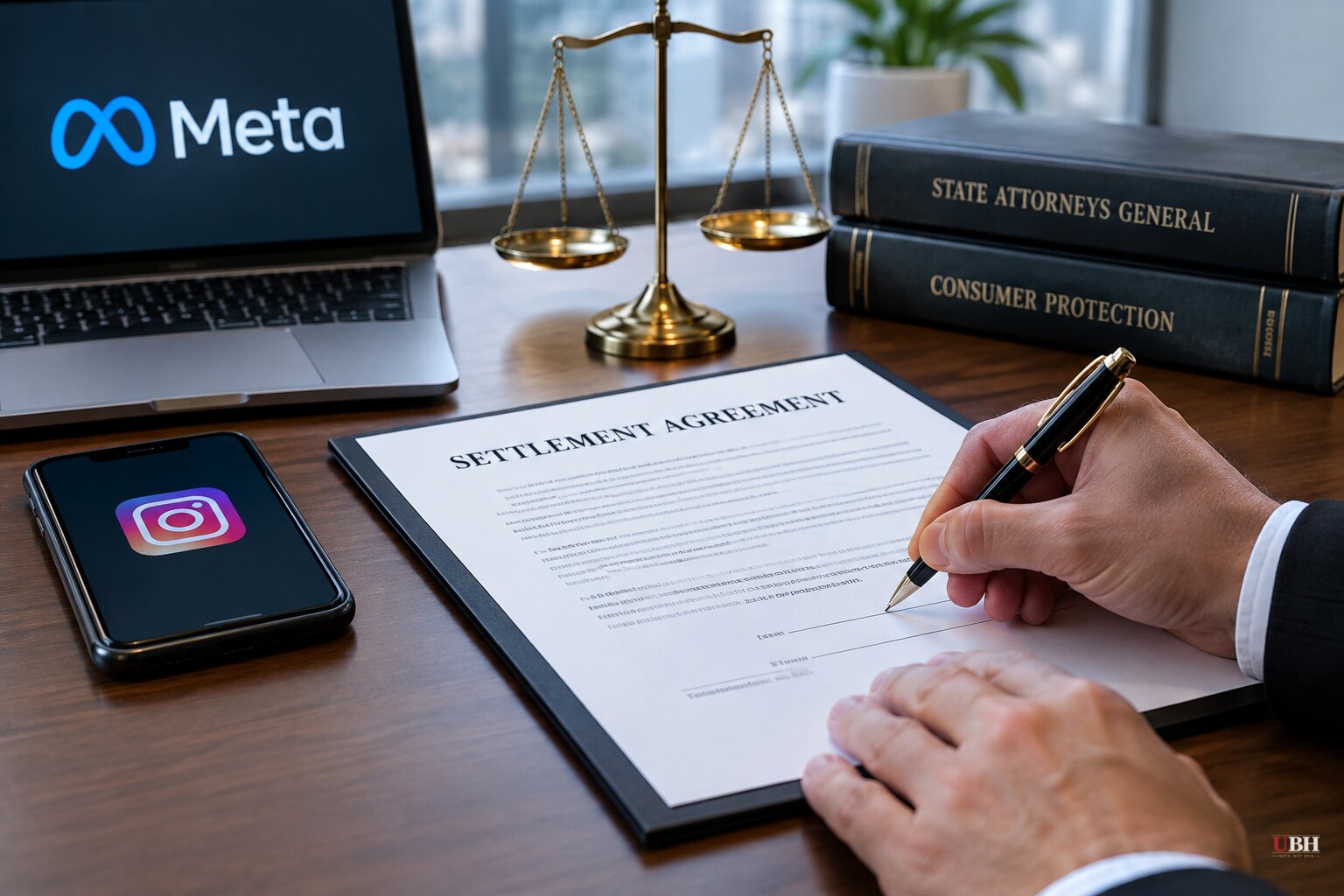
Meta has agreed to pay up to $17.1 billion over the next decade to resolve claims from dozens of state attorneys general that its Facebook and Instagram platforms harmed the mental health of young users, according to New York Magazine and MedPage Today. The company will also roll out new restrictions for under-18 accounts. Meta denied any wrongdoing in the deal.
The exact scope varies slightly depending on the source. New York Magazine and Breitbart put the coalition at 47 states; the law firm Loeb & Loeb, writing for children's privacy attorneys, counts 48 state attorneys general. The newsletter Understandably credits New York Attorney General Letitia James and "50 other attorneys general," putting the total at 51. Breitbart's Peter Schweizer cites a total figure of $17.6 billion rather than $17.1 billion. The structure underlying all these numbers is consistent: $12 billion guaranteed over 10 years, with an additional roughly $5 billion released only if Meta's competitors, including YouTube, TikTok and Snapchat, agree to adopt similar restrictions, according to Loeb & Loeb and New York Magazine.
What actually changes
According to Loeb & Loeb's breakdown of the agreement, Meta must build an age-assurance system tested annually by a third party, cap under-18 daily use at two hours by default, block access between midnight and 6 a.m., and mute push notifications from 10 p.m. to 7 a.m. and during school hours. Teens will get "productivity pauses" after 60 and 90 minutes of cumulative daily use, plus mindfulness reminders during sessions longer than 15 minutes. Like counts and cosmetic-filter features will be hidden by default for minors, and Meta must identify secondary accounts teens use to dodge the limits. Those restrictions last five years, extending to 10 if more platforms sign on.
Every one of those defaults can be switched off by a parent, a point New York Magazine flags as a major limitation: "parents will remain responsible for managing their children's relationship to social media," the outlet noted, meaning the settlement changes defaults, not outcomes, for any teen whose parent clicks override.
The case for skepticism
The lawsuit that produced this settlement argued Meta designed its products "to entice, engage, and ultimately ensnare" young users, treating the platforms the way tobacco was once treated as a public health hazard, according to New York Magazine. A psychoanalyst writing in The Guardian, Robin Kirman, described trial testimony from a plaintiff identified as Kaley, who had used social media since age six and told a therapist her "miracle day" would simply mean being prettier. Kirman argues that's evidence of deeper damage to how teens form desires and identity, not just documented behavioral symptoms like depression or self-harm.
A negotiated settlement is not scientific proof of causation. Meta paid without admitting fault, and most existing research linking heavy social media use to depression, anxiety or sleep problems remains observational, unable to fully separate cause from effect given confounders like family trauma, peer stress and preexisting psychiatric vulnerability.
On the right, Breitbart's Peter Schweizer and Eric Eggers argue the deal is soft by design. They point out Meta will likely spend more on its own legal defense this year than on the settlement itself, and that the $5 billion contingent on competitors joining effectively pays Meta only if rivals become less attractive to kids too. This means Meta has no built-in incentive to actually reduce engagement, since its business model runs on time spent in-app. Florida Attorney General James Uthmeier rejected the settlement outright, calling it "peanuts" in comments to CNBC and pursuing a separate trial the outlet describes as going badly for Meta.
The enforcement problem
Age verification is the weak link across every account. New York Magazine cites Australia's under-16 social media ban, where the government reported in March that an estimated two-thirds of children under 16 retained accounts on age-restricted platforms despite the law. Age gates on the internet are historically easy to circumvent, whether through fake birthdates, secondary accounts or borrowed adult logins, and nothing in the Meta settlement's design guarantees this time is different beyond an annual third-party test of the system itself.
Timing added an odd wrinkle. Days before the settlement, researchers from the University of Cincinnati and Northwestern University published an 11-year study of 183,000 adults in the journal npj Mental Health Research, finding intense social media use was among the strongest predictors of self-reported depression, according to Understandably. Corresponding author Hans Breiter called it "a damning picture." The study covers adults, not the teenagers at the center of the settlement, but its release the same news cycle gave the debate fresh ammunition regardless.
What happens next
MedPage Today argues the real value of the settlement isn't the payout but the chance to study it. Staggered rollout of specific design changes, like nighttime blackouts or notification limits, against sleep, attention and school performance could finally separate correlation from causation. That depends on independent auditors getting real access. Under the deal, the auditor can review raw and aggregated data, but full audit reports stay confidential; only executive summaries get published, and those may omit proprietary information.
Florida's trial against Meta continues independently of this settlement, and its outcome could set a different, more costly precedent. Whether TikTok, YouTube and Snapchat join the broader agreement and unlock the additional $5 billion remains an open question with no settled timeline in any of the sources reviewed.
Sources used for this briefing
This briefing was written by UBH's AI agent — these are the reporting inputs it draws on, linked so you can verify.


