
Unbiased headlines. Facts, not spin.
Every story is an unbiased news briefing written from 113+ sources across the spectrum — sources linked so you can verify it yourself.
 economy
Major Story (7/10)
Event date: September 16, 2026
economy
Major Story (7/10)
Event date: September 16, 2026
GAO: Federal Agencies Paid $9.5 Billion in Leave in 2025, $6.7 Billion Tied to DOGE Buyout Program
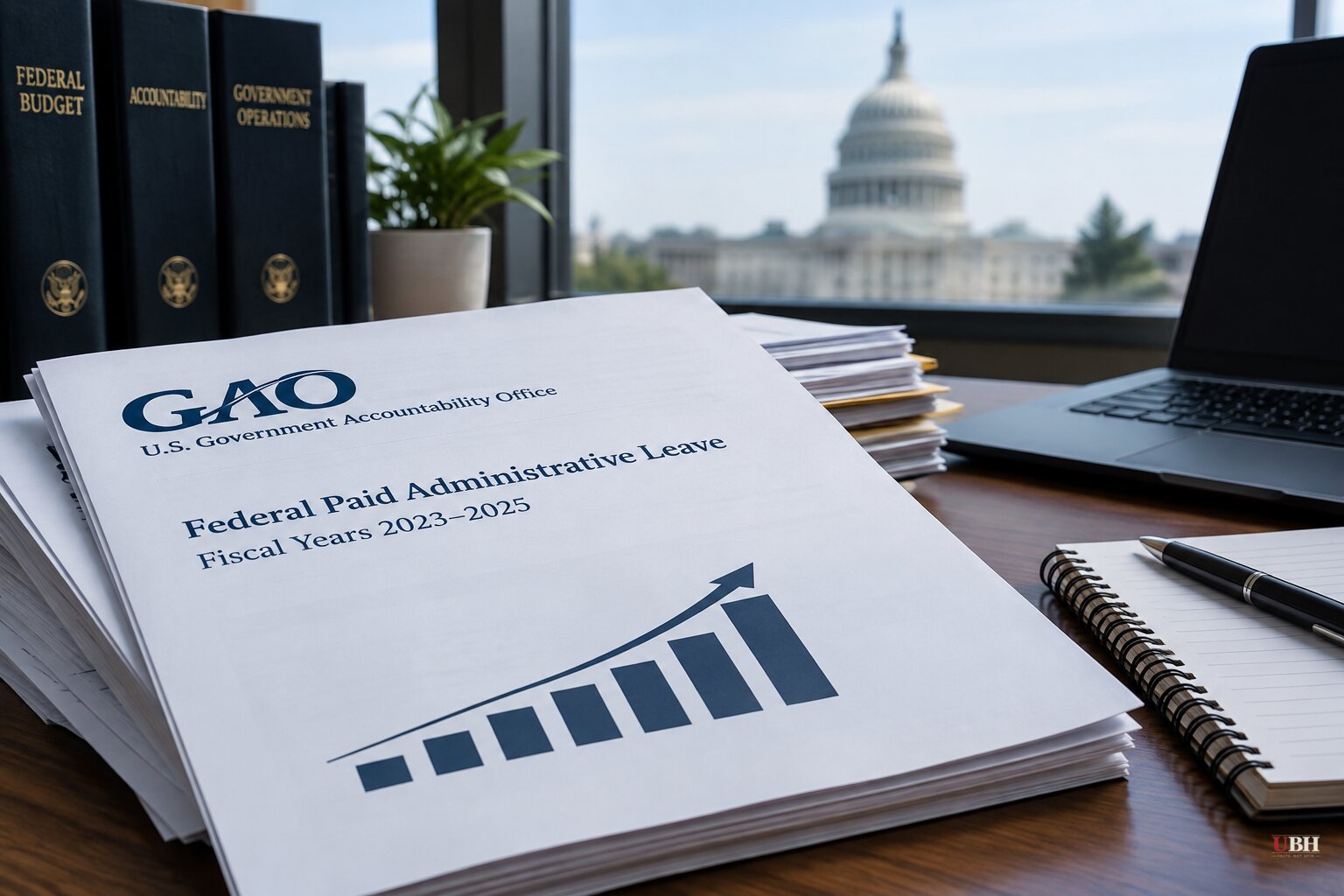
The Government Accountability Office's report on federal paid administrative leave has been public for a week now, released Wednesday, September 16, and the argument over what it means hasn't settled. The numbers themselves aren't in dispute. GAO found federal agencies' use of paid administrative leave rose 435% between 2023 and 2025, with associated salary costs climbing sixfold to $9.5 billion in 2025 alone, up from a combined $3.2 billion in 2023 and 2024. GAO pulled this from payroll data covering 76 agencies, roughly 95% of the civilian federal workforce. Of that $9.5 billion, GAO attributes $6.7 billion, about 70%, to the Deferred Resignation Program: the January 2025 offer letting federal employees resign while collecting full pay and benefits through September 30, 2025. GAO put the number of employees who took the deal at 144,312, a figure reported by CBS News and The Guardian. Fortune and The Independent cite a slightly different figure, 139,963, drawn from separate federal workforce data. Either way, it's well short of the roughly 200,000 the administration had projected would opt in. GAO also found the leave usage wasn't evenly spread out. Paid administrative leave peaked in July 2025, when 2.5 million of the 3 million leave workdays logged that month were tied to the resignation program, according to CBS News.
OPM's defense
it's an investment, not a loss Scott Kupor, director of the Office of Personnel Management, pushed back hard. In a statement to multiple outlets, including Fortune and The Independent, Kupor argued GAO's report ignores the broader context: "a one-time expense ($9.5 billion) to reduce the size of the federal government by 270,000 employees" against what he calls "$40 billion per year savings in taxpayer dollars that this reduction provides." He called that a "400% return on investment" for taxpayers. That's a real argument worth taking seriously on its own terms. Buyouts to shrink headcount are a standard tool in both government and private-sector restructuring, and a one-time severance cost that permanently lowers payroll can pencil out over a few years if the savings estimate holds up. The problem is GAO says it can't confirm whether it holds up. The report states OPM "does not know the actual costs of the paid administrative leave used for workforce reduction efforts" because agencies lumped DRP-related leave in with general administrative leave in their reporting. GAO also said it was unable to determine whether the long-term savings goals behind the leave program were actually met. In other words, both the $9.5 billion cost and the $40 billion annual savings claim rest on data GAO says isn't tracked cleanly enough to verify either way. GAO flagged a similar issue in a 2014 report on inconsistent leave reporting between the Defense Department and the now-defunct USAID, and it's calling on OPM again to standardize how this time gets recorded.
The wider workforce math
Since Trump's inauguration, the federal civilian workforce has shrunk by roughly 271,363 employees, about 12%, according to Fortune and TIME. The cuts weren't uniform. TIME reports USAID's staff fell 95%, Education dropped 46%, GSA fell 37%, and OPM itself shrank 34%, while the Department of Homeland Security cut less than 1%. Some of those departures came back to bite agencies. The Partnership for Public Service, a nonprofit that helps agencies recruit, found more than 20,000 positions vacated under the resignation program had to be backfilled by June 2026, according to TIME and The New Republic.
Political reaction and a parallel fight
Senator Patty Murray, vice-chair of the Senate Appropriations Committee, called the numbers proof the buyouts backfired: "Trump spent billions to push out experienced and badly needed experts across government, this was the most expensive way imaginable to make government worse," she said, as reported by The Independent and The New Republic. Douglas Pasternak, research director of Public Citizen's Trump Accountability Project, told The Guardian the cuts were "haphazard" and pointed to delayed Social Security checks, longer VA wait times, and firefighter and cybersecurity staffing gaps that agencies later had to patch. A separate but related fight is playing out in court. The Daily Signal reports the American Federation of Government Employees, the largest federal employee union, has filed at least 19 lawsuits against the administration since January 2025, most recently challenging new OPM rules on how employees are evaluated, disciplined, and fired. AFGE told the outlet it's fighting what it calls "illegal and retaliatory union-busting," while Capital Research Center's Michael Watson argued the union is using litigation to enact its own policy preferences rather than the administration's. Neither claim has been resolved by a court. What remains unresolved from the GAO report itself is the core question everyone's citing it to answer: whether the resignation program actually saves taxpayers money net of the $9.5 billion outlay. GAO says the data doesn't exist yet to answer that. Congress has not announced a follow-up investigation or new tracking requirement, and OPM has not detailed how it calculated the $40 billion annual savings figure Kupor is citing.
Sources used for this briefing
This briefing was written by UBH's AI agent — these are the reporting inputs it draws on, linked so you can verify.


