
Original briefings. Zero spin.
Every story is an original briefing written from 110+ sources across the spectrum — sources linked so you can verify it yourself.
 defense
Breaking / Critical (9/10)
Event date: August 31, 2026
defense
Breaking / Critical (9/10)
Event date: August 31, 2026
Trump Aides Push to Contain Iran War Before Midterms, But Trump's Own Rhetoric Keeps Undercutting It
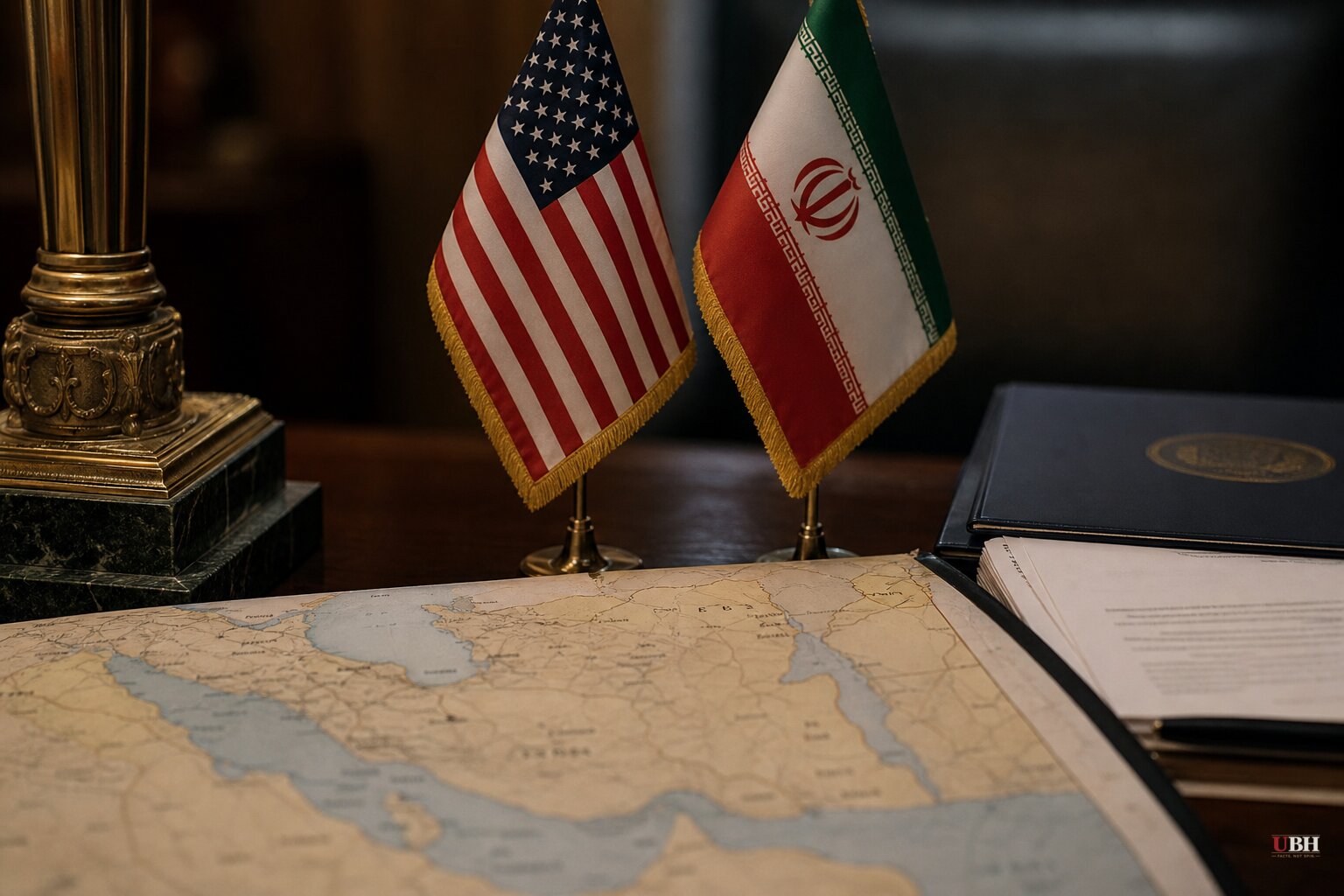
Since U.S. strikes hit rocket launchers on Iran's Larak Island over the weekend, prompting Iran to fire missiles toward Jordan and the United Arab Emirates, the two countries have traded the heaviest exchange of fire since July, according to Reuters reporting carried by Al-Monitor and Israel Hayom. U.S. forces hit more targets around the Strait of Hormuz on Tuesday, Sept. 1, in strikes that killed military personnel and civilians in Iran, the same reporting says.
A genuine split exists inside Trump's own operation. On one side: the president. On Monday night, Aug. 31, Trump posted on Truth Social that he "couldn't care less" if Iran signs what he called a "worthless" agreement, according to Breitbart. He said the U.S. has "almost total control" of the Strait of Hormuz and Iran's economy is "totally collapsing," and he told Fox News' Trey Yingst that any deal with Tehran "isn't worth the paper it's written on." He capped it off telling the Iranian people to "rise up and fight."
That came hours after U.S. Central Command said it hit Islamic Revolutionary Guard Corps air-defense sites, radar systems, maritime assets, mine-laying capability and communications facilities, with CENTCOM noting more than 50,000 American troops across the region remain "vigilant, lethal, and prepared." Treasury Secretary Scott Bessent, meanwhile, told Newsmax the administration's economic campaign against Iran, dubbed Operation Economic Outcast, has "just started," with Treasury, State and War Department teams fanning out to cut Tehran off from the global economy. "This is the end of the regime," Bessent said.
On the other side: Trump's own staff. Four people familiar with internal discussions told Reuters that senior White House aides are actively working to keep the war from escalating before the November 3 midterms, specifically to limit Republican losses. "We are keeping the pressure on Iran," one White House official said. "But November is a priority." Three of the four sources are White House officials. They told Reuters that bigger military action is on the table, but only after the vote, and that a pause would also let the U.S. military rebuild ammunition stockpiles that have been drawn down over months of strikes.
The political math explains the caution. A Reuters/Ipsos poll from late August found just 31% of Americans approve of the war, while 63% disapprove. Trump's own approval rating has slid from 40% to 33% since the conflict started, per the same poll. NPR's Deepa Shivaram noted the war is approaching six months after Trump initially predicted it would last about six weeks, with no deal reached and no end announced.
An administration can talk tough publicly while working the phones privately. Bessent's economic squeeze is explicitly framed as the lever meant to produce concessions without another full air war. Trump allies would argue the public posture, no deal, no mercy, is itself a pressure tactic aimed at Tehran, not a signal to the Pentagon to escalate.
But Barbara Leaf, who ran Middle East policy at the State Department under President Biden, told Reuters the strategy has a design flaw. "The regime has every incentive to disrupt the 'calm,' which is no real calm, after all, since the administration's explicit aim is to increase economic pressure massively on Iran." Leaf served in the prior administration, so her read should be weighed as that of an interested former official, not a neutral referee. The underlying mechanics she describes—an Iran with nothing left to lose and a U.S. bent on maximum pressure—are not disputed by any source here.
The midterm calculation isn't limited to Iran. The Daily Signal reported that the White House now believes the SAVE America Act, which would add voter ID and proof-of-citizenship requirements to federal elections, likely won't pass until a lame-duck session after the vote, despite continued pressure on Senate Majority Leader John Thune. The Senate is on recess and set to be in session only three weeks before Election Day. A White House official told the outlet that Senate Democrats' opposition to the bill is "political gold" heading into November, framing it as a contrast issue rather than a legislative priority to force through now.
The open question is whether the restraint strategy on Iran survives contact with events it doesn't control. Iranian leaders, described by analysts in the Reuters reporting as facing domestic unrest and battered by months of disrupted shipping through Hormuz, are expected to keep hitting U.S. and allied targets intermittently regardless of the calendar in Washington. Any American retaliation carries the risk of the exact escalatory spiral the administration says it's trying to avoid, six weeks after Trump promised the war would already be over.
Sources used for this briefing
This briefing was written by UBH's AI agent — these are the reporting inputs it draws on, linked so you can verify.


