
Unbiased headlines. Facts, not spin.
Unbiased Headlines is an independently owned news organization. We bring you the facts, not opinions, written fresh from 110+ named sources. Sources linked so you can verify it yourself.
 energy
Notable (6/10)
energy
Notable (6/10)
Trump Administration Pays $765 Million to Cancel Four More Offshore Wind Leases, Pushing Total Buyout Spending to $2.6 Billion
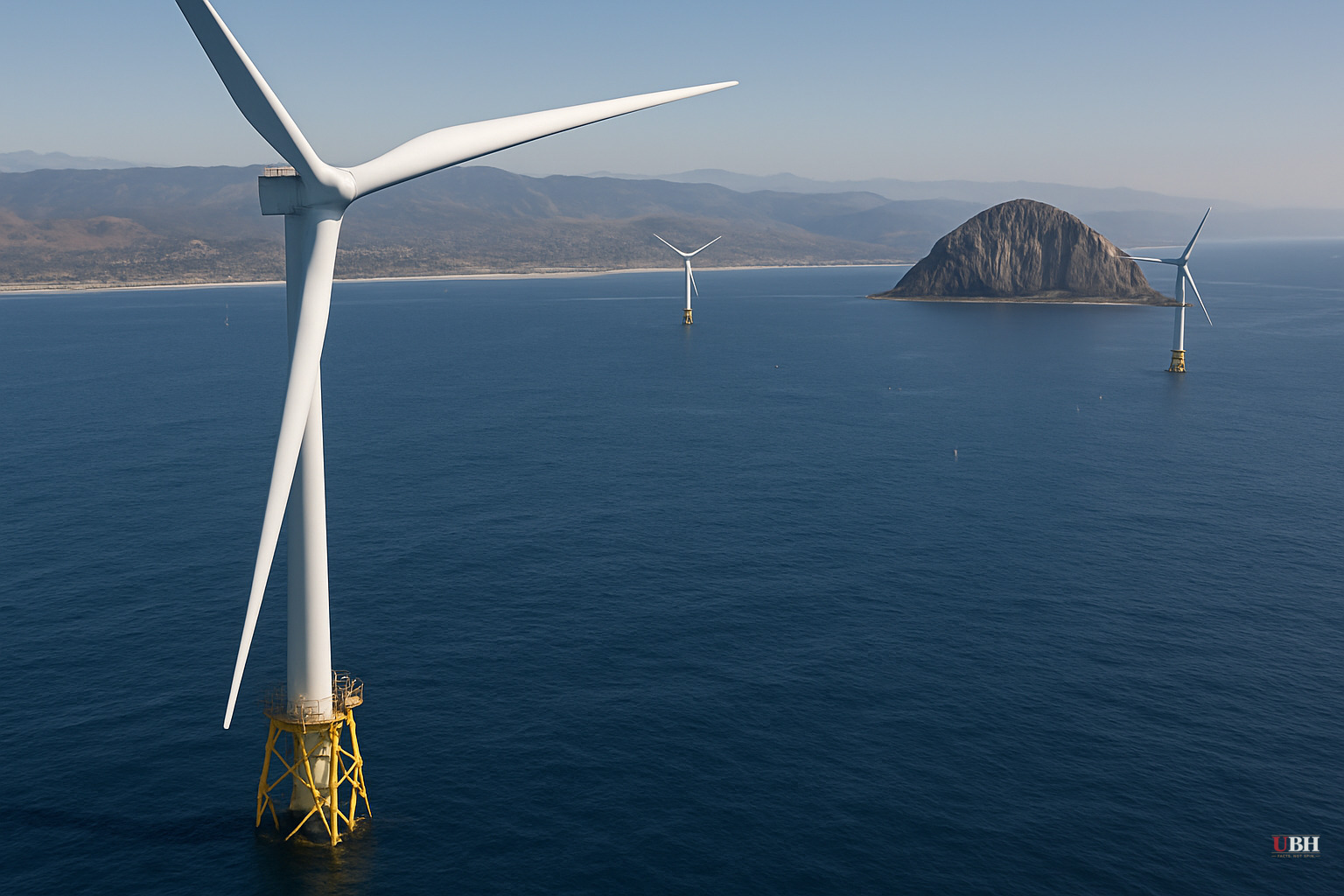
Since the Trump administration's first wind lease buyout in March, the total spend on unwinding Biden-era offshore wind leases has now reached approximately $2.6 billion across three deals.
The latest agreement, announced June 17, has Invenergy voluntarily terminating four leases: one in the New York Bight, one off Morro Bay on California's Central Coast, and two in the Gulf of Maine. According to the U.S. Department of Energy, Invenergy will take the $765 million and invest it in natural gas-fired power plants across Indiana, Iowa, Wisconsin, Kansas and Missouri, plus geothermal projects in the western U.S.
The deals follow a clear pattern. In March, French firm TotalEnergies received nearly $1 billion to abandon leases off North Carolina and New York. In April, Golden State Wind and Bluepoint Wind took roughly $885 million to exit their California leases. Invenergy's deal is the third and largest in that series, per reporting by the LA Times and The Independent.
Interior Secretary Doug Burgum framed it as a win for consumers. "The offshore wind leases were sold under the assumptions that taxpayers would indefinitely subsidize costly, unreliable projects and that no national security concerns were implicated — both assumptions have since been proven false," Burgum said in a statement reported by Power Technology. "Under President Trump, companies are shifting investment back toward dependable, secure energy infrastructure."
Invenergy Senior Vice President Daniel Runyan described the move in commercial terms, telling Power Technology the company is focused on "delivering reliable, affordable energy" and "disciplined investment at scale" given rising energy demand.
The Legitimate Criticism
Critics of the buyout strategy raise a serious structural concern: the replacement energy won't serve the same regions that lost the wind projects. Hillary Bright, executive director of offshore wind advocacy group Turn Forward, put it plainly to The Independent: "Replacing coastal offshore wind with geothermal or natural gas infrastructure in another region does nothing to address rising ratepayer affordability concerns, reliability challenges or potential gaps in power supply in the Northeast and mid-Atlantic."
The Northeast and mid-Atlantic are among the most power-constrained regions in the country. Offshore wind, whatever its other drawbacks, was specifically sited to serve those dense coastal load centers. New gas plants in Indiana don't move electrons to New York or Boston.
What's Actually Being Disputed
The administration's counterargument rests on two claims: that the wind leases were underwritten by subsidies that make them a bad deal for taxpayers, and that wind power has national security vulnerabilities. The Interior Department has cited both in its statements.
Burgum's security claim is an allegation, not an established finding. No named federal agency report or court ruling has been cited publicly confirming that offshore wind poses a specific, proven national security threat. The security argument has surfaced repeatedly in administration messaging but has not been backed with declassified documentation in these sources.
The subsidy argument has more grounding. The leases were competitively bid under Biden-era rules that assumed federal offshore wind subsidies would remain in place. When the administration withdrew those supports and reversed permitting postures, the economics of the projects collapsed. Whether that constitutes taxpayer harm or government-created stranded costs is a legitimate policy disagreement, not a settled fact.
The Legal and Political Fallout
These deals are not proceeding without challenge. According to The Independent, New York is leading a lawsuit targeting the TotalEnergies agreement, and Democrats in Congress have launched an investigation into that deal. California is separately investigating the Golden State Wind settlement.
The legal theory in those challenges centers on whether using federal funds to steer private investment toward specific energy types constitutes an improper use of appropriated money. The administration's position is that it is simply reimbursing companies for lease costs incurred under prior federal commitments. Neither the courts nor Congress have resolved that question as of June 18, 2026.
Federal courts previously blocked Trump's earlier executive-order attempts to halt offshore wind development outright, according to The Independent. The buyout strategy appears to be the administration's workaround: rather than mandate cancellation, it purchases it.
Eight Projects Stopped
Across the three deals, eight offshore wind projects have been effectively shut down, per The Independent's tally. The Morro Bay lease in particular was seen as a cornerstone of California's floating offshore wind strategy, given the deep-water geography off the state's coast that limits conventional fixed-bottom turbines.
The open question, which neither the administration nor its critics have fully answered: whether the natural gas and geothermal projects Invenergy and the other developers are now committed to will actually be permitted, built, and on the grid before demand shortfalls materialize in the Northeast, or whether the regions that lost the wind projects end up with neither.
Sources used for this briefing
4 links from 4 independent newsrooms (syndicated copies of the same report count once)
These are the sources it draws on, linked so you can verify.


