
Original briefings. Zero spin.
Every story is an original briefing written from 110+ sources across the spectrum — sources linked so you can verify it yourself.
 finance
Major Story (7/10)
August 20, 2026 at 01:50 PM
finance
Major Story (7/10)
August 20, 2026 at 01:50 PM
Treasury's Doubled Buyback Cools 30-Year Yield to 5.19%, But Foreign Demand Keeps Sliding
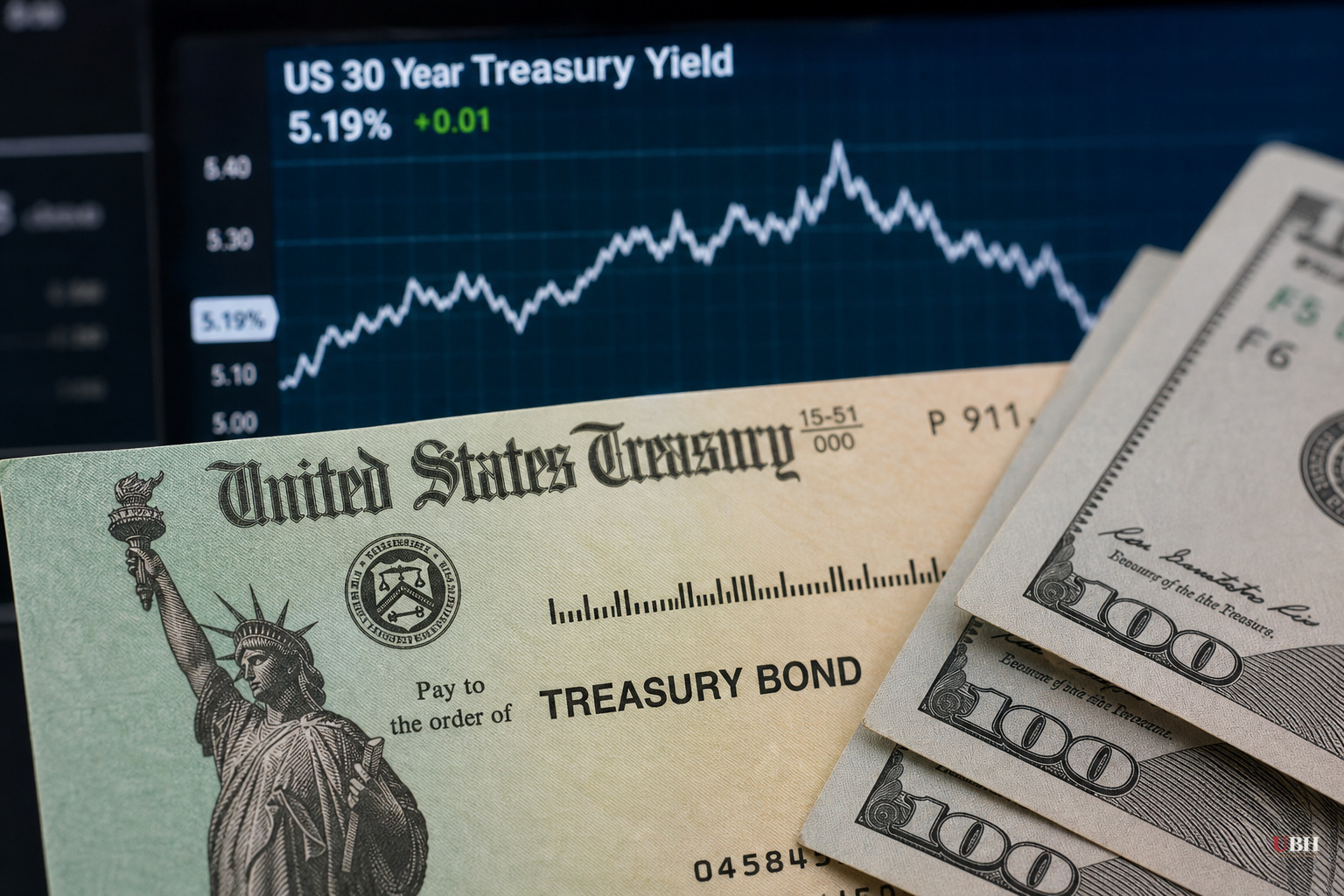
The 30-year Treasury yield touched 5.34% on Tuesday, its highest since 2007. By Wednesday it had eased to roughly 5.19%, and both the 10-year and 30-year were trading flat Thursday, according to Anadolu Agency. That drop came directly after the Treasury Department announced Wednesday it would double its long-bond buyback operations.
Starting September 9 and running through November 4, the Treasury will repurchase at least $4 billion per operation in the 10-to-20-year and 20-to-30-year maturity sectors, up from $2 billion, the department said in an August 19 statement. Buybacks work by having the government repurchase its own older bonds before maturity, retiring them and replacing them with fresh issuance, according to the Epoch Times.
The market reaction was immediate. The 10-year yield fell below 4.7%, and the 20- and 30-year yields eased to around 5.2%, per the Epoch Times. Aju Press reported the 30-year specifically retreated to about 5.18% after touching 5.34%.
The scale problem nobody's hiding
Maximum buybacks between early August and early November total roughly $83 billion, according to Aju Press. Total publicly held U.S. debt is more than $32 trillion. Treasury also expects to borrow $739 billion in privately held net marketable debt in the third quarter and another $628 billion in the fourth.
Citi's Dan Gottlander told Aju Press the expanded operations "could have a significant effect on longer maturities" but flatly noted the program "does not change deficits." Lawrence Gillum, chief fixed income strategist at LPL Financial, was more blunt in comments to the Epoch Times, calling it "more of a band-aid than a panacea," and adding that "the size of the buyback itself isn't meaningful enough to make a big difference in yields" and that Wednesday's rally likely reflected "offside positioning" more than any structural fix.
If the honest read from a fixed-income strategist is that this is cosmetic, readers should weigh that against the market's positive reaction. Both things are true at once: yields fell, and the underlying supply-demand mismatch didn't move an inch.
Foreign buyers are stepping back, not out
The deeper story is who's actually buying this debt now. Foreign private-sector net purchases of Treasury notes and bonds fell to $16.6 billion in June, the weakest monthly reading since January, according to BigGo Finance, citing Treasury International Capital data. Twelve-month foreign private purchases dropped more than 40% year-over-year to $329 billion.
Foreign official holdings in custody at the New York Fed have fallen to $2.6 trillion, the lowest in 14 years. JPMorgan cut its 2026 forecast for total foreign Treasury purchases to $450 billion from $500 billion, per BigGo Finance. Japan and China both trimmed holdings in June, with Japan's move tied to yen intervention.
Notably, foreign buying of U.S. equities hit a record $144.7 billion in June. That's not capital fleeing America. It's capital rotating out of Treasuries and into stocks, a distinction BigGo Finance's reporting draws clearly and one that matters: this isn't a story of foreign investors abandoning the U.S., it's a story of them getting choosier about which U.S. asset they want to hold.
Is this inflation fear, or something else?
Breitbart's Business Digest makes a case worth taking seriously: that the yield spike reflects growth optimism, not inflation panic or debt fear. The argument rests on breakeven inflation rates, the gap between regular Treasury yields and TIPS. The 30-year breakeven was 2.20% in July, down from 2.30% in May, below the 2.55% hit in April 2022. If markets feared Washington would inflate away its debt, that number should be rising, not falling.
But it doesn't fully square with other data in the same window. The New York Fed's term premium estimate has climbed to roughly 80 basis points, near a 12-year high according to Aju Press, and Crypto Briefing puts the 10-year term premium as high as 1.37% depending on the model, the highest sustained level in nearly a decade. Term premium is compensation for uncertainty, not inflation expectations specifically, so a rising term premium and a falling breakeven aren't necessarily contradictory. They can both be true if investors are confident about inflation but nervous about supply, deficits, and who's going to keep buying.
What's actually new since debt crossed $40 trillion
Since the debt figure crossed $40 trillion, per Anadolu Agency's Wednesday report, up from $38.4 trillion at the start of 2026 and over $30 trillion at the start of 2022, the concrete new development is the Treasury's countermeasure and its immediate but narrow market effect. The Federal Reserve's July meeting minutes showed a 9-3 vote to hold the federal funds rate at 3.5%-3.75%, the first three-way same-direction dissent since 2016, a split that itself signals disagreement inside the Fed about whether policy needs tightening if inflation doesn't ease.
Treasury will release more detail on future buyback sizing in its next quarterly refunding announcement on November 4. That date is the next real test: whether the doubled buyback becomes a sustained tool or reverts once this week's yield spike fades from memory.
Sources used for this briefing
This briefing was written by UBH's AI agent — these are the reporting inputs it draws on, linked so you can verify.


