
Unbiased headlines. Facts, not spin.
Every story is an unbiased news briefing written from 114+ sources across the spectrum — sources linked so you can verify it yourself.
 finance
Major Story (8/10)
Event date: May 22, 2026
finance
Major Story (8/10)
Event date: May 22, 2026
National Debt Hits $40 Trillion, Treasury Scrambles to Calm Bond Market
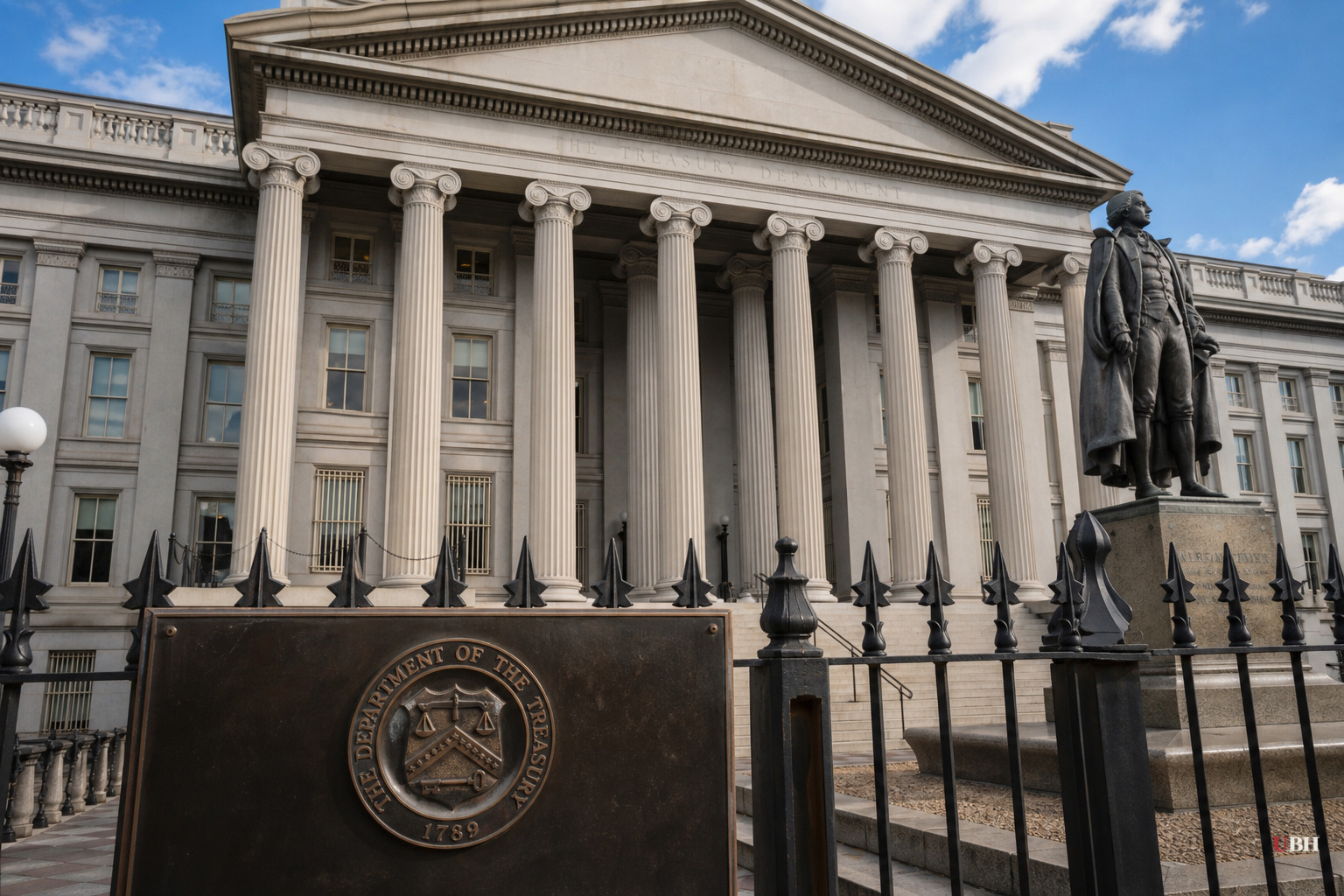
The federal government's total debt hit $40.05 trillion at the close of business Tuesday, according to Treasury Department data. That's up from $39 trillion roughly three months ago, based on the Treasury's debt-to-the-penny dashboard.
This milestone arrived early. The Congressional Budget Office's baseline estimate had debt hitting $39.4 trillion by the end of fiscal year 2026. Instead the government blew past $40 trillion ahead of schedule.
The government is pulling in a record $5 trillion in revenue this year and spending roughly $7 trillion. That leaves a $2 trillion annual deficit. It's a structural feature, not a one-time occurrence.
Debt held by the public sits around $32.2 trillion. Intragovernmental holdings, money the government owes itself across trust funds, make up the remaining $7.8 trillion.
Social Security and Medicare spending has already topped $2 trillion this fiscal year alone. Net interest payments on the debt are north of $900 billion and forecast to cross $1 trillion. The CBO projects that within a decade, interest costs alone will eat up around 20 percent of federal outlays, roughly $2.1 trillion a year.
Jessica Riedl, a budget and tax fellow at the Brookings Institution, said the United States has been on an unsustainable fiscal path for years. "It's been well known for a while that the United States government was on a pretty unsustainable path with deficits," she said. "Over the last few years, the United States has moved into roughly $2 trillion deficits, even during peace and prosperity," she added. Deficits that used to sit at 3 to 4 percent of GDP, a level that once spooked markets, are now running 6 to 7 percent, she said. "That has made markets more nervous," she said.
Caleb Quakenbush, director of fiscal policy at the Bipartisan Policy Center, told AFP that neither Congress nor multiple administrations, Republican or Democrat, have addressed the spending trajectory in any "meaningful or durable way." That's a bipartisan failure. Nobody in either party gets a pass here.
Bond Yields Spike, Then Treasury Steps In
The debt milestone landed the same week long-term borrowing costs hit their highest level since before the 2008 financial crisis. The 30-year Treasury yield touched 5.31 percent on August 17. The 10-year sat near 4.74 percent Tuesday, close to the highest of Trump's second term, according to CNN.
Higher yields mean higher costs for mortgages, auto loans, business loans, everything tied to Treasury rates. It's real money out of real pockets.
Treasury Secretary Scott Bessent moved fast. Wednesday morning, the department announced it would at least double the size of its bond buybacks from September through early November, focused on 10-year to 30-year Treasuries, according to CNN and the Washington Post.
It worked, at least for a day. The 30-year yield dropped nine basis points to 5.2 percent. The 10-year fell six basis points to 4.65 percent. Stocks rose, with the S&P 500, Dow, and Nasdaq each up roughly 0.2 percent, according to Morningstar's market wrap.
Analysts don't think this fixes anything long-term. Neil Wilson, a strategist at Saxo Markets, called it "a very strong sign that the Treasury has decided higher US yields are unacceptable." That's a signal, not a solution.
Kieran Davies of Coolabah Capital told Morningstar the buyback is "relatively small" in the scheme of things and that purchases usually need to be extremely large to move yields in any lasting way. Masahiko Loo at State Street Investment Management said the moves "do little to change the bigger picture of inflation and fiscal concerns, rising term premiums, and AI-driven capital demand."
Breitbart's coverage noted the debt run-up came partly amid tariff uncertainty tied to Trump administration trade policy that courts have contested, alongside rising entitlement and interest costs. That's a detail largely absent from the Epoch Times' piece, which frames the story almost entirely around spending growth and the midterm political stakes without mentioning tariff litigation as a contributing factor.
Voters Are Watching, and They're Not Happy
The Peter G. Peterson Foundation's U.S. Fiscal Confidence Index registered 39, far below the neutral mark of 100, signaling deep voter unease about the debt trajectory heading into the November midterms.
"As Congress considers election year budget proposals, the national debt keeps rising and American families are paying the price through higher interest rates and inflation," said Michael A. Peterson, the foundation's CEO, in a July 31 statement. "Voters understand that the growing debt adds to their cost of living, and they are calling for a more responsible approach."
Some economists note there's no fixed debt-to-GDP ratio that triggers an automatic crisis, and gross debt is a symbolic rather than precise economic measure. Riedl herself made that distinction, saying debt held by the public is the more economically meaningful figure. But she also said the $40 trillion mark matters psychologically, warning markets "to take another look at rising debt."
Using the CBO's 7 percent growth scenario, the debt could hit $50 trillion by 2030. Whether Congress does anything differently before then remains, as it has for two decades, an open question with no serious legislative fix on the table from either party.
Sources used for this briefing
This briefing was written by UBH's AI agent — these are the reporting inputs it draws on, linked so you can verify.


