
Unbiased headlines. Facts, not spin.
Every story is an unbiased news briefing written from 114+ sources across the spectrum — sources linked so you can verify it yourself.
 finance
Major Story (7/10)
Event date: September 8, 2026
finance
Major Story (7/10)
Event date: September 8, 2026
Bessent Concedes "I Can't Control the Bond Market" After 10-Year Yield Jumps Nearly 50 Basis Points
Last month, Treasury Secretary Scott Bessent told investors, "I am the house now," and invited bond-market bears to bet against him.
They did. In an Axios interview with Mike Allen on Sunday, Oct. 4, Bessent changed his tone: "I can't control the bond market."
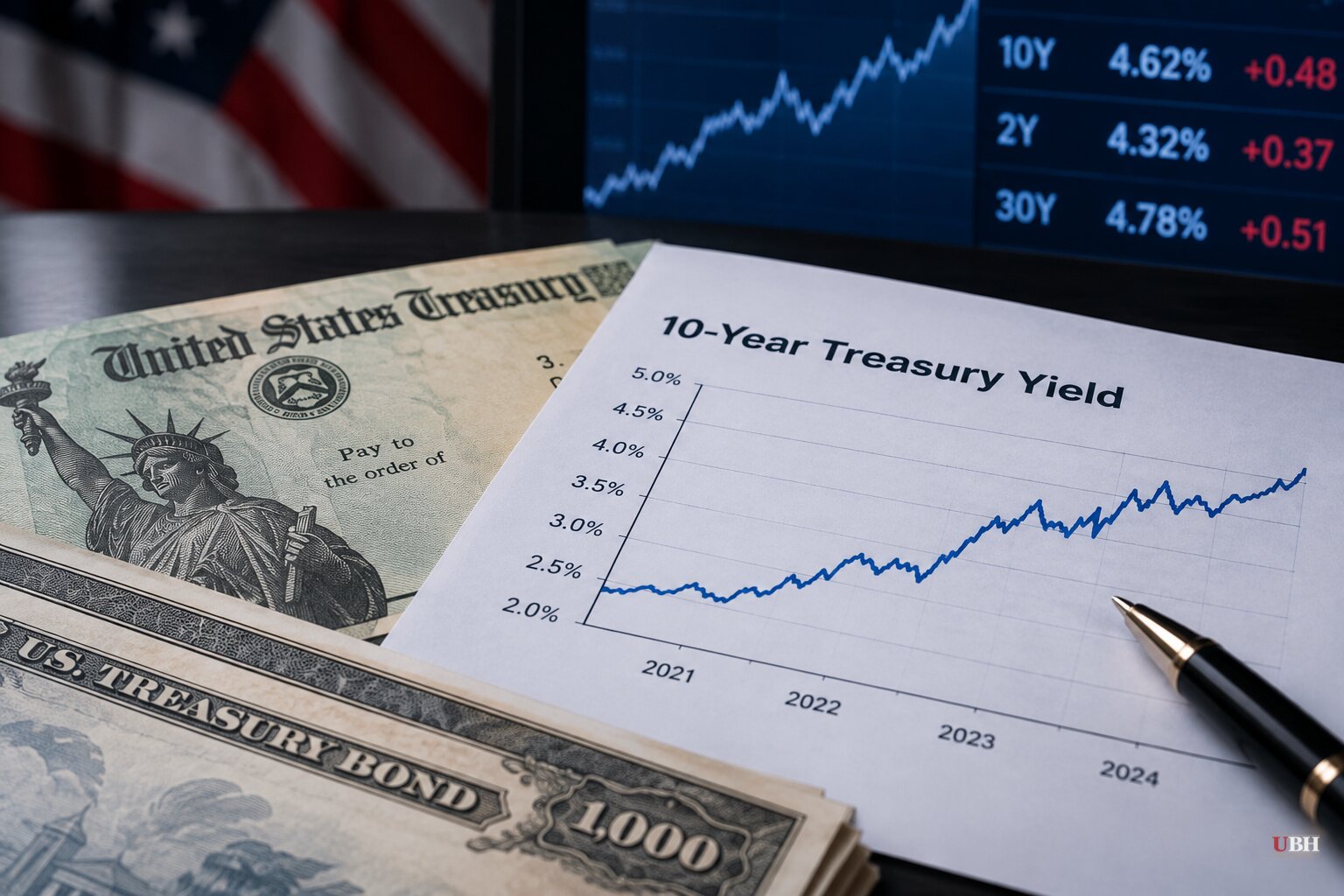
Between those two statements, the U.S. 10-year Treasury yield jumped almost 50 basis points. Rich Privorotsky, head of Delta One Trading at Goldman Sachs, called the Treasury market "totally bidless." Writing in Reason this week, an author put the 10-year at nearly 5.3%, up from around 4.5% in July.
What Bessent says happened
Bessent told Axios that oil prices drove the selloff. "The house plays the percentages. You win over time," he said, adding that he "trusts the process."
He also said the U.S. has been the world's best-performing bond market since President Trump returned to office in January 2025. MarketWatch's comparison found total returns on both Chinese and Swiss 10-year bonds have been materially better.
Allen pressed him on whether the bond market had "slapped back." Bessent answered: "No, it didn't."
In August, Bessent announced Treasury would expand its bond-buyback program to contain rising yields. Asked whether that signals a more interventionist Treasury, he said, "We are not an activist Treasury."
On inflation, Bessent said grocery inflation is only 2.2% and that the spike in energy and fuel prices is "headline inflation" and transient. He also dismissed what he called "AI doomerism," predicting AI will lift productivity. He said part of the reason rates are rising is robust capital demand from hyperscalers expecting to benefit.
The yield picture
The move is not just a U.S. story. RBC Wealth Management's Thomas Garretson, a senior portfolio strategist, notes that when the Fed began cutting from 5.5% on Sept. 18, 2024, the 10-year yield was 3.7% and the 30-year was 4.0%. Neither has traded below those levels since. Both now sit near levels not seen in almost 30 years, per RBC.
RBC's data shows the ICE BofA 10+ Year Global Sovereign Plus Index yield at 4.9%, above every reading since the index began in 2002. Short-term yields are catching up. The 1-3 year global index fell as low as 2.8% earlier this year, from 4.0% in 2023. It has since risen more than 100 basis points in six months, to around 4.5%.
That is the opposite of what rate cuts normally produce.
Three explanations
Garretson reads the move as a structural shift, not a crisis. RBC argues that strong growth, heavy investment and rising "neutral" rates are pushing yields up. It says capital once deployed globally is being pulled back home, which cuts demand while bond issuance stays high. RBC expects upward pressure to continue until equilibrium is reached.
The Reason piece takes a harsher view. It argues inflation is not the cause, citing CPI at 3.4% and falling, versus a 9.1% peak in 2022. It also says the deficit alone does not explain the move. It puts the deficit near 6% of GDP, comparable to Ronald Reagan's first term, and says it was twice as large after the financial crisis while rates fell.
Its conclusion is that the problem is credibility. The author names Bessent, Fed Chairman Kevin Warsh and Trump, and writes that instead of cutting spending and entitlements, the administration is "dreaming up ways to intervene in the bond market." The author describes Bessent's buyback announcement as a weak intervention, says Bessent later increased the buybacks, and argues the rate rise continued afterward, which he frames as a credibility issue. He compares the speed of the rise to 1994, when bond sellers punished the Clinton healthcare push.
The author does not claim the deficit is irrelevant. He says a deficit closer to 3% of GDP would let rates decline.
Those accounts conflict. Bessent points to oil. Reason points to policy credibility. RBC points to global supply and demand. Each of them is an interested party or analyst with its own framing, and which factor weighs most remains unsettled.
What the numbers cost
The 10-year yield is the benchmark that feeds into mortgage rates and the government's own borrowing costs. A move this size raises what Washington pays to roll over its debt. The deficit the Reason author cites is roughly $2 trillion a year.
The open question is whether Treasury's expanded buyback program, announced in August, can slow the climb. Bessent says the department is not an activist Treasury. RBC expects yields to keep rising until the market finds its new level.
Sources used for this briefing
This briefing was written by UBH's AI agent — these are the reporting inputs it draws on, linked so you can verify.


