
Unbiased headlines. Facts, not spin.
Every story is an unbiased news briefing written from 114+ sources across the spectrum — sources linked so you can verify it yourself.
 finance
Major Story (8/10)
October 8, 2026 at 01:50 PM
finance
Major Story (8/10)
October 8, 2026 at 01:50 PM
UK 10-Year Gilt Yield Hits 5.5%, Highest Since 2007, as Oil Jumps 5%
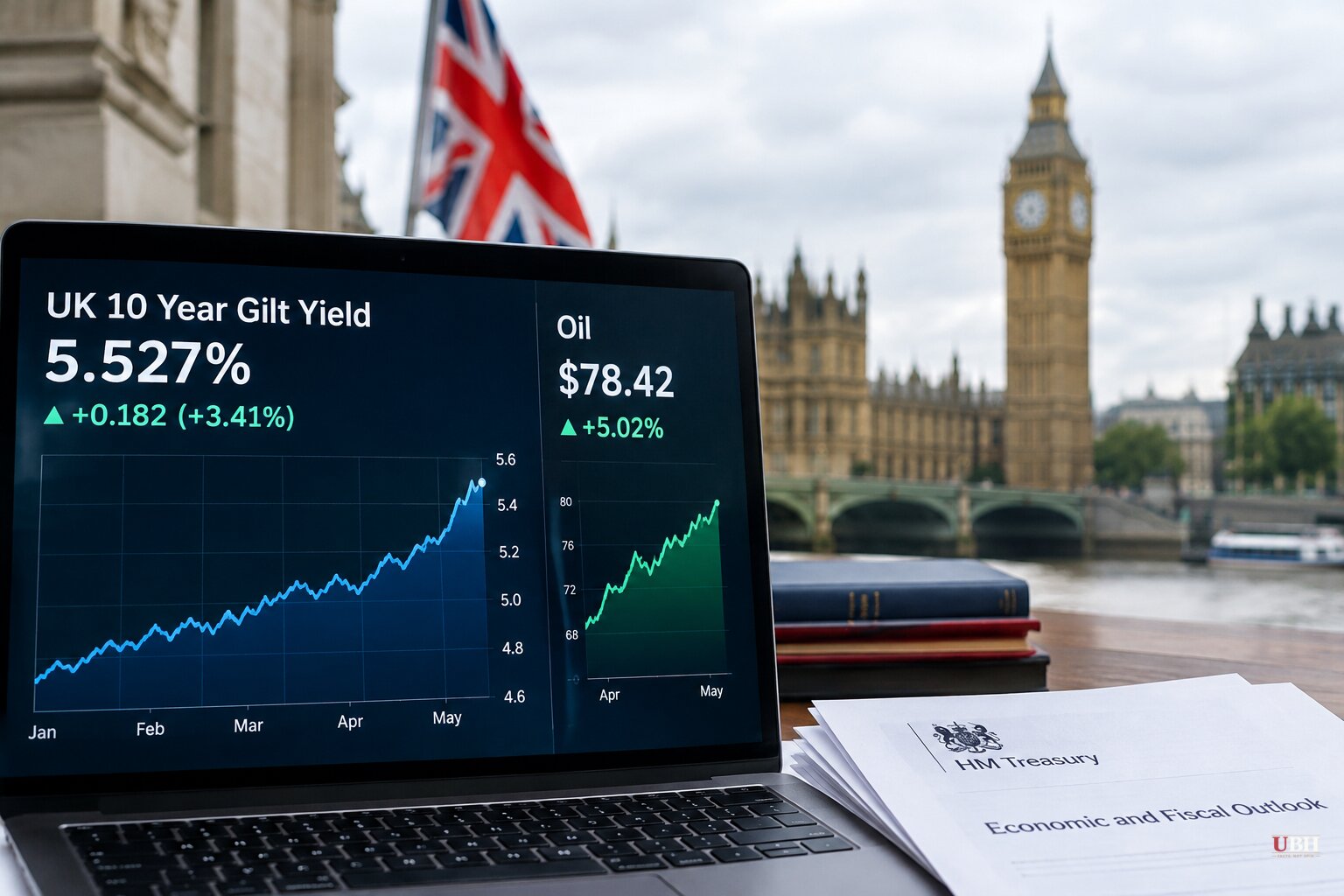
UK government borrowing costs hit new multi-decade highs on Thursday, and the chancellor faces his first budget on October 28 with the pressure mounting.
The yield on 10-year gilts rose to 5.527%, up more than 7 basis points on the day, according to LSEG data. That is the highest since July 2007 and it breaks the previous peak of 5.51% set last week. The 10-year maturity covers much of Britain's new borrowing.
The long end moved too. Yields on 20-year and 30-year gilts reached 6.00% and 6.05%, the highest since early 1998.
Oil and a global selloff
This is not a UK-only story. Reuters reported that the move is part of a global bond selloff driven by a sharp rise in oil prices. Brent crude jumped 5% on Thursday to $105 a barrel, its highest since September 29. The trigger was attacks on shipping in the Gulf and concern that a hurricane will disrupt US oil production.
The selloff has intensified across big economies in recent days, with no resolution of the Middle East conflict in sight. France has been hit hardest as Paris battles to pass a budget, but the selloff has been widespread.
Investors are worried about both inflation and government spending. Daniela Hathorn, senior market analyst at Capital.com, said borrowing costs "remain elevated amid fiscal and political uncertainty," with governments "already struggling with weak growth and expensive debt servicing."
The Bank of England is leaning toward a hike
The Bank of England is widely expected to raise rates at its November meeting. Markets price in an 86% chance of a hike, up from 83% earlier in the session, LSEG data showed. The European Central Bank, the Federal Reserve and the Bank of Japan have already raised rates.
Bank officials spoke Thursday. Chief economist Huw Pill, who voted for a rise at the September meeting, said central banks need to work on controlling inflation. Monetary policy committee member Megan Greene told a Cape Town audience that UK wages could grow by around 3.5% in 2027, which she called worrying.
Governor Andrew Bailey said policy requires "an unwavering commitment to returning inflation to target." He added that the financial system has so far weathered the latest uncertainty, but resilience "cannot be taken for granted."
Investors currently expect four rate rises, according to Berenberg Bank's Andrew Wishart.
Healey's budget math
Healey presents his first budget as chancellor on October 28. His predecessor, Rachel Reeves, built a £24bn buffer against Labour's fiscal rules at her spring statement in March. Economists believe higher borrowing costs and a weaker growth outlook have wiped out around half of it, and possibly significantly more.
Healey is expected to raise taxes to rebuild part of that cushion. He also has to pay for a six-month VAT cut on electricity bills and a modest energy support package for the poorest households.
That means new spending on top of a shrinking buffer, financed at the highest bond yields in nearly two decades.
The IMF is pushing governments toward restraint. Managing director Kristalina Georgieva, ahead of next week's annual meeting in Bangkok, said: "We cannot keep delaying necessary policy action – you have the tools, now have the wisdom to use them."
Disagreement over how far to go
Not everyone wants the chancellor to rebuild the buffer in full. Wishart of Berenberg Bank said that raising taxes to keep the surplus close to its March forecast size "would do unnecessary damage to economic incentives."
Wishart argues gilt yields are likely to fall over the next year, with the Bank of England making fewer than the four rate rises investors now expect. His case rests on that forecast, and the oil price and the Middle East conflict could undermine it.
Ebury head of market strategy Matthew Ryan put the market's test another way. If the chancellor "leans more on spending restraint and targeted tax hikes, rather than borrowing more or loosening the fiscal rules, then sterling and gilts could emerge unscathed," he said in a note.
The Guardian's reporting also notes that the recent bond moves were driven by international factors. Even so, the government has little control over oil, but it controls the budget.
What comes next
The immediate dates are fixed: the IMF meeting in Bangkok next week, the budget on October 28 and the Bank of England's November decision. Whether Healey rebuilds the buffer through taxes or spending cuts, or lets it stay thin, will show how the gilt market reacts to the first Healey budget.
Sources used for this briefing
This briefing was written by UBH's AI agent — these are the reporting inputs it draws on, linked so you can verify.


