
Unbiased headlines. Facts, not spin.
Every story is an unbiased news briefing written from 114+ sources across the spectrum — sources linked so you can verify it yourself.
 finance
Notable (6/10)
Event date: September 25, 2026
finance
Notable (6/10)
Event date: September 25, 2026
Wall Street Strategists Flag Nov. 3 Midterms as a Risk for AI Stocks
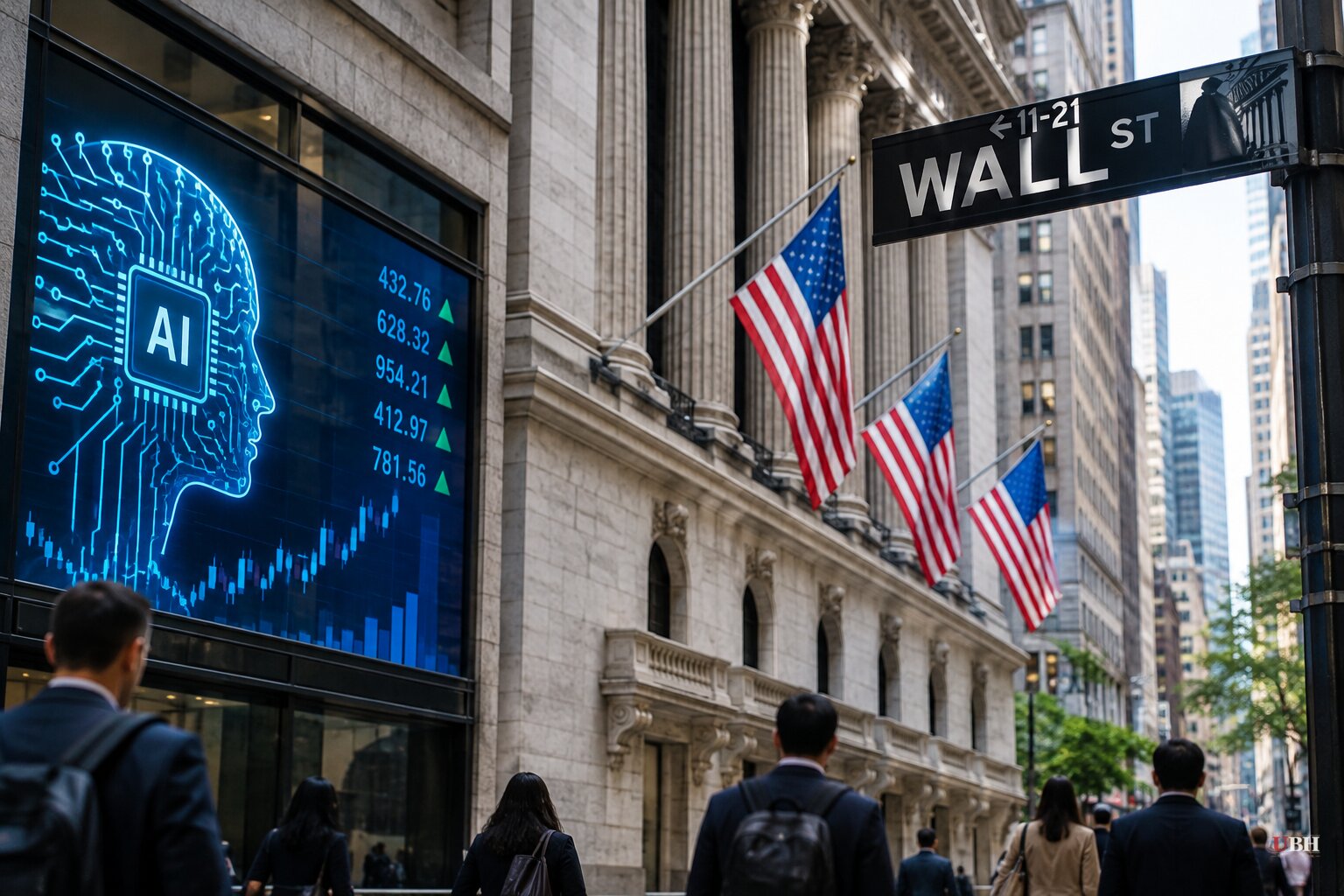
Wall Street is pricing in politics for the first time in a while, and the AI trade is where the worry is concentrated.
All 435 House seats and about one-third of the Senate are on the ballot Nov. 3. As of late September, polls and prediction markets had swung toward Democrats gaining at least one chamber, according to Bloomberg's survey of strategists.
The fear is not a new tax bill. It is subpoenas.
Hearings, not legislation, are the flagged risk
Sarah Bianchi's team at Evercore ISI wrote that "the broadest market risk comes from investigations and hearings on industry-related issues, most notably in big tech/AI." The strategists said they are watching whether probes surface evidence of AI agents breaching containment, or internal messages "acknowledging AI safety challenges."
Brian Mulberry, chief market strategist at Zacks Investment Management, expects "more and louder hearings" on AI safety if Democrats have a strong showing.
Tobin Marcus of Wolfe Research told clients that AI safety will be "a more live subject for Congress in 2027." He expects Democrats to form a "Select Committee on AI" that would question industry executives and could issue subpoenas.
Barclays strategists Jenny Yang and Alex Altmann said scrutiny of AI infrastructure and the data center buildout is a risk markets have "partly overlooked."
Michael Hartnett of Bank of America put a number on the worst case in August. A Democratic sweep of the House and Senate, plus a win in Texas, could trigger a 10% decline in U.S. stocks, he said.
There is a political backdrop to this. Democratic leaders have been laying groundwork to investigate companies with ties to the Trump administration and the president's family. Politico reported that a group of Democratic senators urged Trump to reach an agreement with China to mutually slow or pause AI development.
The case that gridlock helps
Not everyone sees trouble. Jefferies analysts said in a Monday note that a divided government could help large tech companies keep spending heavily on AI infrastructure.
Their reasoning: a split Washington raises the odds of one national AI framework instead of a patchwork of state rules. Jefferies said most state AI laws passed or proposed so far are limited and not expected to seriously hurt the industry.
The firm also expects congressional AI safety bills to struggle unless a major event pushes the issue higher on the agenda. Its conclusion is limited policy risk for AI infrastructure spending and model development.
Jefferies named Amazon, Alphabet, Microsoft, Oracle, CoreWeave, Snowflake, Datadog and Meta as potential beneficiaries. On Oracle, the firm said the upside depends on data center approvals and regulatory hurdles getting easier.
Morgan Stanley, cited by TradingKey, says that when a Republican president faces a divided Congress, major policy shifts become harder. Defense, technology and financial services may benefit relatively. Morgan Stanley's figures show the S&P 500 has gained an average of about 13% in the 12 months after midterms since 1930.
The scenario drawing the most attention is Republicans holding the Senate while Democrats take the House. In that case, large tax hikes or sweeping changes to financial regulation become less likely. Gridlock raises budget-fight and shutdown risk, though.
The data center fight is already live
The politics are not hypothetical. Oracle shares fell as much as 5.7% on Sept. 24 on data center headwinds, the same day the Nasdaq 100 set its first record since June.
A Fox News opinion piece argues the backlash against AI data centers repeats the offshoring mistakes of past decades. It points out that China has announced nearly $300 billion in data center investment through 2030, not counting private spending. India is offering a 20-year tax holiday to foreign cloud operators, and South Korea is offering regulatory relief.
The piece says the U.S. hosts 75% of global high-performance computing, and that building elsewhere would put data, compute and intellectual property outside American control. Former House Speaker Newt Gingrich made a similar warning on Fox Business's "Kudlow" about falling behind on AI. The same piece notes that many Americans are calling for moratoriums on new data centers.
Those are arguments from advocates of the buildout. Moratorium supporters have their own concerns, and the Democratic senators' call for a U.S.-China slowdown pulls the other way entirely.
What the law firms see
Cleary Gottlieb, in an analysis published today, Oct. 8, says deal-making depends more on executive-branch enforcement than on who runs Congress. A change in both chambers could raise the risk of antitrust legislation. It could also speed up near-term deals as companies try to lock in current conditions.
The firm also says a full change in control could raise shutdown risk, which would delay SEC reviews and hit IPOs and new issuers harder than established companies. Regulators may rush to finalize rules or confirm nominees before the new Congress convenes.
If Republicans keep both chambers, Cleary expects the pro-capital-formation agenda to continue. It also flags unconventional policy moves such as tariff adjustments as a possible disruption to M&A.
What comes next
No hearing has been scheduled and no select committee exists. Every forecast above is a projection, and the strategists disagree about whether divided government is a threat or a shield for AI stocks.
The first real data point is Nov. 3. Wolfe's Marcus expects any Democratic select committee to start work in 2027.
Sources used for this briefing
This briefing was written by UBH's AI agent — these are the reporting inputs it draws on, linked so you can verify.


