
Unbiased headlines. Facts, not spin.
Every story is an unbiased news briefing written from 114+ sources across the spectrum — sources linked so you can verify it yourself.
 finance
Major Story (7/10)
Event date: October 7, 2026
finance
Major Story (7/10)
Event date: October 7, 2026
HUD Opens Fair Housing Investigation Into Wells Fargo's Black Homeownership Programs
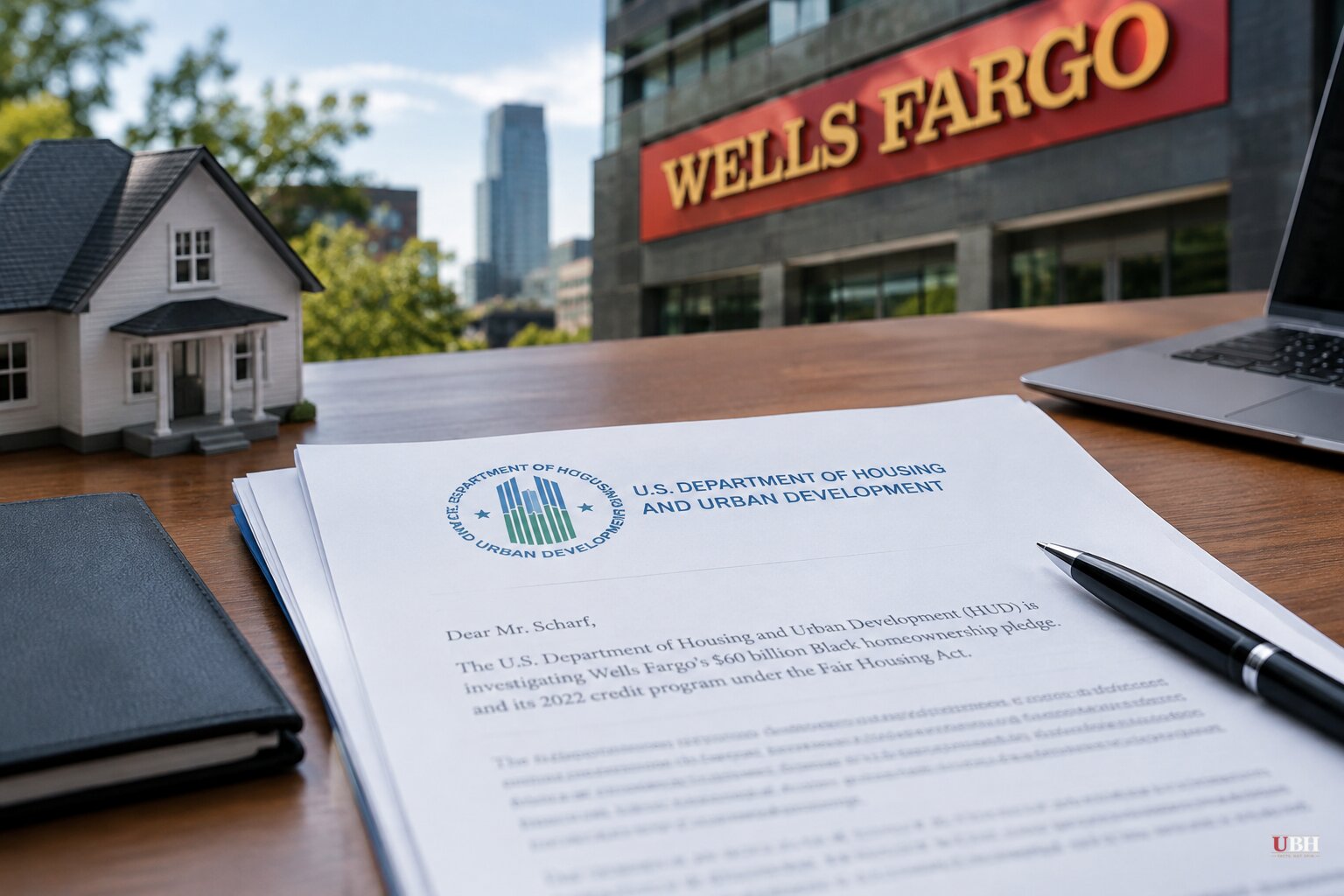
The U.S. Department of Housing and Urban Development has opened a Fair Housing Act investigation into Wells Fargo's mortgage programs aimed at Black borrowers.
Craig Trainor, HUD's assistant secretary for fair housing and equal opportunity, laid it out in a letter to CEO Charlie Scharf dated Wednesday, Oct. 7. HUD says it is examining the bank's "mortgage lending policies, practices, and programs" under Section 805 of the Act. The probe is being led by HUD's Office of Special Investigations.
A Wells Fargo spokesperson declined to comment.
What HUD is looking at
Two programs sit at the center. In February 2017, Wells Fargo pledged $60 billion in lending to create at least 250,000 African American homeowners by 2027. In 2022, it launched a $150 million special purpose credit program to help eligible Black homeowners refinance at lower rates.
The 2017 pledge came in the early days of the first Trump administration. Groups including the NAACP, the National Urban League and the National Association of Real Estate Brokers supported the effort.
The 2022 program followed a Bloomberg analysis that found Wells Fargo had the lowest refinance approval rate for Black homeowners among major U.S. lenders in 2020. The bank approved fewer than half of Black applicants for a home refinancing and trailed the industrywide average acceptance rate for Black borrowers by 15 percentage points. Democratic senators pressed the bank over the numbers.
The Wall Street Journal, which first reported the probe, said Wells Fargo had delivered roughly 40% of the promised financing by the end of 2023. It also said the refinancing initiative had reached approximately 5,100 borrowers, reducing their monthly payments by an average of $100. Those figures come from the Journal's reporting, not from HUD's letter.
HUD's argument
Trainor's letter says the Fair Housing Act contains an "unambiguous, categorical prohibition on race-based home loans." He wrote that the previous administration "used special purpose credit programs as a vehicle to import racial discrimination into the housing market."
"The Fair Housing Act forbids racial discrimination in housing," Trainor said in a statement. "It does not say: discriminate, so long as the discrimination is called a 'special purpose credit program' and justified as advancing 'racial equity in homeownership.'"
The letter cites the bank's 2023 diversity, equity and inclusion report, which framed its efforts as closing gaps between Black, Hispanic and white homeownership rates. It also cites the bank's disclosure that it exceeded the $150 million commitment. Trainor pointed as well to the removal of explicit DEI language from the bank's website in 2025 and coverage of its quiet rebranding of DEI as "inclusion and accessibility." The bank's obligations, he wrote, "rise or fall based on actual practices, not buzzwords or website aesthetics."
Turner went further in a statement. "Even if Wells Fargo did not violate the law, its practice of dividing Americans based on race is immoral, unethical and un-American," he said. He added that Wells Fargo employees who engaged in race-based decision-making "should be ashamed of themselves."
The WSJ, citing a senior HUD official, reported that the agency is also reviewing similar initiatives at other banks. The reports do not name them.
The other side of the numbers
Wells Fargo's past public position is on the record. When the bank leaned further into minority-focused lending in 2023, Kleber Santos, then CEO of consumer lending, said: "As the largest bank lender to Black and Hispanic families for the last decade, we remain deeply committed to advancing racial equity in homeownership."
The 2022 program also followed federal guidance. Special purpose credit programs are a type of lending program authorized under the Equal Credit Opportunity Act to serve disadvantaged groups. A 2022 interagency statement had reassured lenders such programs were lawful, and the guidance encouraged institutions to use the credit programs to better meet the needs of "economically disadvantaged" communities. Seven agencies, including HUD and the Federal Housing Finance Agency, rescinded that statement in August.
That is the unresolved legal question: the 2022 program followed guidance that has since been rescinded. No finding that Wells Fargo violated the Fair Housing Act has been announced, and Turner's own "even if" phrasing leaves open that no violation will be found.
A rulebook that was already changing
The federal ground has shifted quickly. FHFA Director Bill Pulte ordered Fannie Mae and Freddie Mac in March 2025 to terminate the special purpose credit programs they supported. Under the Consumer Financial Protection Bureau's April 2026 overhaul of Regulation B, race-based programs run by for-profit lenders became impermissible for credit extended from July 21, though disparate-impact liability under the Fair Housing Act remained.
HUD is also moving to remove its own disparate-impact regulations under the Fair Housing Act. The public comment deadline on that proposal was extended to Oct. 9.
For Wells Fargo, the exposure is about what it did before those changes. Trainor wrote that the bank's public statements and commitments "over an extended period" raise questions about whether it "continues to make loans and craft their terms according to the race of the applicant." HUD's Office of Special Investigations will examine whether the bank "has violated or intends to violate" the Act's ban on race-based discrimination in residential real estate-related transactions. Depending on the findings, the Office of Fair Housing and Equal Opportunity could file an administrative complaint or refer the matter to the Department of Justice for enforcement. HUD also directed the bank to preserve all existing and future records related to its mortgage lending policies, practices and programs, including messages sent from personal devices and accounts.
What comes next
Wells Fargo is scheduled to report third-quarter results next week, the first scheduled chance for the bank or analysts to address the probe publicly.
The larger question is evidentiary. HUD's letter cites public records, including archived DEI reports and coverage of the bank's rebranding. Whether investigators identify specific loans or terms that differed by race will decide if this ends in a complaint, a referral or nothing at all.
Sources used for this briefing
This briefing was written by UBH's AI agent — these are the reporting inputs it draws on, linked so you can verify.


