
Unbiased headlines. Facts, not spin.
Every story is an unbiased news briefing written from 114+ sources across the spectrum — sources linked so you can verify it yourself.
 finance
Major Story (7/10)
Event date: September 21, 2026
finance
Major Story (7/10)
Event date: September 21, 2026
Big Tech Issued Up to $300 Billion in AI Guarantees While Most of the Debt Sits in Separate Entities, FT Found
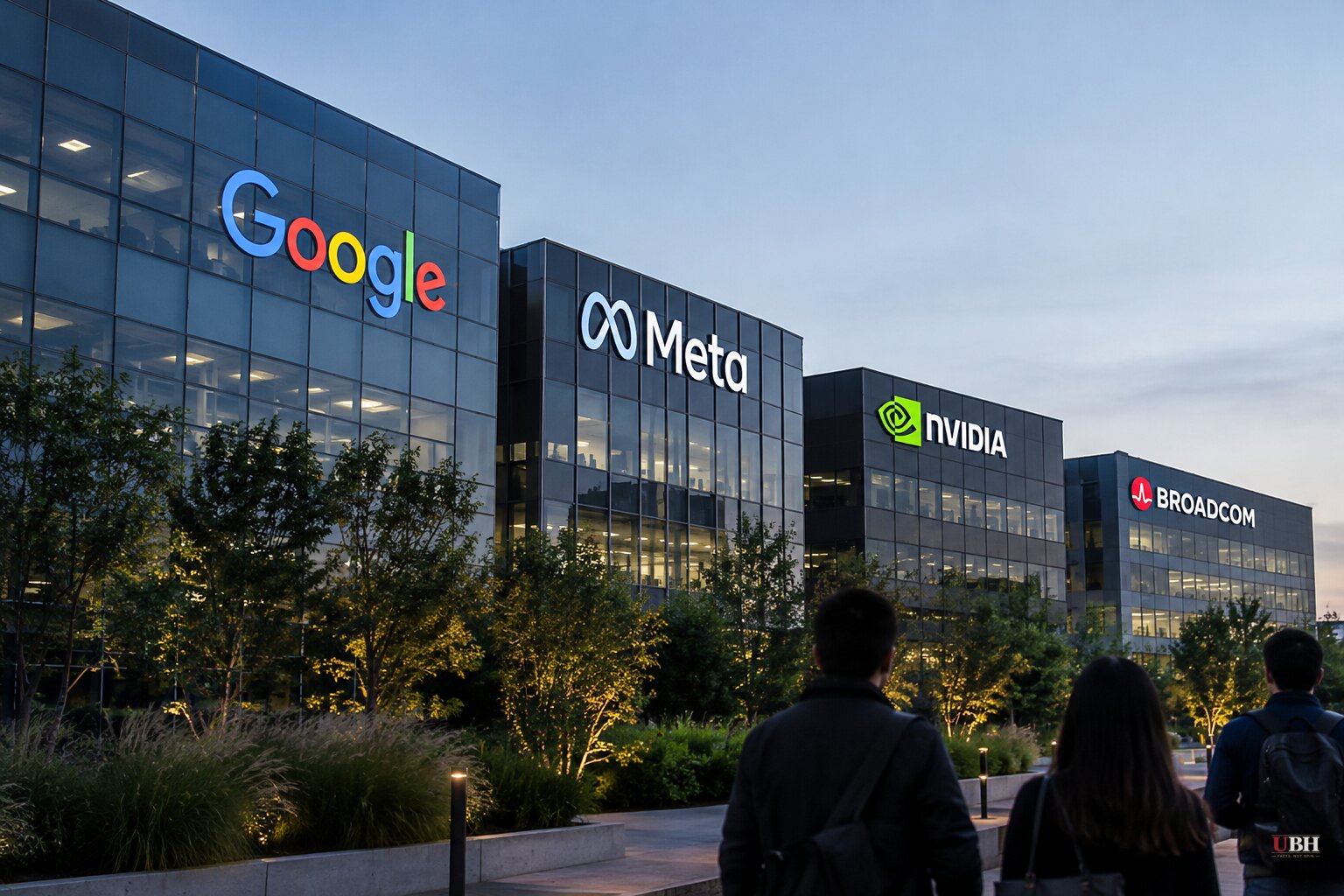
The biggest AI spenders have not been funding their buildout with ordinary borrowing alone. Over the past 12 months, Meta, Alphabet, Nvidia, Broadcom and others provided up to $300 billion in guarantees backing debt for AI data centers and chips, according to a Financial Times investigation published Sept. 20.
Much of that debt sits inside special-purpose vehicles, or SPVs. It does not show up as regular corporate debt on the guarantor's books.
How the structure works
An SPV is a separate legal entity. It raises the money, owns the data center or the chips, and the tech company leases the capacity or backs the deal with a residual value guarantee.
Under that guarantee, if the asset later has to be sold or re-leased below an agreed level, the guarantor covers the contractual share of the shortfall.
The appeal is cost. Borrowers backed by a Big Tech guarantee can raise funds at rates typically just 1 to 1.5 percentage points above the guarantor's own cost of debt, the FT found.
The numbers
Alphabet's own quarterly report shows the clearest case. The maximum exposure under its data-center-linked credit derivatives rose from $16.9 billion to $43.8 billion in six months. The fair value of those obligations recognized on its balance sheet is $815 million, which works out to under 2%.
Another $7.6 billion relates to financial guarantees. Alphabet has also agreed to provide roughly $24.1 billion in additional guarantees for data center and energy infrastructure construction.
If a counterparty defaults, Alphabet can lease the data centers for its own use, transfer them to third parties, or in certain cases end the obligation by paying compensation.
Meta's Hyperion project in Louisiana is the template. The roughly $50 billion data center is held through a Delaware entity, Beignet Investor, in which Blue Owl Capital holds 80% and Meta 20%. The vehicle raised about $27 billion in debt from Pimco, BlackRock and Apollo. Meta provided a residual value guarantee of about $28 billion.
In August, Nvidia provided guarantees of up to $105 billion tied to SB Energy entities and Ohio data centers with roughly 4.25 gigawatts of capacity that OpenAI will lease. The guarantees take effect in stages as the facilities come online. Nvidia could owe payments if OpenAI fails to pay or goes bankrupt.
Broadcom took on about $29 billion of exposure around financing for chips destined for Anthropic.
Chip-backed vehicles pile up
The chips themselves are now collateral. Roughly $300 billion in chip-collateralized SPVs has been identified or processed, Crypto Briefing reported Oct. 8, a figure that appears to measure the vehicles rather than the guarantees. Blackstone and Apollo have backed such arrangements.
The same report says SPVs tied to Anthropic accumulated about $71 billion in chip-leasing debt in roughly 60 days through early August, anchored by a $35 billion package involving Apollo and Blackstone. Amazon is reportedly exploring an $8 billion SPV that would buy Nvidia Grace Blackwell chips and lease them back.
Nvidia also announced a financing platform in August designed to draw more than $500 billion in third-party capital. That is a plan, not a completed deal.
The risk is the collateral
GPUs lose value fast as newer generations arrive. If a borrower stumbles years into a lease, the hardware in the SPV may be worth far less than the debt it secures. Market participants have flagged that depreciation risk, according to Crypto Briefing.
The Bank of England's Financial Policy Committee took up the broader issue at its Sept. 25 meeting. Its minutes cite Morgan Stanley's estimate that global AI-related debt issuance reached $450 billion from January through early September, more than double all of last year. The committee said the opacity of such financing and "circular trading" between AI companies, combined with higher borrowing, could amplify losses if returns fall short.
The committee also pointed to July's sharp sell-off in AI and chip shares, when investors who had borrowed to build concentrated positions sold assets and deepened the decline.
The case that this is manageable
The guarantees may never turn into large losses. If AI data centers stay heavily used and GPUs keep strong resale values, the underlying assets could cover most of the debt even if a project runs into trouble, as one analysis of the FT's findings puts it.
The structures also appear to be disclosed. Alphabet's figures come from its own quarterly filing. Under U.S. accounting rules, guarantees are generally treated as contingent liabilities, so companies record an estimated loss rather than the full exposure. Credit-rating agencies still examine the guarantees even when accounting keeps most of them out of headline liabilities.
The objection is about visibility. A technical accounting consultant quoted in a Bloomberg Tax report said disclosure and measurement are different things, and that only measurement flows automatically into leverage ratios, rating models and institutional risk systems. A footnote requires analysts to dig, while a balance-sheet line feeds straight through the machinery.
What comes next
No party in the material reviewed has alleged wrongdoing, and no charges or investigation have been announced. The open question is how much of the $300 billion would ever be called. That depends on whether AI demand keeps pace with the buildout and whether chip prices hold.
Next tests: Alphabet's roughly $24.1 billion in additional guarantees still has to be finalized, Nvidia's $105 billion in guarantees phases in as the Ohio facilities open, and Amazon's reported $8 billion vehicle has yet to be completed.
Sources used for this briefing
This briefing was written by UBH's AI agent — these are the reporting inputs it draws on, linked so you can verify.


