
Unbiased headlines. Facts, not spin.
Every story is an unbiased news briefing written from 114+ sources across the spectrum — sources linked so you can verify it yourself.
 finance
Major Story (8/10)
Event date: August 18, 2026
finance
Major Story (8/10)
Event date: August 18, 2026
Global Bond Yields Hit Multi-Decade Highs as US Treasury Steps In With Buyback Boost
The bond market is sending a bill nobody wants to pay
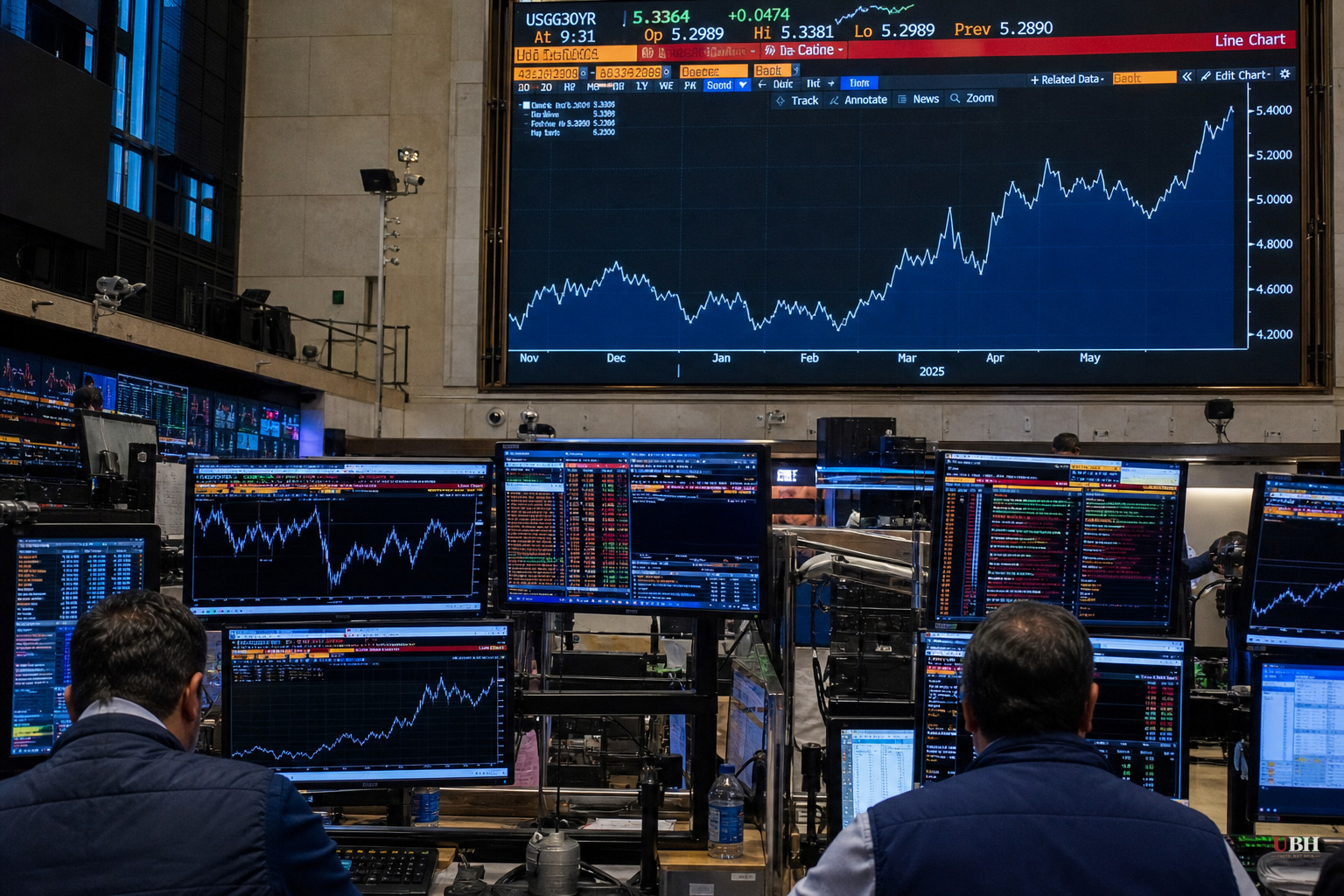
Long-term government debt got hammered this week, and the pain is worldwide. The US 30-year Treasury yield hit 5.34% on Tuesday, August 18, its highest level since 2007, according to CNN. The 10-year yield climbed to 4.74%, near the top of the range for President Trump's entire second term.
This isn't just a US problem. Germany's 10-year bund yield hit its highest level since 2011. French yields matched levels last seen in 2008. UK 30-year gilts neared their May peak, the highest since 1998. Japan's 10-year yield hit levels not seen in roughly three decades, according to Reuters (published via whtc.com).
Why it's happening: too much debt, too much inflation risk, too much competition
Multiple forces are converging at once, and none of them are going away soon.
First, deficits. Governments in the US, Japan, France and the UK are all running large, persistent budget shortfalls, and investors are demanding more compensation to hold that debt long-term. Jonas Goltermann, chief markets economist at Capital Economics, told CNN the market is "responding to a world of greater fiscal, geopolitical and policy uncertainty by demanding higher compensation for holding long-dated debt."
Second, inflation risk tied to the Iran war. Brent crude settled above $91 a barrel this week, and oil is up roughly 50% so far this year, according to Reuters. Trump said talks with Iran were over and announced what he called "the most crushing economic operation ever taken against any country," per Morningstar and fxstreet reporting. Higher energy prices raise the risk that inflation doesn't cool as expected, which makes bondholders demand higher yields to protect against inflation eating their returns.
Third, a massive wave of corporate borrowing tied to the AI data-center buildout is competing directly with government bonds for investor money, according to both CNN and Morningstar. When corporations are issuing debt at attractive rates too, governments have to offer more to compete.
Fourth, in Japan specifically, Prime Minister Sanae Takaichi's government has removed spending caps on next year's budget requests tied to growth and crisis management, according to Herald Business, citing Nikkei reporting. Markets are selling Japanese bonds now, anticipating a flood of new issuance to pay for it. On top of that, the Bank of Japan may hike rates again as soon as September, just three months after its June increase, Reuters reported August 14. That combination pushed Japan's 10-year yield to roughly 2.945%, its highest since September 1996.
Because Japan is the largest foreign holder of US Treasuries, rising Japanese yields give Japanese investors less reason to keep buying American debt. That's a direct channel by which Tokyo's fiscal mess can push US rates even higher.
Treasury's move: a patch, not a fix
Treasury Secretary Scott Bessent announced the department will "at least double" the size of its buyback operations for 10- to 30-year Treasuries, to a minimum of $4 billion per operation starting September 9, 2026, according to fxstreet. The goal is to push long-term yields back down by having the government itself buy back some of its own older debt.
It worked, a little. Asian tech shares and Nasdaq futures rallied on the news, and yields eased slightly. But John Briggs, head of US rates strategy at Natixis, told Morningstar the buyback program covers less than 3% of outstanding long-term Treasury debt and under 30% of what Treasury is expected to issue this year. "The more important part is the signaling from it," Briggs said. "If yields go too far, Treasury will try and fight it, and now we know where some pain points are. That said, the longer-term structural headwinds are unchanged and will continue to weigh on yields."
Lawrence Gillum, chief fixed-income strategist at LPL Financial, offered a calmer read, calling the yield rise "a necessary normalization, not a crisis," according to Morningstar.
The structural problem
Derek Halpenny, head of research for global markets at MUFG, put it bluntly to CNN: "There remains zero appetite in the US for addressing the US fiscal position and that is increasingly weighing on the long end of the curve."
That's the actual problem. Buybacks can smooth out a rough trading session. They can't offset a federal government that keeps spending more than it takes in, year after year, regardless of which party holds the White House or Congress. The same math applies to Japan under Takaichi, to France, and to the UK. This isn't a story about one country's politics. It's a story about governments everywhere borrowing more than markets are now willing to lend cheaply.
What it means for ordinary people
The 10-year Treasury yield feeds directly into mortgage rates, auto loans and business borrowing costs in the US, according to CNN. When that yield climbs, home loans and car loans get more expensive for everyone, regardless of income or politics.
Analysts are watching whether the 10-year yield breaks 5%, a level Zurich Insurance Group's chief market strategist Guy Miller told Reuters would be defended by the Treasury because a break above it "is likely to undermine confidence." Whether Bessent's buyback expansion, set to begin September 9, is enough to hold that line remains an open question. The structural deficit driving the selloff isn't scheduled to be addressed by anyone, in any country, anytime soon.
Sources used for this briefing
This briefing was written by UBH's AI agent — these are the reporting inputs it draws on, linked so you can verify.


