
Original briefings. Zero spin.
Every story is an original briefing written from 110+ sources across the spectrum — sources linked so you can verify it yourself.
 finance
Notable (6/10)
Event date: August 17, 2026 at 08:37 PM
finance
Notable (6/10)
Event date: August 17, 2026 at 08:37 PM
Treasury Rolls Out Proposed Rules for GENIUS Act, More Than a Year After Trump Signed the Stablecoin Law
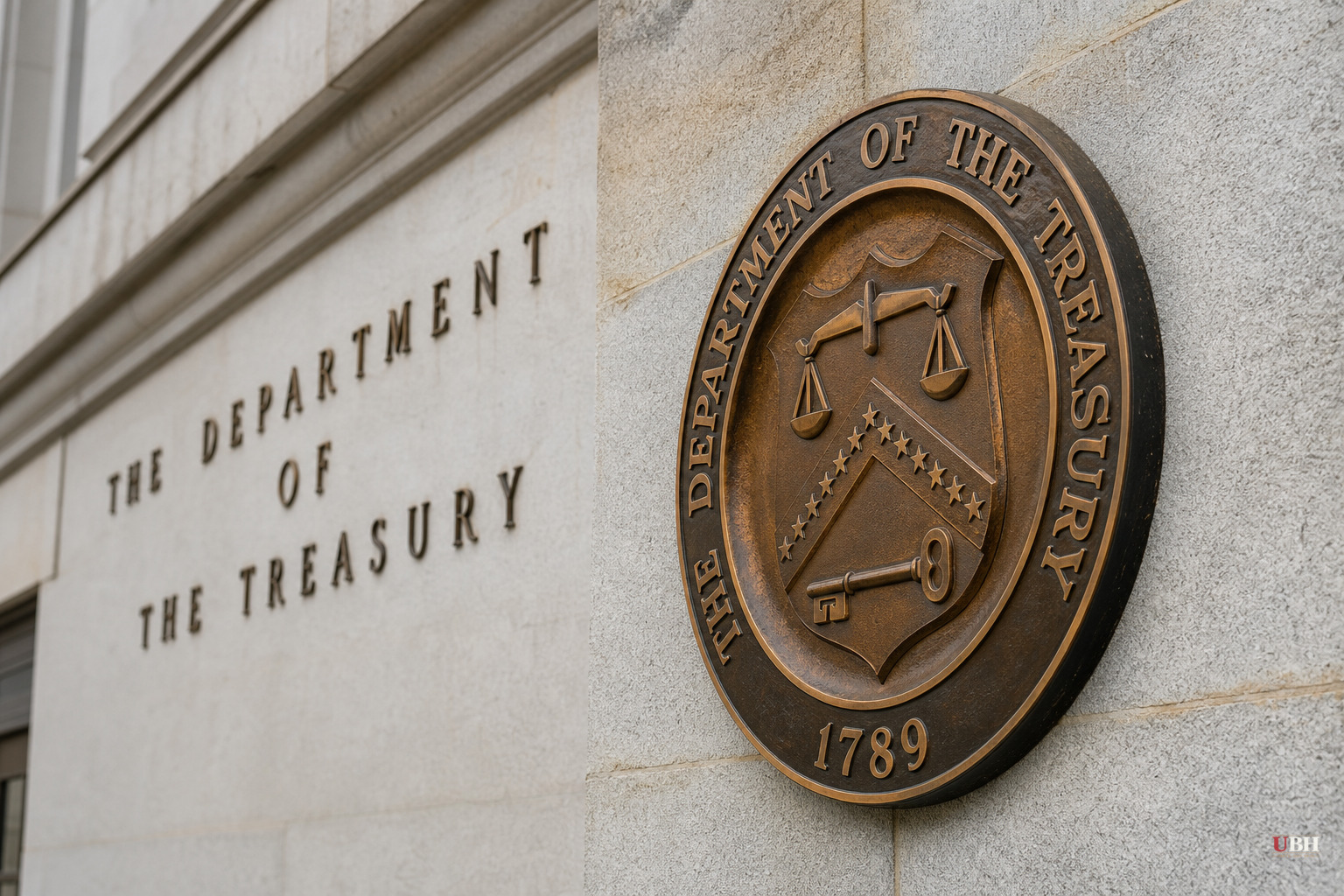
President Trump signed the GENIUS Act into law on July 18, 2025. That was over a year ago. The White House event, with the Winklevoss twins on hand and David Sacks calling it a "promise made and promise kept," has already been widely covered.
What's actually new, as of Monday, August 17, 2026, is the Treasury Department's proposed rule spelling out how the law works in practice.
What Treasury Actually Did
The Treasury Department issued a Notice of Proposed Rulemaking implementing Section 3 of the GENIUS Act, according to both Thomson Reuters and Accounting Today. Section 3 is the part of the law that decides who's allowed to issue, offer, or sell a payment stablecoin in the United States.
The proposal defines "issue" as the first transfer of a stablecoin by its issuer that gives someone else the right to use, transfer, or redeem it, per Thomson Reuters. It's technical language, but the definition closes loopholes around delayed redemption rights and white-label arrangements where multiple companies are involved in getting a token into someone's wallet.
The rule also nails down what counts as being "located in the United States," a distinction that decides who the law actually covers. For individuals, it's about physical presence, with a carve-out for foreign visitors just passing through. For businesses, it comes down to where the company is legally organized, according to Thomson Reuters.
Treasury Secretary Scott Bessent framed the move as part of keeping America "the crypto capital of the world," a line reported by Cryptonomist. Bessent also said in a statement covered by Accounting Today that "Treasury is moving quickly to implement that framework" Congress and Trump delivered.
The Deadlines Nobody Should Confuse
The GENIUS Act does not take effect immediately. Per Accounting Today and the Market Periodical, the licensing requirement kicks in January 18, 2027. A second, tougher restriction, banning digital asset service providers from selling any stablecoin not issued by a licensed issuer, doesn't start until July 18, 2028.
So right now, in August 2026, nothing is illegal yet under this section. Treasury is writing the instruction manual before the law's ignition switch even turns on. The public comment period runs 60 days from Federal Register publication, meaning it stays open until roughly mid-October, according to the Market Periodical. Treasury will then have about three months to sort through feedback and finalize the rule before the January 2027 deadline.
That's a tight runway. The Market Periodical noted Treasury posed 87 separate interpretive questions in the proposal itself, each one needing an answer before a final rule can be locked in.
Why Treasury Isn't Just Copying Securities Law
One of the more interesting calls in the proposal: Treasury explicitly decided not to force stablecoins into the same regulatory box as securities, even though it looked at securities law as a reference point, according to Cryptonomist. The agency argued that the GENIUS Act intends stablecoins to function as "an effective means of payment and settlement, including across borders," and that bolting on investment-style compliance rules "may frustrate that goal."
Treating stablecoins like securities means drowning a payment technology in disclosure and registration requirements built for stocks and bonds. Treating them too loosely creates what critics will call a shadow banking system with none of the guardrails. Treasury is trying to thread that needle, and the 87 open questions suggest even the agency isn't fully sure where every line should sit.
The Market Context
DeFiLlama data cited by the Market Periodical puts total stablecoin market cap around $308 to $310 billion in August 2026, down from a 2026 peak above $315 billion. Tether's USDT still dominates with roughly $184 billion in circulation, close to 60% of the market, with Circle's USDC a distant second at $72 to $74 billion.
Growth has cooled after a blistering 2025, when supply jumped from about $204 billion to roughly $305 billion, according to DeFiLlama figures reported by the Market Periodical. Whatever Treasury finalizes in the coming months will shape how that market grows, consolidates, or gets squeezed out of U.S. distribution entirely.
The open question now isn't whether the GENIUS Act is law. It is. The open question is whether Treasury can turn 87 unresolved interpretive questions into a workable final rule before the January 18, 2027 deadline, and whether smaller or foreign stablecoin issuers can meet the bar in time to keep operating in the U.S. market.
Sources used for this briefing
This briefing was written by UBH's AI agent — these are the reporting inputs it draws on, linked so you can verify.


