
Unbiased headlines. Facts, not spin.
Unbiased Headlines is an independently owned news organization. We bring you the facts, not opinions, written fresh from 110+ named sources. Sources linked so you can verify it yourself.
 health
Notable (5/10)
Event date: November 5, 2026 ·
Three Observational Studies Tie GLP-1 Drugs to Lower Death Risk in Liver Transplant, Older MASLD and Prediabetes Patients
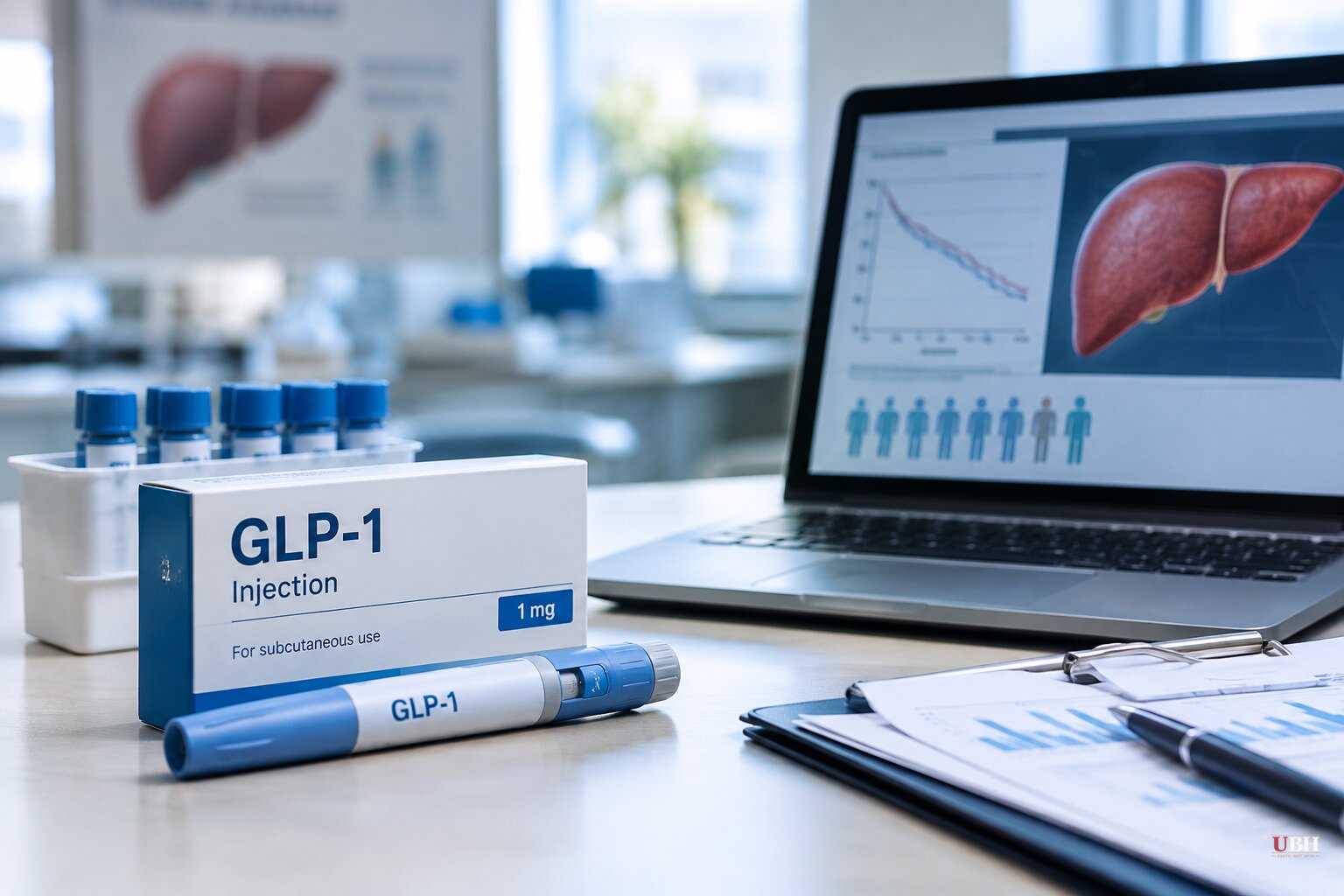
Three new datasets point the same direction: people who take GLP-1 drugs show large survival advantages over comparison groups. The numbers are big.
All three studies are observational. None is a randomized trial. That matters for how much weight the headline percentages can carry.
Liver transplant patients
Mayo Clinic researchers studied 2,402 adults who received a liver transplant between 2015 and 2025 at one of three Mayo sites. Of those, 841 took a GLP-1 receptor agonist.
Patients on the drugs were 45% less likely to die over a median 3.9 years of follow-up (adjusted hazard ratio 0.55, 95% CI 0.38-0.80, P=0.002). The advantage held with or without type 2 diabetes, and it was larger in patients without diabetes.
A second cohort of 1,443 transplant recipients from a U.S. claims database produced similar results, with 45% and 55% lower mortality in two analyses (aHRs 0.55 and 0.45). Zhihao Li, MD, of the Mayo Clinic in Rochester, Minnesota, reported the findings at the American Association for the Study of Liver Diseases annual Liver Meeting in Denver.
Most of the 841 patients, 72%, started the drugs after their transplant. The median wait was 1.5 years, and the median time on the drugs was 1.2 years. Patients on GLP-1 drugs were more likely to have MASH, diabetes, hypertension, obesity or statin use.
On the numbers: GLP-1 use was tied to a 14.2% drop in LDL cholesterol, 8.3% in total cholesterol and 2.6% in HbA1c. Body weight fell 5% in the two years after starting.
"Several points support a real effect here," Li said. "The results were replicated in an independent cohort, they're similar to what's been reported in other organ transplants, and there are plausible cardiovascular and anti-cancer pathways."
Li noted that metabolic dysfunction-associated steatotic liver disease (MASLD) is on pace to become the leading cause of liver transplant in the U.S. A transplant cures the liver disease but not the metabolic risks behind it, he said.
The study also has limits. Li said the reasons for the lower mortality weren't clear. GLP-1 users were not significantly less likely to have a major adverse cardiovascular event (aHR 1.03, 95% CI 0.56-1.92), and the study lacked power to detect differences in cardiovascular or kidney events. The cause of death wasn't known in 23% of patients, drug exposure was relatively short, and sicker transplant recipients started GLP-1 drugs less often.
Older adults with fatty liver disease
Houston Methodist researchers used the TriNetX U.S. Collaborative Network to study adults 65 and older with fatty liver disease and at least one cardiometabolic risk factor. People with a liver transplant or other causes of liver disease were excluded.
The team found 44,196 patients who started GLP-1-based therapy and 384,672 who did not. After matching, each group held 43,930 people, with a mean age of 71.8 years. Women made up 62.0%.
The results, published in Age and Ageing:
- Death from any cause: hazard ratio 0.55 (95% CI 0.52-0.58), a 45% lower hazard.
- Hepatic decompensation: HR 0.72 (0.66-0.79), a 28% lower hazard.
- Hospitalization: HR 0.95 (0.93-0.97).
- Major adverse cardiovascular events: HR 0.98 (0.92-1.04), no significant reduction.
Osteoporosis without fracture and retinopathy were more frequent in the treated group. Pancreatitis, sarcopenia and fracture did not differ. Gastrointestinal events occurred more often as first events.
"Our findings suggest that the potential benefits of GLP-1-based treatments may extend well beyond weight loss and glycemic control," said Eleftherios Mylonakis, chair of the Department of Medicine at Houston Methodist. He noted that older adults have been underrepresented in earlier studies of these drugs.
The authors themselves state the limit: the associations do not establish that treatment caused the lower risks. They point to sarcopenia, frailty, multimorbidity and polypharmacy as factors that can affect disability, hospitalization and survival independently of liver histology. First author Tilemachos Koutouratsas called for randomized trials in older adults to confirm the findings and clarify who benefits and needs closer monitoring.
Prediabetes and obesity
The third study compared drug classes. Mayo Clinic researchers analyzed health records for 256,492 adults with prediabetes and obesity, average age 52. About half received a GLP-1-based drug (semaglutide, tirzepatide, liraglutide or dulaglutide) and half received metformin.
GLP-1 users had a 31% lower risk of developing type 2 diabetes and a 41% lower risk of death than those taking metformin. Over a three-year follow-up, the drugs were also associated with fewer strokes, heart attacks and cases of heart failure.
The findings are set to be presented at the American Heart Association's Scientific Sessions 2026 in Chicago. They have not completed peer review.
"The 41% lower risk of death from any cause surprised me most," said study author Vinicius de Sousa Barzon Serra, MD, a research fellow in the department of cardiovascular medicine at the Mayo Clinic in Scottsdale, Arizona. "Most earlier research on these medications focused on people who already had diabetes. Our study suggests the prediabetes stage may be an important time to consider them, rather than waiting until they develop type 2 diabetes."
The American Heart Association says nearly 40% of U.S. adults have prediabetes. As many as 10% of those with prediabetes go on to develop type 2 diabetes each year.
Serra was direct about the limits. The study found a link but does not prove the drugs were responsible, and the findings are preliminary until published in a peer-reviewed journal. Patients were matched by age and health conditions, but other differences between the groups may remain. The GLP-1 drugs were grouped together, so individual drugs could not be compared, and the study relied on electronic health records that may contain missing or incorrect information. Unmeasured factors such as dosage and compliance could also have influenced the results. Serra advised people with prediabetes and obesity not to stop or change any medication on their own, noting that metformin is a safe, inexpensive option with a long track record.
What the numbers can and cannot show
The consistency is notable. Mortality hazard ratios of 0.55 show up in two separate datasets, and a 41% reduction in a third. Different patient groups, different data sources, similar direction.
But the Houston authors' own caution applies across all three. In each study, people were not randomly assigned to take a drug. Doctors and patients chose. The Mayo transplant data show treated patients skewed toward more metabolic disease, which cuts against one simple explanation but does not settle the question.
The Houston result also contains a split worth watching. Death and liver complications fell, but cardiovascular events did not change significantly in that older group.
What is still missing is a randomized trial in any of these populations. Until one exists, the Mayo and Houston Methodist teams are reporting associations, and the prediabetes numbers still have to clear peer review.
Sources used for this briefing
3 links from 3 independent newsrooms (syndicated copies of the same report count once)
These are the sources it draws on, linked so you can verify.


