
Unbiased headlines. Facts, not spin.
Unbiased Headlines is an independently owned news organization. We bring you the facts, not opinions, written fresh from 110+ named sources. Sources linked so you can verify it yourself.
 health
Major Story (7/10)
Event date: November 10, 2026 ·
CDC Director Says Measles Response Stays the Same Even If U.S. Loses Elimination Status
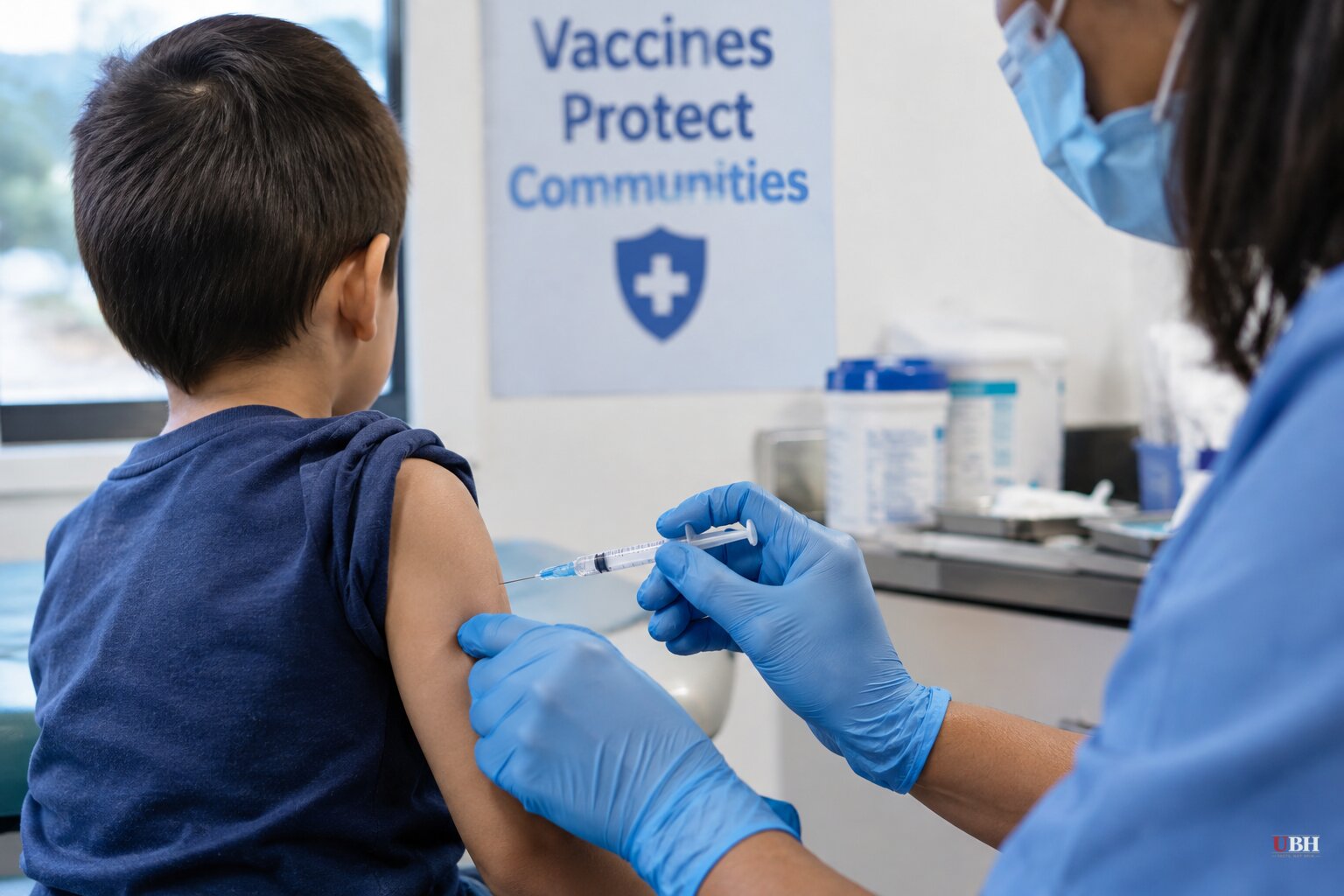
Since the Pan American Health Organization convened its review this week, the question has shifted from whether the U.S. will lose measles elimination status to what Washington plans to do about it. The answer from the CDC's director: nothing different.
Schwartz, confirmed as CDC director in August, told Reuters in an interview on Tuesday, Nov. 10, that the agency's approach will not fundamentally change. "Let's say we did lose our measles elimination status. We're going to be doing the same exact thing that we've been doing today, which is working with the states," she said.
That means awareness campaigns and pushing the combined measles, mumps and rubella (MMR) vaccine, which Schwartz called "the number one way to prevent measles." She said she expects a PAHO decision by early next week.
The numbers behind the review
The CDC's Nov. 6 update counted 5,182 confirmed cases as of Nov. 5. That compares with 2,289 for all of 2025 and just 85 in 2000, the year PAHO declared measles eliminated in the U.S.
State health departments have reported 11 deaths since early 2025. CIDRAP's tally puts at least eight of those in 2026 and three last year.
Brown University epidemiologist Jennifer Nuzzo, who directs the school's Pandemic Center, described the pattern as "popcorn: outbreak, outbreak, outbreak, outbreak. All over the country." Outbreaks grow, shrink and pop up somewhere else, she said. Nuzzo said the year's total could pass 7,000 before December ends, though she called that a possibility, not a forecast.
A country loses elimination status when transmission is re-established and continues uninterrupted for at least 12 months. That call belongs to PAHO's Measles and Rubella Elimination Regional Monitoring and Re-Verification Commission, an independent technical body. The commission's meeting in Washington runs through Friday, Nov. 13, according to CIDRAP.
At its November 2025 meeting, the same commission found measles endemic again in Canada. It rated the U.S. "sustained with major concerns," a category it shared with Mexico, Honduras and Venezuela. Several epidemiologists and infectious disease physicians told CIDRAP they expect PAHO to deem measles endemic in the U.S. The status question may turn on genomic sequencing data showing whether outbreaks are linked in one unbroken chain.
Where Schwartz puts the blame
Schwartz pointed to "closely knit communities" as the main engine of spread. Several outbreaks began in religious groups with lower vaccination rates, including the Amish in Pennsylvania.
"These communities typically don't vaccinate their children," she said. "Their families were making decisions about the MMR vaccine 20 to 30 years ago, and we're just now seeing the results of those decisions." Her stated priority: "leaning in on these close-knit communities" so they understand the vaccine's role.
The national data point to a wider drop. CDC figures show kindergarten MMR coverage fell from 95.2% in the 2019-2020 school year to 92.4% in 2025-2026.
The Kennedy factor
Schwartz reports to Health Secretary Robert F. Kennedy Jr., who has for years questioned the safety and effectiveness of the MMR vaccine and has sought to reduce the number of childhood immunizations. Medical experts have said his rhetoric and actions have fueled falling vaccination rates. Kennedy's own response to that criticism does not appear in Schwartz's interview.
In August, shortly after Schwartz's confirmation, President Trump and Kennedy announced an executive order calling for the combined MMR shot to be split into three separate vaccines. Pharmaceutical companies have said that could take years. Doctors have warned it could add confusion for families.
Schwartz's explanation, decisions by families decades ago in isolated communities, and the medical experts' explanation, current federal messaging, are different accounts of why coverage is slipping. The data released so far does not settle which carries more of the load.
One fact stands regardless of the label PAHO assigns: case counts in 2026 have more than doubled the prior year's total under the current approach, which Schwartz says will continue unchanged.
PAHO's commission is expected to rule early next week. If it declares measles endemic in the U.S., the country joins Canada, which lost its status last year, and the CDC will carry on with the same state-by-state, vaccine-promotion strategy it has used while cases climbed.
Sources used for this briefing
6 links from 6 independent newsrooms (syndicated copies of the same report count once)
These are the sources it draws on, linked so you can verify.


