
Unbiased headlines. Facts, not spin.
Unbiased Headlines is an independently owned news organization. We bring you the facts, not opinions, written fresh from 110+ named sources. Sources linked so you can verify it yourself.
 health
Major Story (7/10)
Event date: November 10, 2026 ·
MSHA Proposes Overhaul of Stayed Silica Rule as Black Lung Among Veteran Appalachian Miners Hits 50-Year High
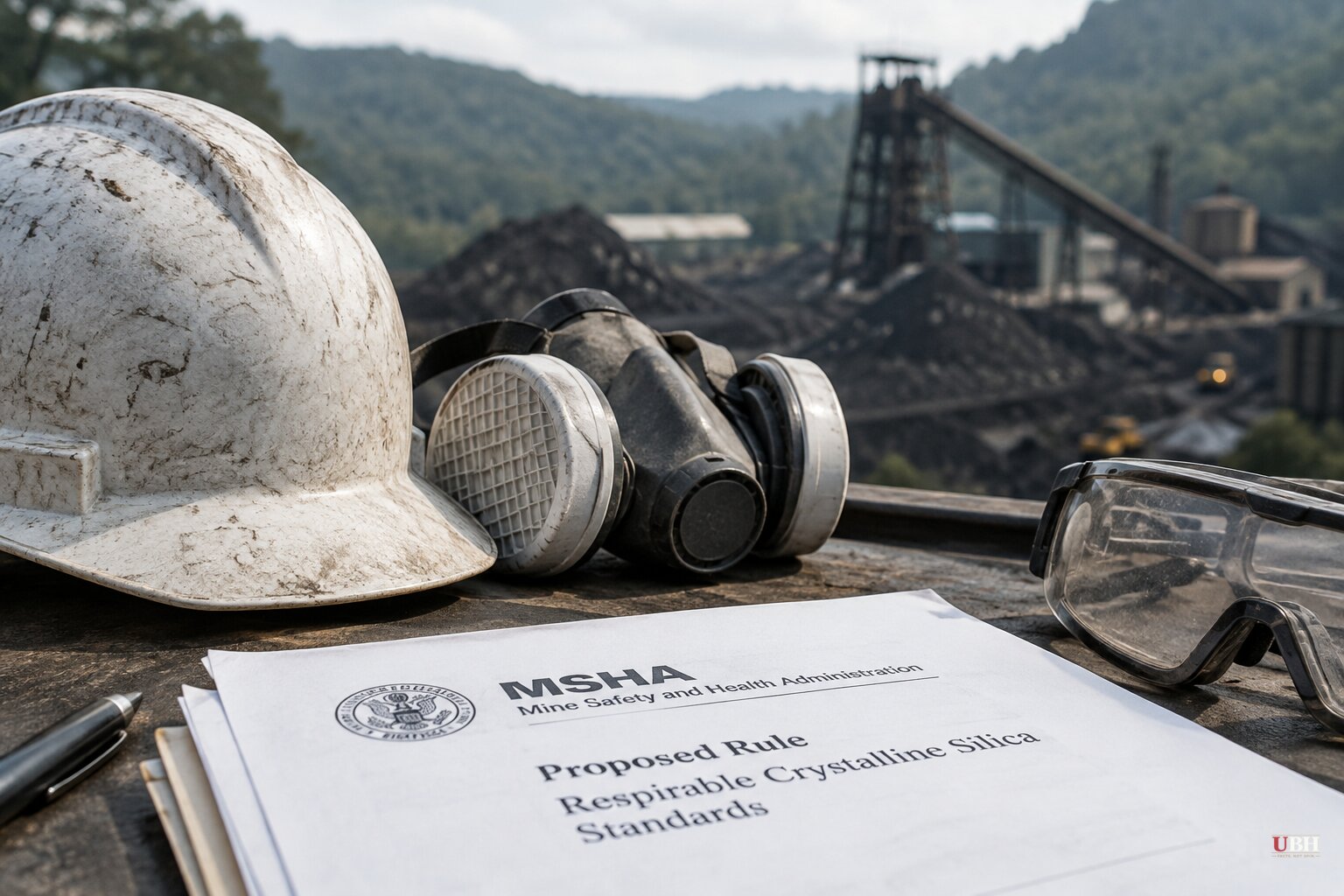
The federal rule meant to limit silica dust in coal mines has never been enforced. On Nov. 10, the Mine Safety and Health Administration (MSHA) proposed rewriting it.
The agency released an overhaul of the 2024 respirable silica standard, which it had stayed. The proposal is not final. MSHA will hold a virtual public hearing on Dec. 15 and is accepting public comments.
The numbers behind the fight
A research letter published in August in the American Journal of Respiratory and Critical Care Medicine found that 32.5 percent of underground coal miners in central Appalachia with 25 or more years of experience tested positive for coal workers' pneumoconiosis, the clinical name for black lung. Researchers screened 280 miners at mobile NIOSH clinics in 2026 and found 91 cases. That is the highest rate in roughly half a century.
An earlier NIOSH study counted at least 1,700 coal miner deaths from the disease between 2020 and 2023. MSHA's own regulatory impact analysis projected that full enforcement of the 2024 silica rule would prevent 1,067 deaths over miners' lifetimes.
Dr. Brandon Crum, a radiologist in Coal Run Village, Kentucky, was among the first clinicians to document the surge around 2016. The cases he saw were progressive massive fibrosis, the advanced form in which scar tissue fills both lungs. It has no treatment and keeps progressing after a miner leaves the mine.
The findings are the centerpiece of "Coal's Human Cost," a PBS Frontline documentary produced with NPR, Public Health Watch and the Appalachia + Mid-South Newsroom. Correspondent Howard Berkes has covered the issue since a 2010 West Virginia mine disaster that killed 29 miners.
What the proposal does
MSHA describes the proposal as a revision of the stayed 2024 standard. The full text of the changes was not available to advocates for long. Appalachian Voices and the Appalachian Citizens Law Center said their initial analysis found the proposal weakens protections in at least three major ways. They also said it is weaker than what the coal industry itself requested. Those are the groups' claims. They have not been independently confirmed here.
Quenton King of Appalachian Voices called the proposal "a death sentence." Brendan Muckian-Bates of the Appalachian Citizens Law Center said: "The administration said they wanted to bring back coal. Instead, under their watch, they are bringing back black lung."
Sens. Mark Warner (D-VA), Tim Kaine (D-VA) and John Fetterman (D-PA) issued a joint statement saying the changes "would result in more miners getting black lung disease." They noted they had warned in 2025 that the enforcement pause would likely lead to this.
The same advocates are not exactly fans of the 2024 rule either. Appalachian Voices called it "an important, if flawed, step forward." And the surge is not new. Crum documented it a decade ago, years before this administration. Berkes' reporting traces back through a 15-year record of what he calls federal regulators' failure to act.
Coal policy and miner safety
A report from Reimagine Appalachia and the Appalachian Citizens Law Center tracked 500 days of federal action from January 2025 to August 2026. It found the Trump administration advanced more than $1 billion in investments supporting the domestic coal industry while cutting miner safety and health initiatives. The report lists a failure to enforce silica protections, removal of staff who screen for black lung, fewer mine inspectors and inadequate compensation for affected families.
The administration has made coal a pillar of its energy agenda. In April 2025, President Trump signed four executive orders to boost the industry, including emergency authority to keep some older coal plants running. He also lifted barriers to coal mining and prioritized coal leasing on federal land.
Brian Sanson, president of the United Mine Workers of America, said in a September 2026 statement: "When federal regulators fall asleep at the wheel, coal operators step in and put production goals ahead of human safety."
Claims data and the state court fight
U.S. Department of Labor data show federal black lung claims in Kentucky rose from 3,956 in 2013 to 4,776 in 2024, then dipped slightly to 4,734 last year. Benefits paid there topped $46 million last year.
With federal action stalled, miners are going to state court. The UMWA and 52 miners filed an emergency petition on Oct. 29 with the West Virginia Supreme Court. They want the court to force the state Board of Coal Mine Health and Safety to adopt a silica dust limit.
Attorney Sam Petsonk, who represents the miners, said state silica rules were supposed to be passed in the 1980s but never were. He said the industry has "fought dust regulation with a fiery vengeance." The petition notes miners as young as their 30s have developed pneumoconiosis from mining thin-seam coal, which requires cutting more sandstone.
Petsonk said past state action has pushed MSHA to follow. "That's what, unfortunately, may have to happen at this time as well, given MSHA's abandonment of the silica rule," he said. Thomas Clark, administrator of the state board, did not respond to a voicemail seeking comment.
What comes next
The 2024 rule remains stayed while the proposal moves through the comment process. The Dec. 15 hearing is the first public test of the new text. The West Virginia Supreme Court has not yet acted on the miners' petition.
Sources used for this briefing
7 links from 7 independent newsrooms (syndicated copies of the same report count once)
These are the sources it draws on, linked so you can verify.


