
Unbiased headlines. Facts, not spin.
Unbiased Headlines is an independently owned news organization. We bring you the facts, not opinions, written fresh from 110+ named sources. Sources linked so you can verify it yourself.
 health
Notable (5/10)
South Australia seeks legal advice on proposal for states to sue tobacco companies for up to $50bn
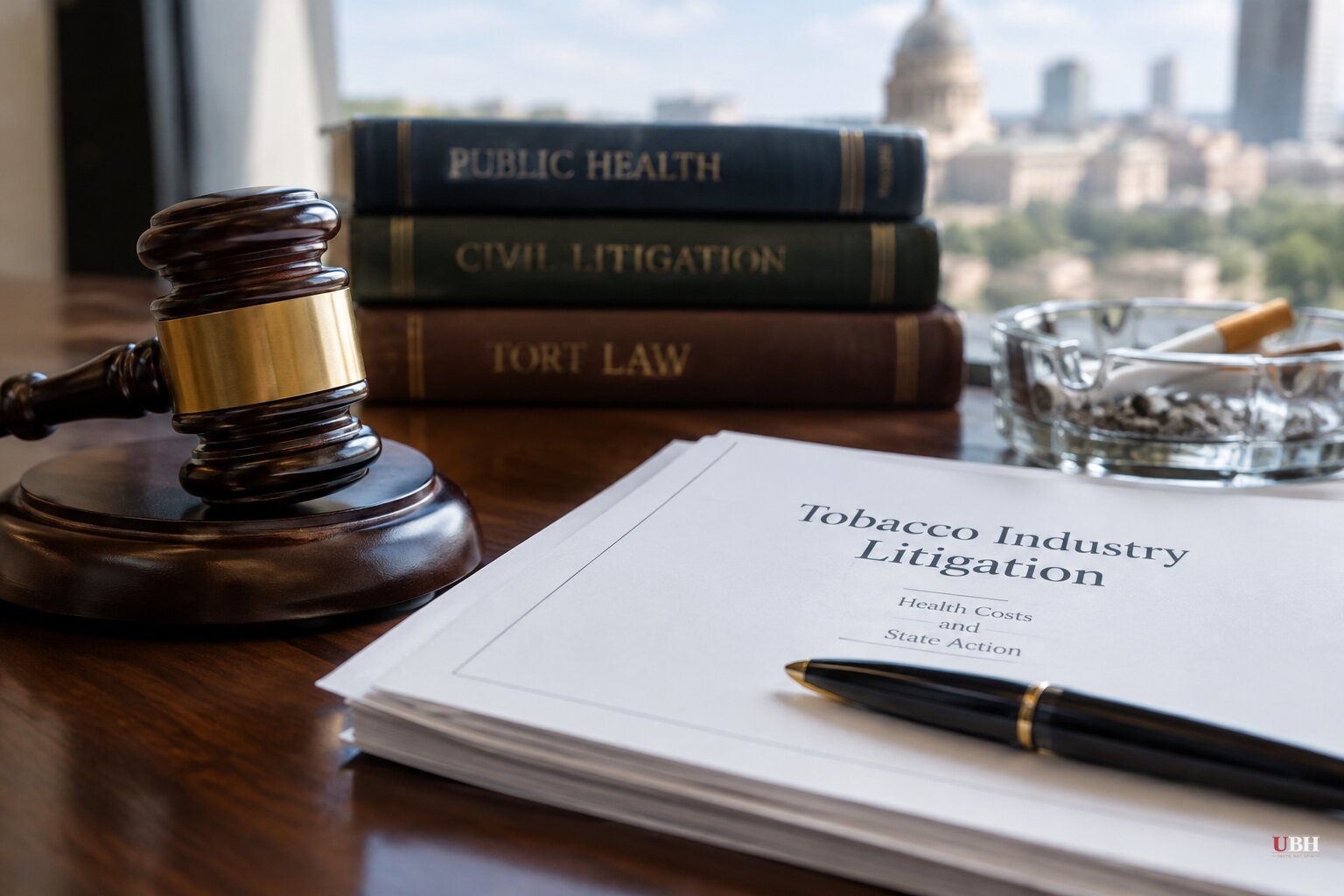
A proposal to put Australia's biggest tobacco companies in the dock for the cost of public healthcare is now in front of state governments. The South Australian government is formally seeking advice on it. Other states are reviewing it.
The plan was written by Neil Francey, a research affiliate at Sydney Health Law and a former barrister. It argues the states could file proceedings in the federal court seeking up to $50bn in compensation. The money would cover health costs and fund cancer screening and prevention programs.
What the proposal asks for
The targets are British American Tobacco (BAT), Philip Morris and Imperial Brands, plus their parent corporations overseas.
The legal theory is misleading and deceptive conduct under Australian consumer law. Francey argues the companies spent decades distracting and confusing smokers about the harms and addictiveness of cigarettes.
The proposal says the industry "has not been forced to bear the full costs of the harm caused by their product." In its words, those costs have fallen "either on smokers themselves, or by taxpayers when smokers get sick and receive publicly funded or subsidised health care."
The claim would cover healthcare costs the states have incurred since 2000. That is the year internal tobacco industry documents were published. The proposal says those documents showed the industry knew smoking caused serious disease but colluded to cover up and obfuscate the evidence.
Francey puts the number high. "I think you can justify a figure in the order of fifty billion, possibly even more," he said.
Six states, one legal team
Under the plan, the six state governments would pool resources and set up a joint legal taskforce to run a single case.
The Northern Territory and the ACT are left out. Francey said the territories are an arm of the commonwealth and that differences in healthcare funding arrangements could complicate the case.
He has briefed state government MPs. He is also presenting the blueprint at the Clinical Oncology Society of Australia's annual scientific meeting in Sydney on Thursday.
Why a state-led case
Francey has a track record here. In 1991 he represented consumers in a federal court case triggered by a Tobacco Institute of Australia advertisement. The ad claimed there was "nothing which proves scientifically that cigarette smoke causes disease in nonsmokers."
The court found compelling scientific proof that passive smoking causes lung disease and respiratory conditions in non-smokers, and ruled the industry's claims unlawful. That ruling accelerated workplace and public indoor smoking bans.
Francey says the new approach has a built-in advantage. Because state governments would be the plaintiffs, using consumer protection law, it sidesteps some of the obstacles individual smokers face in personal injury suits. In those cases, it can be hard to prove which brand caused the harm.
Where the companies stand
A BAT Australia spokesperson said the company does not comment on potential or pending legal claims. Philip Morris and Imperial Brands did not respond to requests for comment.
No company has laid out a legal defense. Nothing has been filed in any court, and no state has announced it will sue. The $50bn figure is Francey's own estimate, not a government valuation.
The taxpayer angle
This cuts two ways for the people footing the bill. Francey's argument is that taxpayers have been covering the health costs of smoking-related disease and that the companies should repay them.
A six-state federal court case against three multinational firms and their overseas parents would also be a large, long legal undertaking run by government lawyers. The taskforce would be paid for out of pooled state resources.
The next concrete step is South Australia's advice. The government has formally asked for it, and its content will show whether the state moves from reviewing the plan to backing a joint case. The other states have yet to say whether they will join.
Sources used for this briefing
4 links from 4 independent newsrooms (syndicated copies of the same report count once)
These are the sources it draws on, linked so you can verify.


