
Unbiased headlines. Facts, not spin.
Unbiased Headlines is an independently owned news organization. We bring you the facts, not opinions, written fresh from 110+ named sources. Sources linked so you can verify it yourself.
 health
Major Story (7/10)
Event date: November 11, 2026 ·
Big Pharma Has Struck 100-Plus Licensing Deals With Chinese Drugmakers as BIO Pitches a U.S. Counter-Plan
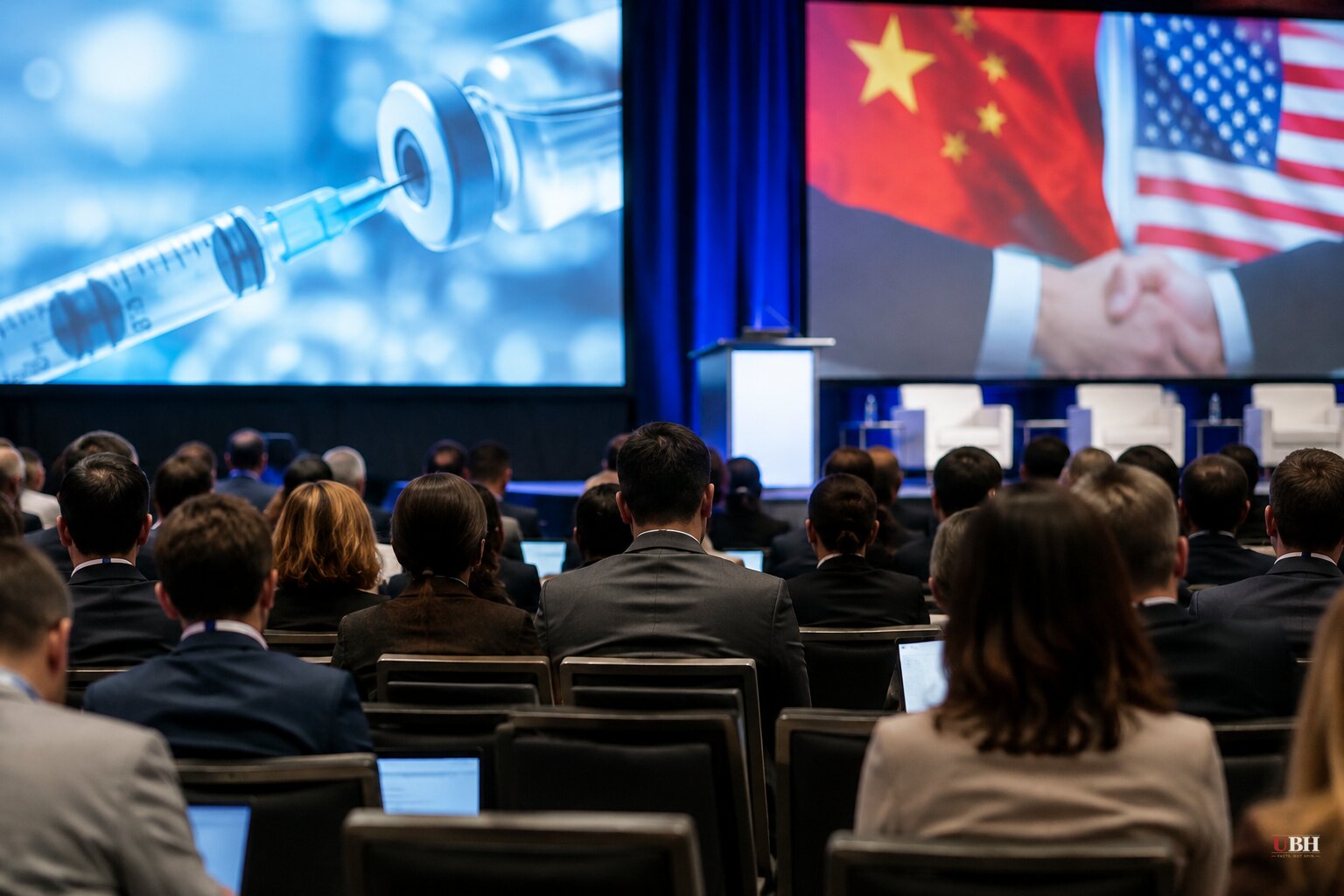
Western pharma is going shopping in China, and the receipts are piling up.
BioPharma Dive's tally shows more than 100 licensing deals between Western drugmakers or biotechs and Chinese companies. Obesity is a big piece of it. According to a market summary dated today, Nov. 11, outlicensing deals for weight-loss treatments have topped $47 billion since 2023, and nearly 250 Chinese GLP-1 candidates are in development.
Pfizer's first obesity product comes from China
Pfizer licensed mainland China rights to Sciwind Biosciences' injectable GLP-1 Ecnoglutide in February in a deal worth up to $495 million in upfront and milestone payments. The drug launched in China in April.
Pfizer CEO Albert Bourla said on the company's third-quarter earnings call that the market suits Pfizer. He compared it to Viagra. "People are willing to pay out of pocket for products that they value, irrelevant if they are reimbursed or not," Bourla said.
He said Pfizer already uses that self-pay model in China for the migraine drug Nurtec and the COVID treatment Paxlovid.
Chief International Commercial Officer Alexandre de Germay said the launch has gone smoothly. He described distinct patient groups: some want weight loss for "aesthetic-driven" reasons, while others have a lot to lose and will tolerate more side effects in exchange for stronger results.
Pfizer needs the foothold. Eli Lilly and Novo Nordisk have led obesity for years. Pfizer fought Novo in a 2025 bidding war for Metsera and bought the company, but Metsera's assets are still years from the U.S. market.
The prize in China is not yet proven. Novo Nordisk puts the country's GLP-1 market at under $1 billion. Nomura expects the global weight-loss market to grow from about $72 billion to $180 billion in a decade.
The pipeline is deep
GlobalData counts 47 Chinese companies developing 67 obesity drugs in China: 54 GLP-1 drugs and 13 using other mechanisms. Fifteen are in Phase III, 19 in Phase II and 33 in Phase I.
"Chinese drugmakers are following a two-fold approach," GlobalData analyst Abhishake Peyyeti said. They are making proven GLP-1 therapies more convenient, and they are developing mechanisms beyond conventional incretin biology.
Novo Nordisk agreed in September to pay up to $2.6 billion for ex-China rights to an experimental pill from Jiangsu Hengrui Pharma. Peyyeti also named AstraZeneca, Roche and Pfizer among the big companies that have signed billion-dollar deals over the past three years.
BIO says China now starts more than a quarter of the world's clinical trials and launches early-stage studies faster and cheaper. China's five-year plan, released in September, sets a goal of developing at least a quarter of the world's first-in-class drugs by 2030.
Washington's split response
The Biotechnology Innovation Organization has put out a seven-part plan called "BioAdvance: Securing America's Biotech Century." It targets faster drug development, better clinical trial infrastructure, more investment and stronger biomedical research support. It also asks for a "White House Office of Biotechnology" to coordinate the effort.
"This moment demands the ambition and determination that catalyzed the biotechnology revolution and made America the definitive global leader," said BIO President and CEO John Crowley.
The U.S. government has not picked a lane. The Treasury Department has floated adding biotech to the COINS Act, which could limit some deals and add scrutiny to U.S. biotech investments in China.
BIO opposes that approach. Crowley warned in October that the U.S. "cannot restrict our way to success." He said an overly broad approach "would create uncertainty for innovators and investors, and that may unintentionally risk weakening U.S. biotech competitiveness."
RA Capital Management has made a similar argument, saying putting biotech into the COINS Act "does nothing to shore up domestic manufacturing."
BIO is a lobbying group with its own members' interests at stake. It is also asking Congress and the Trump administration for new policy and a new office.
Gray-market fallout
The China connection has an ugly side. An RTL Nieuws investigation in the Netherlands found 203 online shops selling weight-loss drugs illegally. More than half are under six months old, and none appears on the official register of authorized online pharmacies.
The sites sell semaglutide and tirzepatide, plus retatrutide, an Eli Lilly drug still in testing and not approved anywhere. Buyers need no prescription. BNR ordered a dose of retatrutide from a Chinese supplier and was offered nearly 50 products, with a 20 percent discount and free shipping on orders above $5,000.
Dutch Customs said it had intercepted hundreds of peptide shipments, mostly arriving by courier, through September.
"There is an alarming number of them. It is a major societal problem," said Marloes Dankers of the Institute for Responsible Use of Medicines. Erasmus MC toxicologist Corine Ethlehem called it "cold-blooded business."
Insulin gets less attention
The Access to Medicine Foundation, a Netherlands-based nonprofit, warns that the obesity rush could pull company focus away from diabetes basics. Chief executive Jay Iyer said Sanofi, Lilly or Novo could leave the insulin market, which would be "disastrous" for people with type 1 diabetes. The foundation says weight-loss drugs carry far higher prices and margins than insulin.
Novo has announced plans to phase out some older diabetes products, including insulin pens. Sanofi has broken ground on a new insulin site in Frankfurt. Lilly won U.S. approval in September for a once-weekly insulin for adults with type 2 diabetes. Novo said it will review the foundation's findings, including ways to broaden access to analogue insulins.
The Treasury Department has floated adding biotech to the COINS Act, and BIO's plan sets the U.S. industry's counter-proposal against it.
Sources used for this briefing
6 links from 6 independent newsrooms (syndicated copies of the same report count once)
These are the sources it draws on, linked so you can verify.


