
Unbiased headlines. Facts, not spin.
Unbiased Headlines is an independently owned news organization. We bring you the facts, not opinions, written fresh from 110+ named sources. Sources linked so you can verify it yourself.
 defense
Major Story (8/10)
Third U.S. Carrier Heads to Mideast as Source Says U.S. and Israel Plan Iran Strike After Midterms
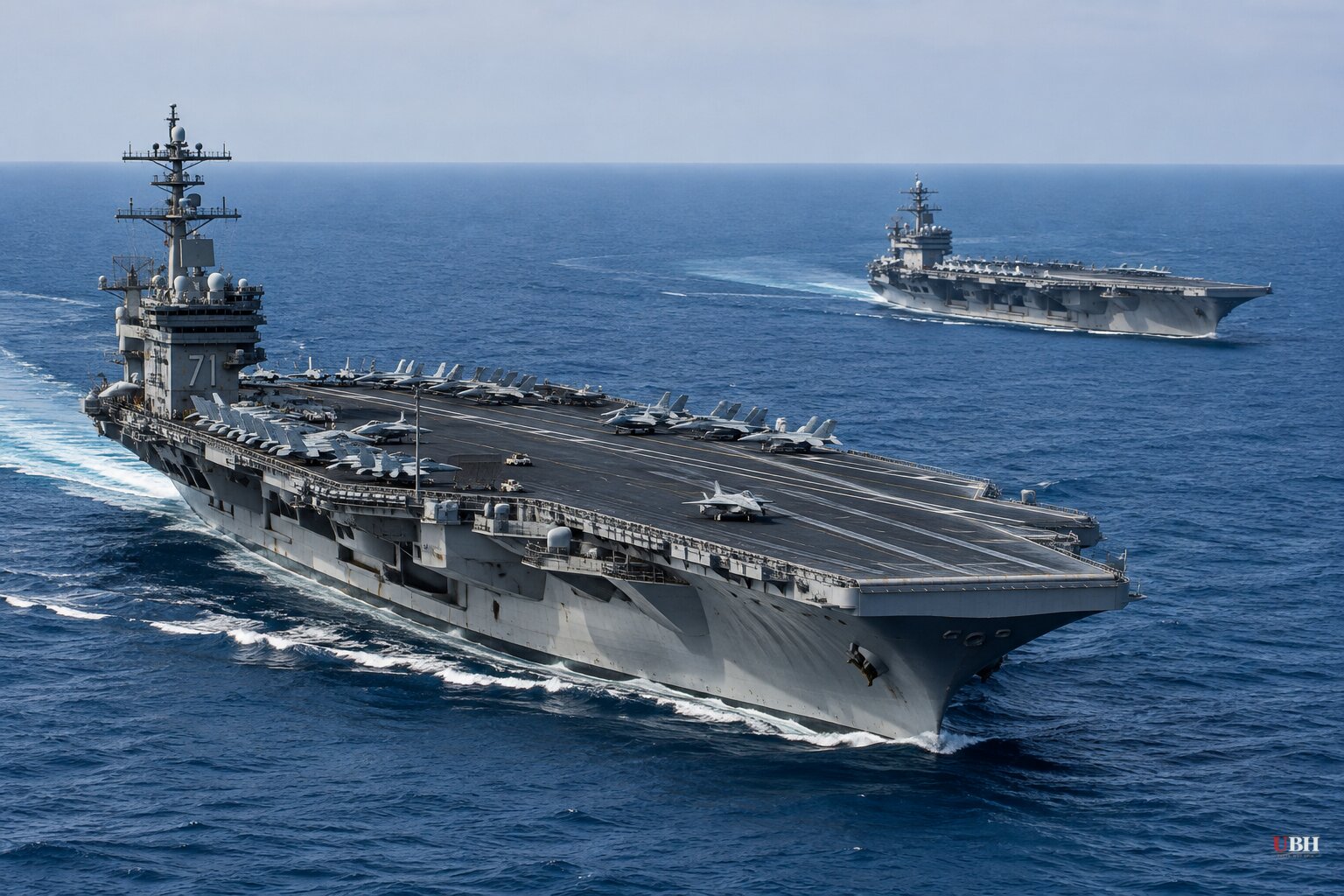
The U.S. military is adding firepower in the Middle East. A person briefed on U.S. and Israeli war planning told NPR that the two countries are preparing plans for a possible attack on Iran after the Nov. 3 midterm elections.
That account comes from a single anonymous source and has not been confirmed publicly by the administration. The physical moves around it are visible, though.
What is moving
The U.S. is sending a third aircraft carrier to the region, the USS Theodore Roosevelt. NPR national security correspondent Greg Myre said it will not arrive for another week or so.
Defense Secretary Pete Hegseth made a low-key visit to Israel this week and met Prime Minister Benjamin Netanyahu. Some State Department officials and their family members are leaving Saudi Arabia.
Myre described the combined signals as pointing to "the growing possibility, but not the certainty, of military action."
Trump's decision
Myre said the person who knows what happens next is Trump, "and he's being intentionally vague." Myre noted that earlier in this war the U.S. military prepared for one action only to have Trump call it off and go a different direction.
So the buildup is not a decision. It is the ability to act on one.
Why after the election
Myre said an attack looks much more likely after Nov. 3 than before. His reasoning: Trump wants lower oil prices, and military action would push them up.
The market is already reacting to the talk. Myre said Brent crude was at $114 a barrel, the highest since May.
Israel has its own deadline. Voters there go to the polls Tuesday, Oct. 27, and Myre said Netanyahu is battling for his political survival. The U.S. forces also are not all in place yet.
Iran's posture
Iranian Foreign Minister Abbas Araghchi said Thursday that his country is prepared for both diplomacy and war.
Iran continues to fire on oil tankers in the Gulf and the Strait of Hormuz. Iran claimed that seven were hit Thursday. Trump rejected that, saying it was untrue and an attempt to drive up oil prices. The two sides' accounts directly conflict, and no independent tally has been offered.
Iran has also said it could target a range of facilities in Arab Gulf states. Myre said Iranian missiles and drones have already hit oil and gas hubs, airports and commercial areas, causing significant damage. Iran would also try to hit U.S. bases and ships, he said.
The home-front bill
The war is already showing up at the grocery store. NPR's analysis found that Trump promised lower grocery prices, and while some items have gotten cheaper, overall grocery prices have risen. NPR cited higher labor costs, tariffs and higher energy prices tied to the conflict with Iran.
Ground beef reached $6.79 per pound last month, an 85% increase over a decade, according to the Bureau of Labor Statistics.
A strike that sends oil higher would add to that pressure.
Voters are already choosing
Almost 21 million Americans have already voted by mail or in person, according to the University of Florida's Election Lab. That is about 2 million more than the day before, per NPR's Saige Miller.
Early voting in key battleground states is significantly higher than in the last midterm. Miller cautioned that early data should not be overinterpreted as a predictor of final results. Democrats are voting early at higher rates than Republicans, but Democrats generally vote early more often and Republicans tend to turn out on Election Day, Miller said.
Separately, a federal judge in California is limiting the Department of Homeland Security's pre-election field operations. The agency says the operations aim to identify noncitizens who allegedly voted illegally in nine states.
What to watch
The carrier's arrival is the next hard marker, roughly a week away. After that come Israel's election on Oct. 27 and the U.S. midterms on Nov. 3.
Trump has the final call on whether any strike happens, and whether it happens in the window the anonymous source describes. The administration has not publicly laid out a timeline.
Sources used for this briefing
7 links from 3 independent newsrooms (syndicated copies of the same report count once)
These are the sources it draws on, linked so you can verify.


