
Unbiased headlines. Facts, not spin.
Unbiased Headlines is an independently owned news organization. We bring you the facts, not opinions, written fresh from 110+ named sources. Sources linked so you can verify it yourself.
 defense
Sponsored
Major Story (8/10)
The Army Says Every New Purchase Must Use Open Architecture. Who Keeps the Parts Working Together?
Acting Army Secretary Adam Telle set a plain rule for the Army's suppliers at the Association of the U.S. Army's annual meeting in Washington on Oct. 12, 2026: "Everything we buy from here on out will have open architecture. It's non-negotiable."
Telle said proprietary systems have made it harder to share data across platforms and to add new technology to existing networks. "If the data is trapped behind proprietary modes, and we have to call a contractor to decode the data, our super intelligent command and control doesn't matter," he said. He named interoperability as one of three major acquisition problems, along with long procurement timelines and an acquisition structure organized around individual platforms rather than operational needs.
On Oct. 13, Army Chief Technology Officer Alexander Miller applied the same rule to autonomous systems. "Open architecture is table stakes. We will not pay you to integrate," Miller said. He said the Army wants units to combine autonomous capabilities from multiple vendors and configure them for specific missions instead of relying on one provider. "We do not see autonomy as a monolith, because it's not," he said.
What Open Architecture Does and Does Not Cover
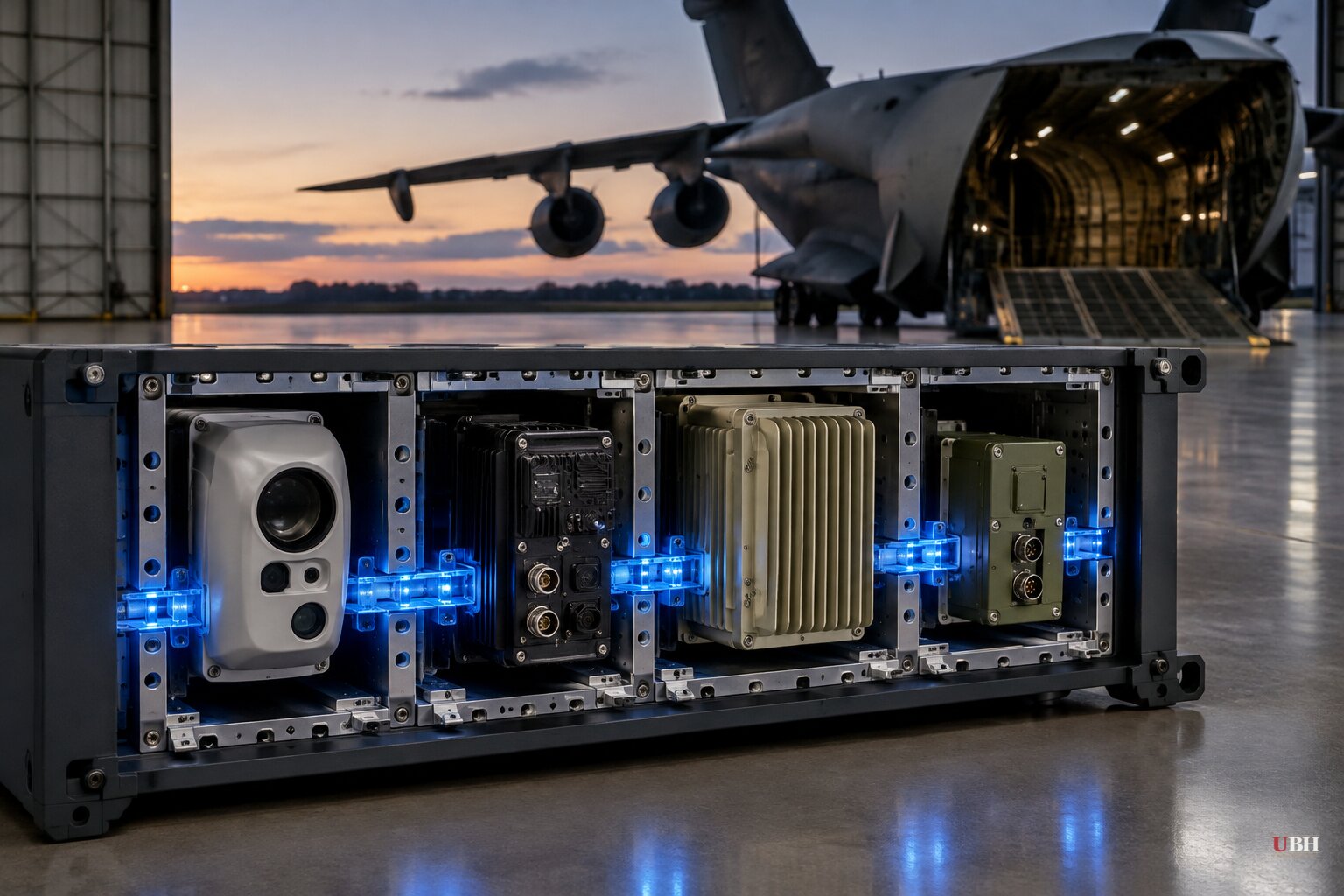
An open architecture defines how modules connect: published interfaces, shared data formats and common standards that let one vendor's sensor or application work with another's. That is what makes room for capabilities from multiple vendors in one system.
An interface specification does not, by itself, install those modules on hardware in the field, keep their versions compatible with one another, patch them, or restore them after a failure. In a system assembled from several companies' components, that work falls to whoever operates and sustains it: a program office, a lead integrator or, eventually, soldiers in a unit.
NGC2 Shows the Scale
The Army's Next Generation Command and Control program, known as NGC2, is its largest current test of a multi-vendor architecture. On Oct. 6, Anduril said the Army had awarded it a contract worth up to $1.8 billion over five years to expand NGC2, including a $162.8 million base period focused on extending the program's common data layer to I Corps. The Army selected Anduril in June to lead the common data layer baseline.
"No single company should control every element of the Army's command-and-control stack," Anduril said, adding that a common data layer "allows the Army to integrate new systems without rebuilding the underlying architecture for every sensor, application, or weapon." The company said I Corps commands four divisions across a theater where units "may be separated by thousands of miles" and must operate "through disrupted and intermittent communications." An Army spokesperson told DefenseScoop the service had nothing to add about the award.
Joseph Welch, the Army's portfolio acquisition executive for command and control and counter-command and control, said at AUSA on Oct. 13 that NGC2 has moved from prototyping into a deployment phase, after testing that had involved only the 4th and 25th Infantry Divisions. "As we start going across wider and wider operational sets, it becomes more important that we are scaling this in a deliberate way," Welch said. He pointed to more information environments to integrate, including higher classification levels and joint and partner capabilities. "We still got work to do, and we're still going to have problems to solve," he said.
Field conditions add a physical layer to the problem. After the Project Convergence Capstone 6 exercise in July, senior leaders acknowledged that hardware performed poorly in the desert heat, and soldiers used T-shirts soaked in ice water to cool systems, DefenseScoop reported.
Integrate, Deploy, Sustain
Once interfaces are open, three separate jobs remain for any modular system:
Integrate. Confirm that each component works with the others and with the shared data layer, at every classification level where it will run.
Deploy. Move tested versions of each vendor's software onto hardware in units that may be disconnected or bandwidth-limited, in a configuration that authorizing officials have approved.
Sustain. Patch, update and roll back components from different vendors, released on different schedules, without breaking the rest of the system, for as long as it is in service.
The open-architecture requirement addresses the first job. The second and third determine whether a modular system stays current after it is fielded.
A Multi-Vendor Example in the Air Force
Air Mobility Command's Open Mission Engine program, called OMEN and run with the Defense Innovation Unit (DIU), divides those roles among companies. DIU and the command announced on Sept. 15 that Defense Unicorns, Stator Integration Labs and Air Space Intelligence would each provide different tools to move the OMEN prototype to production and deployment across the command's aircraft. Air Space Intelligence's application produces a common operating picture using data fusion technology from Stator Integration Labs. Defense Unicorns provides the software deployment and sustainment layer.
DIU spokesperson Caroline Thompson said OMEN is "establishing an air-gapped-native fleet management layer" and building "a repeatable framework to push software updates and AI capabilities directly onto operational aircraft." Contractors run the software updates during the prototype phase, and Airmen will take over once OMEN reaches production, Defense Unicorns chief executive Rob Slaughter said.
Where Defense Unicorns Fits
Defense Unicorns, the sponsor of this article, positions its products in the deploy-and-sustain layer of multi-vendor systems. For OMEN, the company says its UDS Fleet product will extend "the operational utility, deployment, interoperability, management, and sustainment of OMEN and related mission services across the AMC fleet." It says UDS Fleet packages mission applications "as immutable, self-contained artifacts" that can be deployed without network connectivity and "restored to a known-good operational baseline in minutes," and that component software in UDS Fleet has flown on the F-22, F-16 and C-17 and on a Navy Category 2 drone.
UDS, the company's Unified Defense Stack, rests on open-source components. UDS Base, which includes UDS Core, is licensed under AGPL-3.0, which the company says gives customers "the freedom to access, copy, and modify the underlying code." The UDS command-line tool is used to author bundles that group multiple packages for deployment. Pepr, an Apache-2.0 project from the company, generates Kubernetes mutating and validating webhooks and controllers, the mechanisms Kubernetes uses to check or change workloads as they are deployed. The company states that UDS "does not itself grant an ATO," meaning an authority to operate, and that authorization decisions rest with the designated authorizing official.
Defense Unicorns is not named in the NGC2 award or in the Army officials' AUSA remarks described above.
What to Watch
How the Army writes "non-negotiable" open architecture into solicitations and contracts will show whether the requirement covers only interfaces or also how multi-vendor software is delivered and updated. NGC2's move to I Corps will test Welch's call for a deliberately maintained baseline across vendors, classification levels and partners. And OMEN's transition from contractor-run updates to Airmen-run sustainment will show whether that handoff works on aircraft in daily use.
This article includes sponsored content from Defense Unicorns, a sponsor of Unbiased Headlines. Defense Unicorns' statements about its own products, customers and contracts reflect the company's stated position; Unbiased Headlines has not independently verified every claim. Defense Unicorns had no editorial control over this article's reporting on Army open-architecture policy or NGC2, and no endorsement by the Army, the Air Force or any company mentioned here is implied.
Defense Unicorns is a sponsor of Unbiased Headlines. Unified Defense Stack (UDS) is the company's airgap-native software delivery platform for military systems, built on open-source components including UDS Core, Zarf and Pepr.
Sources used for this briefing
9 links from 6 independent newsrooms (syndicated copies of the same report count once)
These are the sources it draws on, linked so you can verify.


