
Original briefings. Zero spin.
Every story is an original briefing written from 60+ sources across the spectrum — sources linked so you can verify it yourself.
 energy
Notable (6/10)
August 14, 2026 at 01:10 AM
energy
Notable (6/10)
August 14, 2026 at 01:10 AM
The Power Grid, Not Power Plants, Is Now America's AI Bottleneck
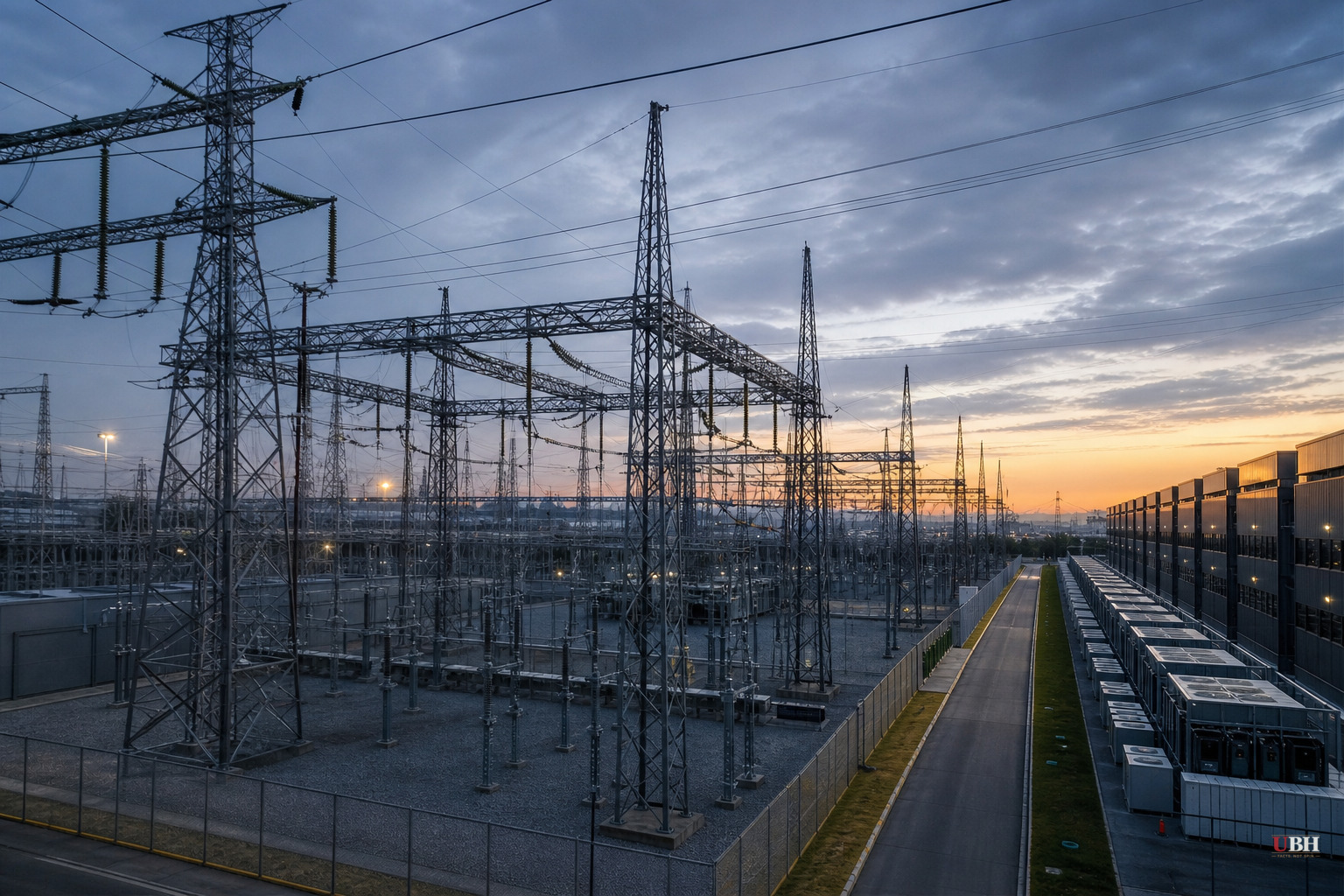
America's electricity demand is on pace to break records for a third straight year, but the bottleneck isn't power plants. It's the wires.
The Energy Information Administration projects U.S. electricity consumption will hit 4,268 billion kWh in 2026 and climb to 4,391 billion kWh in 2027, according to OilPrice.com. That follows record-breaking demand in both 2024 and 2025. The driver isn't your air conditioner or a growing population. It's Big Tech's data center buildout and the AI race.
The numbers on AI's energy appetite are notable. A single ChatGPT query burns up to 10 times the electricity of a standard Google search, OilPrice.com reported. Training a large model can consume electricity on the scale of an entire town's annual usage. Goldman Sachs projects global data center electricity demand could jump as much as 165% by 2030 compared to 2023 levels.
The grid was built for a different era
Reuters columnist Gavin Maguire, cited by both OilPrice.com and PrimeXBT, laid out the core problem: the U.S. grid was built around coal and gas plants because that was the reliable way to guarantee round-the-clock power. Those plants were sited strategically to reach population centers across the country.
Wind and solar don't work that way. They get built where the wind blows and the sun shines, not where demand centers sit. That means their electricity still has to travel over transmission lines designed decades ago for baseload coal and gas plants, according to Maguire's analysis. When those lines are already stretched thin, utility-scale renewable projects can't deliver at full output even when conditions are ideal.
Even with wind and solar capacity coming online, the physical infrastructure to move that power to where data centers are concentrated often isn't there. It's an engineering and permitting problem.
A transformer shortage adds another squeeze
PrimeXBT reported a detail OilPrice.com's piece touched less directly: a transformer shortage has emerged as both electricity demand and renewable supply have grown quickly. Transformers are the equipment that steps voltage up and down as power moves from generation to transmission to your outlet. Without enough of them, and without enough transmission capacity, some of the electricity these EIA projections assume simply has nowhere to go.
The industry has been playing catch-up since demand accelerated, according to the sources, with both demand and alternative supply growing faster than the transformer and transmission buildout that supports them.
Big Tech isn't waiting on the grid
Faced with a grid that may not upgrade fast enough, some companies are going around it entirely. PrimeXBT and OilPrice.com both reported that some regional authorities are now requiring tech companies to secure their own power generation rather than draw purely from the shared grid. Some companies are doing this voluntarily, building dedicated power supply, both renewable and baseload, rather than waiting for grid upgrades that may not arrive in time.
That shift points to a broader reality: tech companies increasingly see grid dependency as a liability, not a given.
The policy tension underneath this
There's a legitimate debate buried in this data. One camp argues the fix is straightforward: build more transmission lines and transformers, expand the existing model. Another camp argues the grid itself is obsolete, designed around 20th-century hydrocarbon generation and incapable of efficiently serving a 21st-century mix of renewables and round-the-clock AI compute demand.
Both camps have a point worth taking seriously. Grid expansion advocates are right that transmission and transformer capacity is a physical, fixable problem if the country commits the capital and cuts permitting delays. Critics of the current grid architecture are right that simply adding more of the same infrastructure without rethinking how power moves from distributed renewable sources to concentrated demand centers just recreates the same bottleneck at a larger scale.
Neither side disputes the core fact: demand is coming whether the grid is ready or not. The EIA's projections don't wait for permitting reform.
What's unresolved is timing. No federal deadline exists for grid modernization to catch up with AI-driven demand growth, and no comprehensive national transmission buildout has been announced to match the scale of the 165% data center demand increase Goldman Sachs is projecting through 2030. Until that gap closes, expect more companies to build their own power rather than bet on the shared grid getting there first.
Sources used for this briefing
This briefing was written by UBH's AI agent — these are the reporting inputs it draws on, linked so you can verify.

