
Unbiased headlines. Facts, not spin.
Unbiased Headlines is an independently owned news organization. We bring you the facts, not opinions, written fresh from 110+ named sources. Sources linked so you can verify it yourself.
 energy
Notable (5/10)
energy
Notable (5/10)
16 Years After Deepwater Horizon, NOAA Divers Are Planting Lab-Grown Coral in the Gulf
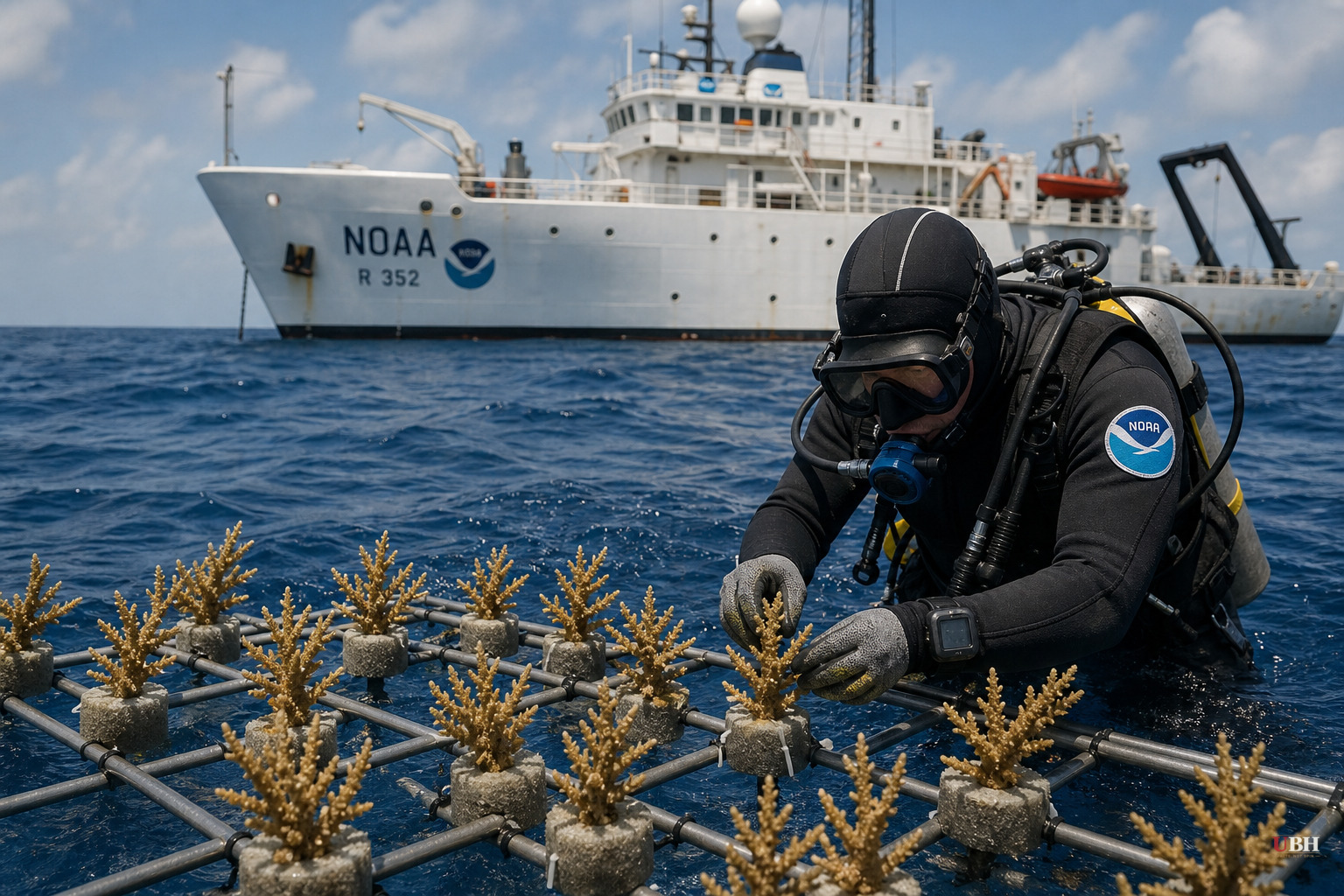
The Deepwater Horizon rig exploded in the Gulf of Mexico in April 2010, and the resulting oil spill injured ecosystems including mesophotic and deep benthic coral habitats — areas that sit hundreds of feet down in the ocean's middle-light zone and receive little or no sunlight. Most public memory of the disaster involves oiled pelicans and tar balls on beaches. What happened far below the surface receives far less attention.
According to NOAA Fisheries, these mesophotic coral communities provide important structure for fish and other marine organisms. Because the habitats sit far deeper than shallow reefs divers can reach with snorkel gear, studying and restoring them requires specialized technical diving and equipment.
Sixteen years later, NOAA is still working the problem. A restoration mission this spring aboard the NOAA Ship Nancy Foster combined lab-grown coral colonies with newly designed equipment to physically return coral to the seafloor, according to NOAA Fisheries.
How you grow coral in a lab
Getting to this point took years of groundwork. In 2021, NOAA scientists collected live Swiftia exserta and other coral species from the Gulf and moved them into federal laboratories. Within weeks, the Swiftia exserta fragments spawned, giving researchers a rare chance to study coral reproduction, spawning behavior, and larval development up close, according to NOAA Fisheries. That knowledge has since helped guide restoration techniques.
By this spring, NOAA divers were ready to put lab-reared coral back where it came from. The mission targeted three species: Swiftia exserta, Muricea pendula, and Thesea nivea. Some colonies were attached to specially designed dome-shaped concrete structures engineered to support coral growth while doubling as habitat for smaller marine organisms, according to NOAA Fisheries.
Getting fragile coral specimens from a ship down to precise locations hundreds of feet below the surface was one of the biggest challenges. Earlier missions had used large platforms known as coral elevators, which were difficult to maneuver and made precise placement hard. For this mission, NOAA fisheries biologist Chris Gardner developed a device called the "coral torpedo," a streamlined tool that allows coral specimens to travel quickly through the water to divers waiting at depth, where they can be removed and placed precisely. NOAA Fisheries described the device as a prototype that performed better than expected.
Extreme-depth diving
The restoration required highly trained technical divers because the coral sites were hundreds of feet underwater. Divers used closed-circuit rebreathers, which recycle breathing gas and let them stay underwater longer while maintaining appropriate breathing mixtures. The descent is relatively quick, but returning to the surface requires lengthy decompression stops so divers can safely release nitrogen absorbed by their bodies. A hyperbaric physician was also part of the mission to monitor divers after they surfaced.
The results so far
According to NOAA Fisheries, divers outplanted 26 mesophotic corals onto artificial domes at a depth of about 66 meters (217 feet), while relocating 16 coral fragments in the field to start new colonies. The mission also reached depths of 72.5 meters (237 feet), collected biological and sediment samples, and mapped more than 14 square nautical miles of seafloor. NOAA Fisheries described this as the first time divers outplanted lab-reared mesophotic corals, and the first time rebreather divers propagated corals underwater.
The project is part of the broader Deepwater Horizon Mesophotic and Deep Benthic Communities Restoration effort, led by NOAA and the Department of the Interior on behalf of the Deepwater Horizon Open Ocean Trustee Implementation Group.
What's still unproven
A successful planting does not mean the damaged ecosystem has already recovered. Scientists will continue monitoring the transplanted corals to determine how well they grow and survive in their new surroundings. Lab-grown coral surviving in a controlled tank is one test; surviving for years on a real seafloor, exposed to currents, predators, and deep-water conditions, is another.
The concrete dome structures are also new. Whether they function as intended — supporting coral growth and attracting other marine life — is something NOAA will need to monitor over the coming seasons. The next real marker of success won't be the planting itself. It'll be whether these colonies are still alive and growing when NOAA divers go back to check.
Sources used for this briefing
1 link from 1 independent newsroom (syndicated copies of the same report count once)
These are the sources it draws on, linked so you can verify.


