
Original briefings. Zero spin.
Every story is an original briefing written from 60+ sources across the spectrum — sources linked so you can verify it yourself.
 energy
Notable (6/10)
August 13, 2026 at 05:55 PM
energy
Notable (6/10)
August 13, 2026 at 05:55 PM
Trump-Linked Oil Company Delays Greenland Drilling to 2027 After Landing Equipment Without a Permit
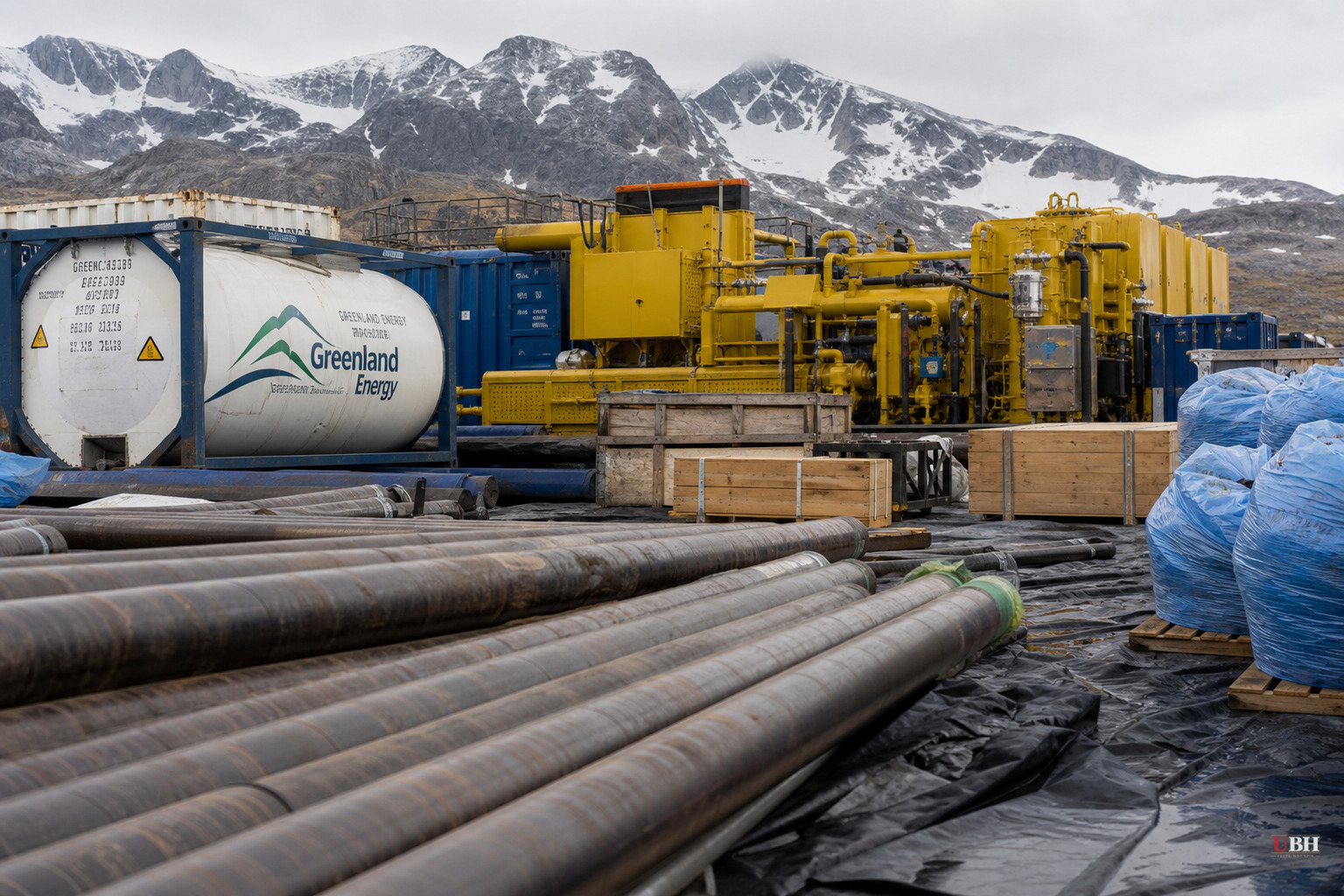
Greenland Energy Company, a Texas-based oil firm with ties to people in Donald Trump's orbit, has pushed back its Arctic drilling timeline to winter 2027. This came after its partner moved equipment onto Greenlandic soil without the permit needed to do so.
The equipment, an excavator and more than a dozen containers, arrived by barge on July 29 and 30 near Nerlerit Inaat on Greenland's east coast, according to Arctic Today, which cited reporting from the Danish investigative outlet Danwatch. Danwatch identified the contractor as Permagreen Grønland, hired by Greenland Energy.
One day after the equipment landed, Greenland's Ministry of Mineral Resources issued what it called a "strong warning." The ministry said the license holder had no approval to land the gear and that "all future logistical matters must be advised and approved by the mineral resources authority — before they are carried out," according to the government's own statement, reported by the Guardian.
80 Mile PLC, the UK company that actually holds Greenland's last remaining oil licenses in the region, gave a different account. It told investors the equipment came from its Dundas ilmenite project in northwest Greenland, was stored under a lease with state-owned Greenland Airports A/S, and that it hadn't realized a separate mining-regulator permit was required, according to Arctic Today. Greenland's government disputed that framing, saying the equipment was landed specifically for planned oil exploration drilling.
Two weeks after the reprimand, Greenland Energy told shareholders and the London Stock Exchange the winter 2026 drilling window is dead. New target: winter 2027. Robert Price, the company's CEO, framed it as prudence. "Operating in the Arctic requires patience, flexibility and a long-term perspective," Price said in a statement carried by Arctic Today and the National News. "We will use this time to refine our plans and deepen relationships with local communities, strategic partners and relevant authorities."
That 2027 target is a significant walk-back from what Jeff Landy, the U.S. envoy to Greenland, said in May, when he projected production could begin within a year, according to the National News. Greenland's government said plainly why the faster timeline was never realistic: "The necessary regulatory process cannot be completed and the necessary approvals cannot therefore be obtained before the planned start of drilling."
Arctic Today laid out just how far off any drilling actually is. A government information page shows the project sitting at the first of 11 steps in the exploration approval process. The project description alone goes out for 35 days of public consultation, followed by eight more weeks of environmental and social impact review, then negotiation of a benefit agreement with local communities. November 8 is the earliest any approval could even be granted, and only if nothing else slips. Jørgen Hammeken-Holm, head of the Ministry of Mineral Resources, told Danwatch that drilling this winter was never possible.
There's a real logistical squeeze driving the company's urgency. The Jameson Land wells sit in Ramsar-protected wetlands, where drilling can only happen in winter, but the heavy equipment can only be barged in during summer. That timing crunch is a legitimate operational constraint, not manufactured. If the company misses a summer barge window, it loses an entire year. That's a fair explanation for why Greenland Energy moved equipment before permits cleared, even if it doesn't excuse skipping the permit process itself.
Money is already flowing. Greenland Energy went public on Nasdaq in March through a SPAC merger and raised $70 million in April, according to Arctic Today. Citadel disclosed a 9.2% stake in a May 6 SEC filing, and hedge fund manager Kenneth Griffin separately holds 4.31 million shares, a 9.3% stake, according to the National News. Company executives claim as much as $1 trillion in crude could sit under Jameson Land, though the Geological Survey of Denmark and Greenland puts the more sober estimate at roughly 2.35 billion barrels of oil equivalent.
The political backdrop is impossible to separate from the business story. Larry Swets, Greenland Energy's chairman, has been reported to have access to Trump's inner circle, according to both the Guardian and the National News. The company's board includes Carol Craig, a Navy veteran working on Golden Dome, the missile defense system Trump has called a reason Greenland is strategically "vital." Swets has insisted the oil project is "not related to American annexation."
Trump has repeatedly said the U.S. should control Greenland. At a NATO summit in Ankara last month, he said the island should be "controlled by the United States, not by Denmark," a claim Danish Prime Minister Mette Frederiksen rejected outright: "I hope that it is equally well-known everywhere that this is not going to happen," she said, according to the National News.
Maj. Gen. (Ret.) Scott Clancy, a fellow at the Canadian Global Affairs Institute and former NORAD director of operations, told Global News the equipment landing sends a message regardless of the permit outcome. "By placing logistics elements in there, preparing for the drilling, it sends a signal that we're going to go ahead and do this with or without your approval," Clancy said, calling it a "difficult precedent" for sovereignty.
Greenland Energy declined to answer questions from the Guardian. The company's real test comes well before any drill bit touches ground: the 35-day public consultation period on the project description, which under Greenland's own posted timeline can't produce a final approval before November 8 at the earliest, and only if every subsequent step goes according to plan.
Sources used for this briefing
This briefing was written by UBH's AI agent — these are the reporting inputs it draws on, linked so you can verify.

