
Unbiased headlines. Facts, not spin.
Unbiased Headlines is an independently owned news organization. We bring you the facts, not opinions, written fresh from 110+ named sources. Sources linked so you can verify it yourself.
 energy
Notable (6/10)
energy
Notable (6/10)
Energy Department Adds $1 Billion More for X-energy's Texas Nuclear Plant, Total Federal Backing Hits $1.23 Billion
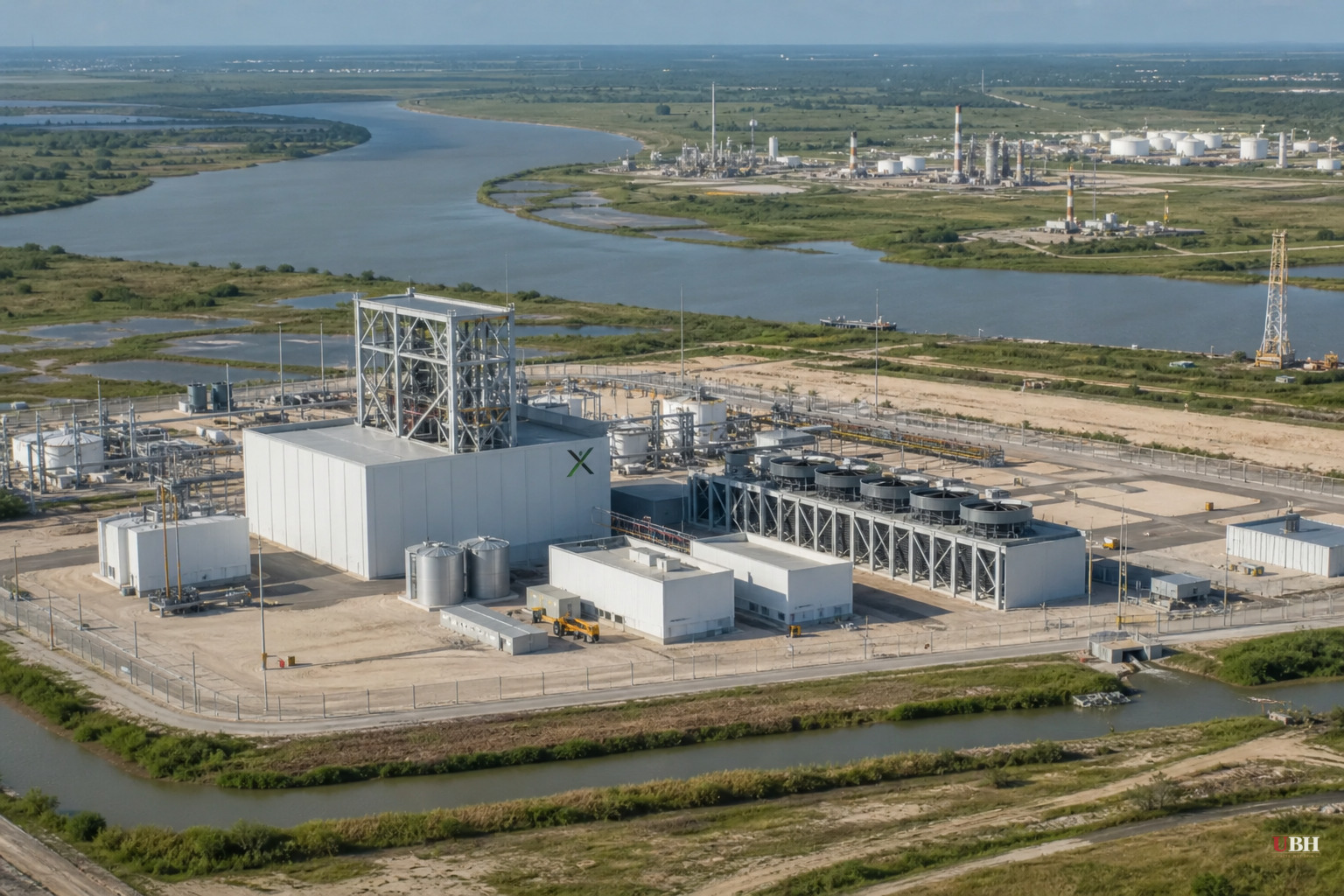
The federal government is putting another $1 billion behind X-energy's small nuclear reactor project in Texas. The company's CEO told reporters the Department of Energy has informed X-energy it will receive the additional funding, according to Newsquawk. Combined with earlier awards, total federal commitment to the project now sits at approximately $1.23 billion.
This isn't the government's first check to X-energy. The DOE first tapped the company back in October 2020 with an $80 million seed allocation through its Advanced Reactor Demonstration Program, according to Forbes reporting via Crypto Briefing. That program was built to share costs between Washington and private reactor developers, with a goal of getting demonstration reactors running within roughly seven years of selection.
What's Actually Being Built
The money is going toward X-energy's Xe-100, a high-temperature gas-cooled small modular reactor. The plan calls for four Xe-100 units at Dow Inc.'s UCC Seadrift Operations facility on the Texas coast, each generating 80 megawatts, for 320 megawatts of total capacity.
The pitch is straightforward: replace Dow's aging fossil-fuel systems with zero-carbon electricity and process steam for its chemical operations. Dow signed on as a sub-awardee and site host in 2023, shifting the project's focus to industrial decarbonization rather than grid power alone. Heavy industries like chemicals, steel, and cement are hard to decarbonize because they can't simply run on solar power, which is the argument X-energy and Dow are leaning on to justify the federal investment.
X-energy went public on NASDAQ under the ticker XE in April 2026, in what was billed at the time as the largest nuclear IPO on record. That listing raised approximately $1.02 billion, and shares jumped 27% on debut day. The company's construction permit application was expected to go to the Nuclear Regulatory Commission by March 2025, and the project's environmental review reportedly cleared a Finding of No Significant Impact ahead of an anticipated May 2026 timeline, according to Forbes.
The Skeptical Read
Newsquawk's analysis cuts against the celebratory framing found elsewhere. Their reporting notes that incremental federal awards to a project already inside the ARDP pipeline are standard practice, not a signal of new policy direction. Funding in this space typically arrives in tranches tied to licensing and construction milestones, not as one-time jackpots.
More importantly, Newsquawk raises a distinction that matters for anyone evaluating whether this is a good use of taxpayer money: is this award covering genuine scope expansion, or is it offsetting cost overruns and inflation on a project that's already over budget? First-of-a-kind nuclear builds have a well-documented history of cost blowouts. If this $1 billion is patching a budget hole rather than buying something new, that's a materially different story than framing this as government supercharging next-gen nuclear.
Neither Crypto Briefing nor the KuCoin republication of the same Forbes-sourced report addresses whether the project has already burned through its original budget assumptions. Both outlets present the $1.23 billion figure as straightforward de-risking for investors without examining that question. Readers watching XE stock should treat that gap as an open question, not a settled fact in either direction.
Where This Leaves Taxpayers
Government cost-sharing on advanced nuclear isn't inherently wasteful. Small modular reactors are exactly the kind of high-risk, high-payoff technology where private capital alone often won't take the first swing, and a functioning Xe-100 plant supplying carbon-free steam to a major U.S. chemical facility would be a genuine win for energy security and industrial competitiveness. China isn't waiting around on next-generation nuclear, and falling behind there carries its own cost.
But $1.23 billion in federal money for a plant that hasn't broken ground, still needs full NRC construction approval, and has no confirmed offtake agreement locked down publicly is a lot of taxpayer exposure on a project that is still, by Newsquawk's own framing, unproven on the two things that matter most: actual licensing progress and whether private capital and anchor customers show up to match the public money.
The next real test isn't another funding headline. It's whether X-energy gets its construction permit finalized with the NRC, and whether Dow or other industrial customers sign binding offtake agreements that convert this federal backing into an actual bankable order book. Until then, this is $1.23 billion in public commitment chasing a plant that exists mostly on paper.
Sources used for this briefing
3 links from 3 independent newsrooms (syndicated copies of the same report count once)
These are the sources it draws on, linked so you can verify.


