
Unbiased headlines. Facts, not spin.
Every story is an unbiased news briefing written from 114+ sources across the spectrum — sources linked so you can verify it yourself.
 energy
Major Story (8/10)
August 13, 2026 at 02:26 PM
energy
Major Story (8/10)
August 13, 2026 at 02:26 PM
China's Grip on Germanium, Tungsten and Scandium Forces Trump Administration Into $2 Billion Mineral Scramble
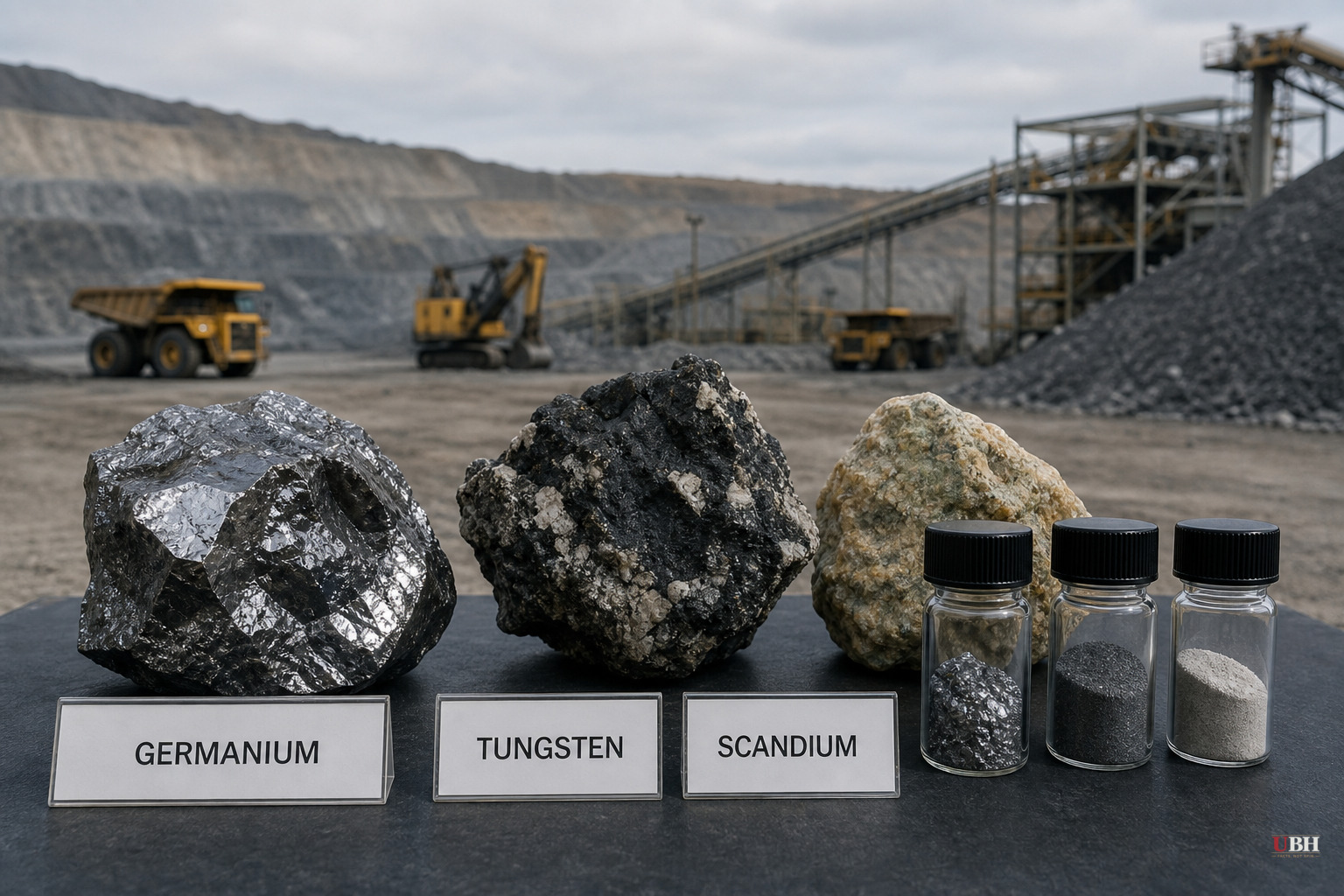
China controls roughly 91% of primary germanium production and more than 90% of global refining capacity, according to S&P Global data cited by ZeroHedge. For tungsten, China holds nearly 80% of global supply, according to the Canadian Mining Report. There is no substitute for tungsten in many high-temperature alloys and weapons components.
Beijing has been squeezing the pipeline for three years. China imposed export-licensing requirements on germanium in August 2023, then banned shipments to the U.S. outright in late 2024. Beijing suspended that blanket ban through November 2026, but licenses are still required, and restrictions on sales to U.S. military users remain in place, according to ZeroHedge. Tungsten prices have surged more than 550% over the past year, according to the Canadian Mining Report. Germanium hit 14-year highs.
Argus Media's August 11 market insight paper on heavy rare earths describes a market that's now split in two: a licensed, Chinese-controlled tier and a scrambling non-Chinese tier facing tighter supply and higher geopolitical risk. Yttrium, dysprosium and terbium are named as the elements facing the greatest exposure. Argus frames this as a structural, multi-year shift, not a temporary shortage.
The administration's response
Since July, President Trump has signed an executive order restricting defense contractors from using adversary-sourced materials, blocked exports of tungsten and battery waste, and pledged more than $2 billion for domestic and allied mineral production, according to Asia Times. The single largest award, $1.4 billion, went to Sila Nanotechnologies, a California battery maker expanding silicon-carbon anode production for satellites, drones and munitions.
Sunrise Energy Metals received $400 million to develop what would be the world's first primary scandium mine, in Australia, aimed at securing high-heat aluminum alloys for fighter jets and spacecraft. Niron Magnetics got $150 million for rare earth-free permanent magnets. Standard Bauxite received $85 million. Another $180 million went toward mining schools, an acknowledgment that the U.S. is short on trained workers, not just ore.
That workforce gap is stark. Accredited U.S. mining programs graduate fewer than 170 mining engineers a year, while China graduates more than 3,000, according to remarks Trump made at an August 8 State Department roundtable reported by the South China Morning Post. Trump also said half the current U.S. mining workforce is set to retire within three years.
Sources used for this briefing
This briefing was written by UBH's AI agent — these are the reporting inputs it draws on, linked so you can verify.


