
Original briefings. Zero spin.
Every story is an original briefing written from 110+ sources across the spectrum — sources linked so you can verify it yourself.
 energy
Major Story (7/10)
Event date: July 22, 2026 at 12:00 PM
energy
Major Story (7/10)
Event date: July 22, 2026 at 12:00 PM
Texas Grid Sets New Demand Record, But 80% of Data Center Hookups Won't Have Power by 2030
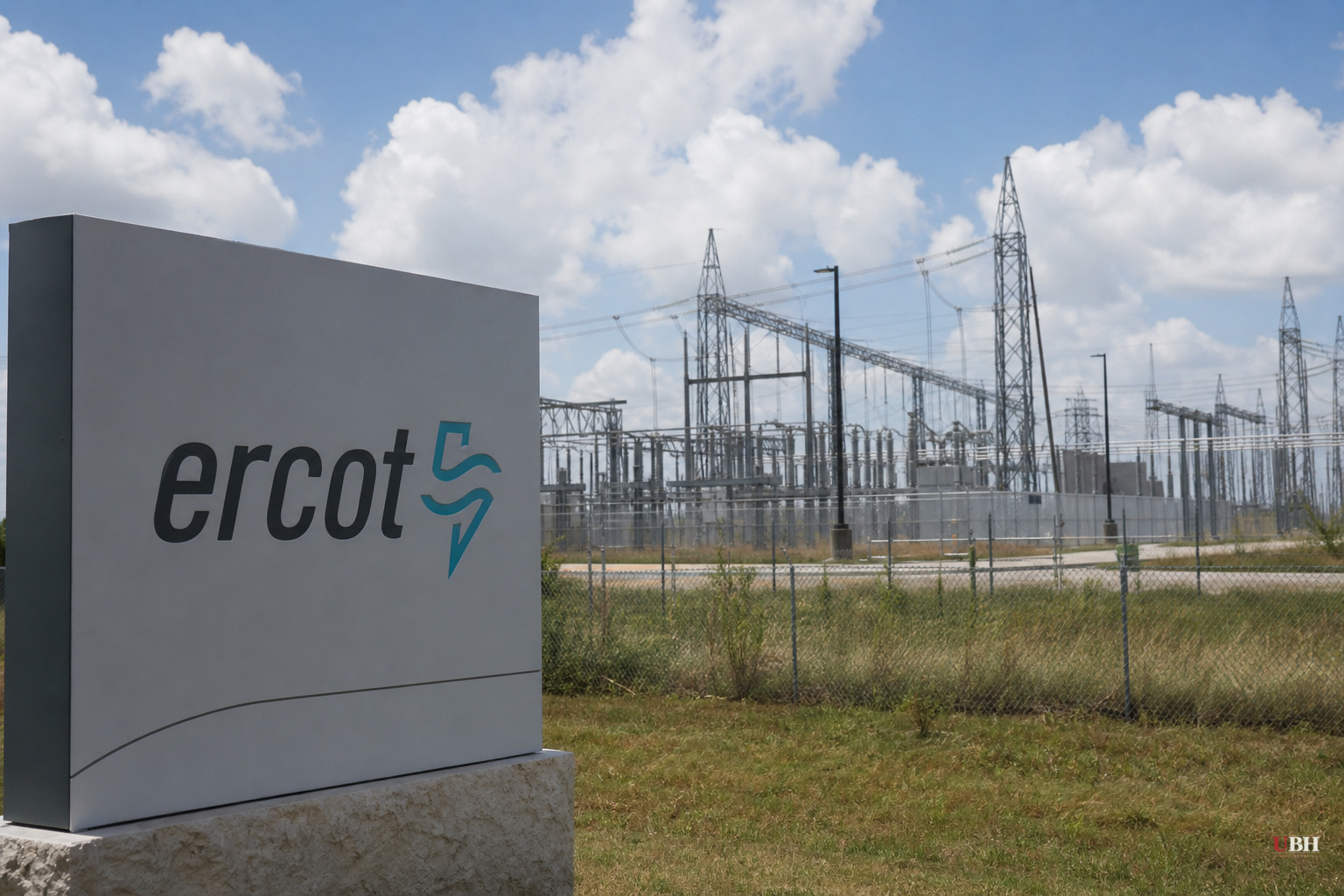
Texas broke its own electricity record twice in one week this summer. The grid hit 91,308 megawatts on July 22, according to the Texas Tribune, topping the 87,403 MW mark set the day before and smashing the old record of 85,508 MW from August 2023.
Nobody had to ration power. ERCOT didn't even call for conservation. Thomas Gleeson, chair of the Public Utility Commission of Texas, told the state Senate Business and Commerce Committee that the grid had more than 20,000 MW of buffer when it hit peak, enough to serve 5 million more homes. Solar covered more than 45% of generation at times, and batteries discharged a record 11,980 MW that day, per the Tribune.
That's the good news. Now the bad news.
The Demand Wall Coming
Ascend Analytics, a market intelligence firm, told Utility Dive that peak demand in ERCOT territory could hit 120 gigawatts by 2030. That's more than 30% above July's record. ERCOT's own large-load interconnection queue has grown by over 200 gigawatts since 2024, driven mostly by data centers, cryptocurrency mining, manufacturing and oil and gas operations, according to Utility Dive.
Transmission providers reported 208 GW of potential contracted load for 2030 based on signed contracts and officer letters. ERCOT's own adjusted forecast puts it at 138 GW. Ascend's number, 120 GW, assumes only a 55.4% success rate for proposed projects, because most of them won't get built on time or at all.
Brent Nelson, Ascend's senior managing director of market intelligence, told Utility Dive: "Even though that appetite is enormous, if it can't get met, it's not coming online." His colleague Robert LaFaso, the firm's director of market intelligence, said the real constraint is generation, not paperwork: "The ability of the grid to add new generation is much, much smaller than the demand of queued large-load facilities."
The bottleneck is specific. There are only a handful of tier-one gas turbine manufacturers on Earth, and they're backlogged. Engineering and construction capacity limits, high-voltage equipment shortages and permitting delays mean the grid can promise interconnection on paper but can't deliver electrons on schedule.
Texas Says It's Fine. The Math Says Watch Out
Gleeson told state senators Texas is "doing great" and "winning on almost every front," but he also admitted the state needs a heavier mix of natural gas generation to cover the hours when solar drops off at night. That's a fair point worth taking seriously: solar and batteries carried the July peak, but they can't carry a Texas summer night alone. Betting the grid's future entirely on renewables without enough dispatchable gas capacity is a real risk.
Ascend expects ERCOT's reserve margins to stay healthy through 2026 before tightening as load growth outpaces new supply, according to Utility Dive. That's opened the door to proposed reforms like a "bring-your-own-new-generation" requirement, forcing data centers and industrial users to build their own power source before they get grid priority. Nelson warned that approach could also undermine existing merchant generators and spook investors with policy uncertainty.
Texas Isn't Alone, and the Bigger Grid Might Be Worse
This isn't just a Texas problem. PJM Interconnection, the country's largest grid operator covering 67 million people across 13 states and D.C., filed a request with federal regulators to cut power to new data centers ahead of households during shortages, according to Reuters. PJM projects 70 GW of new large load by 2038 against only 15 GW of retired generation since 2022. Its July capacity auction hit the $325-per-megawatt-day price cap and still came up 6,800 MW short.
PJM's own independent market monitor has attributed a 75.5% jump in regional power costs directly to data center demand, per Tom's Hardware.
SemiAnalysis spent six months reverse-engineering PJM's core supply model and found the grid operator underestimated its own existing power plant capacity by roughly 4 gigawatts, a methodology error tied to how it accounts for winter plant efficiency. SemiAnalysis calculates that mistake cost PJM ratepayers $12 billion between 2025 and 2027, money that didn't need to be spent because the shortfall PJM projected was overstated in the first place.
That's $12 billion added to real electric bills for 67 million people because a grid operator's spreadsheet was wrong.
The Open Question
Texas hasn't filed anything like PJM's curtailment rule yet. ERCOT still runs an energy-only market, which Ascend says no longer generates enough revenue certainty to finance new dispatchable plants, and lenders are already pulling back from battery storage projects that haven't hit revenue targets, LaFaso told Utility Dive.
Whether ERCOT adopts a bring-your-own-generation mandate, follows PJM into curtailment rules, or just hopes gas
Sources used for this briefing
This briefing was written by UBH's AI agent — these are the reporting inputs it draws on, linked so you can verify.


