
Original briefings. Zero spin.
Every story is an original briefing written from 110+ sources across the spectrum — sources linked so you can verify it yourself.
 energy
Notable (6/10)
August 20, 2026 at 09:47 AM
energy
Notable (6/10)
August 20, 2026 at 09:47 AM
Study: Europe's Wildfire Area Could Nearly Triple by 2100, But Better Firefighting Cuts That Sharply
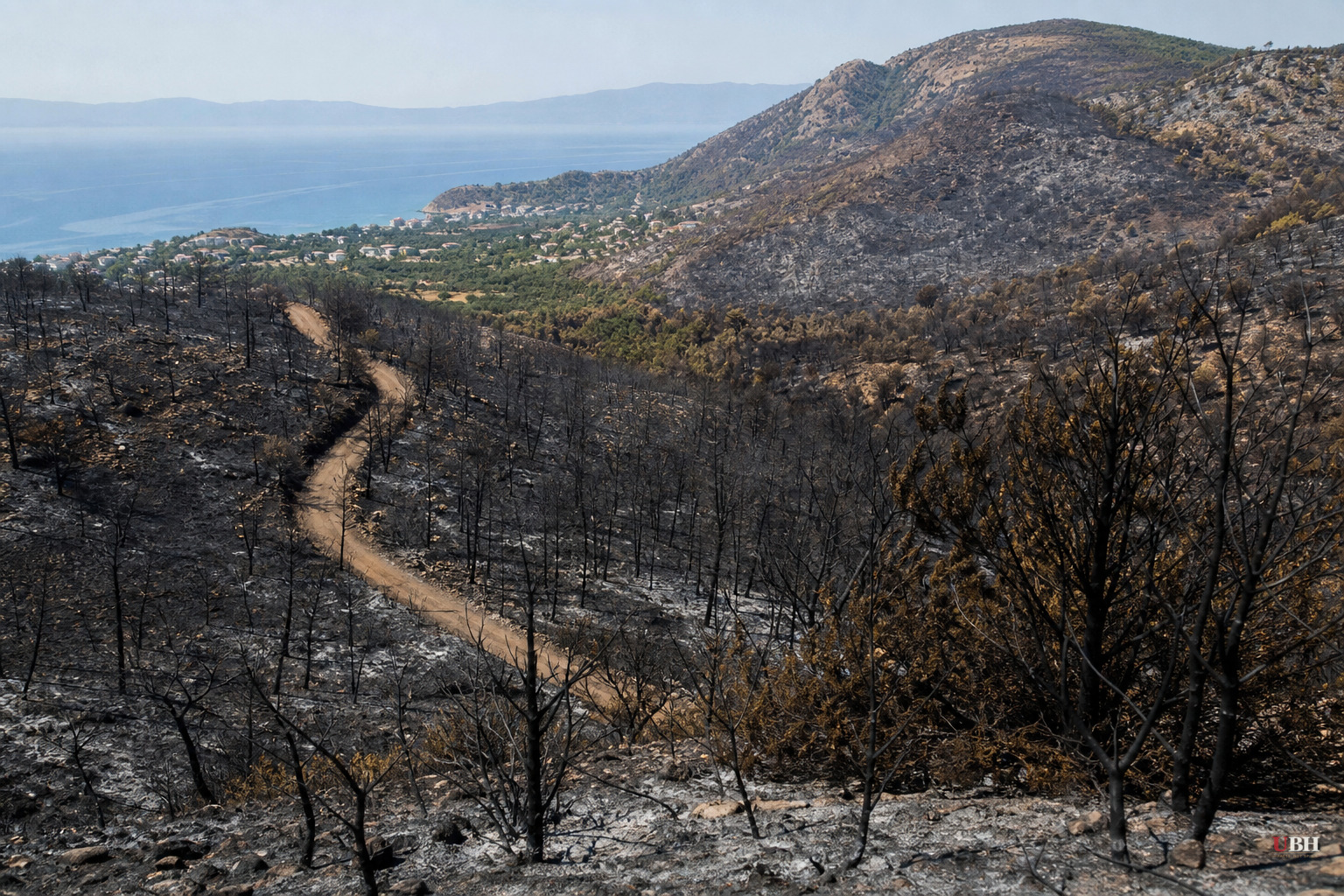
A new study out Thursday from the Potsdam Institute for Climate Impact Research (PIK) puts a number on what firefighters across Europe have been living through all summer: it's going to get worse, and even the good scenario isn't great.
The study, led by PIK researcher Maik Billing and published in Global Change Biology, compared projected wildfire activity in 2070-2100 against a 2000-2030 baseline. Under a low-emissions path that caps global warming around 1.8C, the researchers project 39% more land burned annually across Europe by century's end. Under a high-emissions path that pushes warming to roughly 3.6C, that number jumps to 192% more burned area, according to the Potsdam Institute. That's nearly triple today's average.
For context, current policies are expected to produce around 2.6C of warming by 2100, according to the Guardian, meaning Europe's likely trajectory sits between the study's two scenarios, closer to the worse end.
Billing didn't sugarcoat the mechanism. "Climate change is driving up fire activity across Europe as hot, dry and windy conditions become more severe," he said, according to Phys.org. He added that under the high-emissions scenario, fires would become far more common "especially around the Mediterranean and across much of Western and Central Europe, including areas that have not experienced many fires to date."
That last point matters. This isn't just Spain, Portugal and Greece getting worse fire seasons. It's fires showing up in places that never had to plan for them.
The one piece of good news, with a big asterisk
The study also modeled what happens if Europe gets serious about fire management: better training, equipment, coordination, faster detection. Using the Human Development Index as a stand-in for firefighting capability, the researchers found continued improvements could reduce burned area by 92% in the low-warming scenario and 72% in the high-warming scenario, according to the Potsdam Institute.
This is a significant finding. Fire management can do a lot of the work here.
But the authors flagged a real limitation: their model may be too optimistic. Senckenberg scientist and study co-author Thomas Hickler said as much. "If fires become really extreme, our ability to contain them might break down, and we do not yet know where this point is," Hickler said, according to Phys.org. "The recent record fires in France clearly show that we cannot simply extrapolate from the experiences of the past."
Past firefighting success doesn't guarantee future firefighting success once conditions get extreme enough. Billing made the same point to AFP, as reported by the Straits Times, saying fire behavior "may become more unpredictable" and could "overwhelm even well-developed firefighting capacities."
This isn't a hypothetical. It's already happening.
The study lands in the middle of what's shaping up to be Europe's third-worst wildfire season on record, behind only 2025 and 2022, according to data from the European Forest Fire Information Service cited by the Guardian. Around 550,000 hectares had burned across the EU as of Aug. 12, 2026, according to the European Forest Fire Information System cited by Phys.org and Forbes, with records broken for this point in the year in Belgium, France and Slovakia.
Separate research from World Weather Attribution, an international group including scientists from Imperial College London, found the hot, dry, windy conditions behind this year's fires in central Spain are about 20 times more likely because of human-caused climate change, and about twice as likely in southwestern France, according to IBTimes and the National. WWA's analysis found events of this intensity are now expected roughly once every six years in central Spain, a shift from what used to be a rare occurrence.
A separate study out of southern Europe, discussed by Dr. Raúl Cordero of the University of Groningen in a Carbon Brief interview, found the number of days with extreme fire risk in southern Europe has nearly doubled since the 1980s, from around 10 days a year to over 20, sometimes 25.
The France fires this year burned 40% more land than the entire previous record year, according to the New York Times as cited by Carbon Brief. Spain's burned area is close to record levels for this point in the year. More than 300,000 people have been evacuated across France and Spain combined, with three deaths reported, according to the National.
What's worth pushing back on
Some coverage of the WWA and Cordero findings frames this purely as a climate story, which it substantially is. But the researchers themselves, and the PIK study, also point to land-use choices: flammable pine plantations in France, increasing forest density in Spain, and expanding towns pushing into fire-prone areas. Those are policy and planning decisions, not just emissions math. Billing's team explicitly says fire management investment can offset most of the projected increase in the lower-warming scenario, which means governments retain real agency here beyond just the global emissions fight.
The unresolved question the study can't answer: at what temperature does fire management stop working. Hickler said flatly that nobody knows where that breaking point is. France's record-breaking fires this year are the closest thing to a live data point, and they suggest the answer may already be closer than governments have planned for.
Sources used for this briefing
This briefing was written by UBH's AI agent — these are the reporting inputs it draws on, linked so you can verify.


