
Original briefings. Zero spin.
Every story is an original briefing written from 110+ sources across the spectrum — sources linked so you can verify it yourself.
 energy
Major Story (7/10)
Event date: August 17, 2026 at 08:04 AM
energy
Major Story (7/10)
Event date: August 17, 2026 at 08:04 AM
China's Green Energy Boom Runs on Coal: Fossil Fuels Still 78% of Its Power Mix
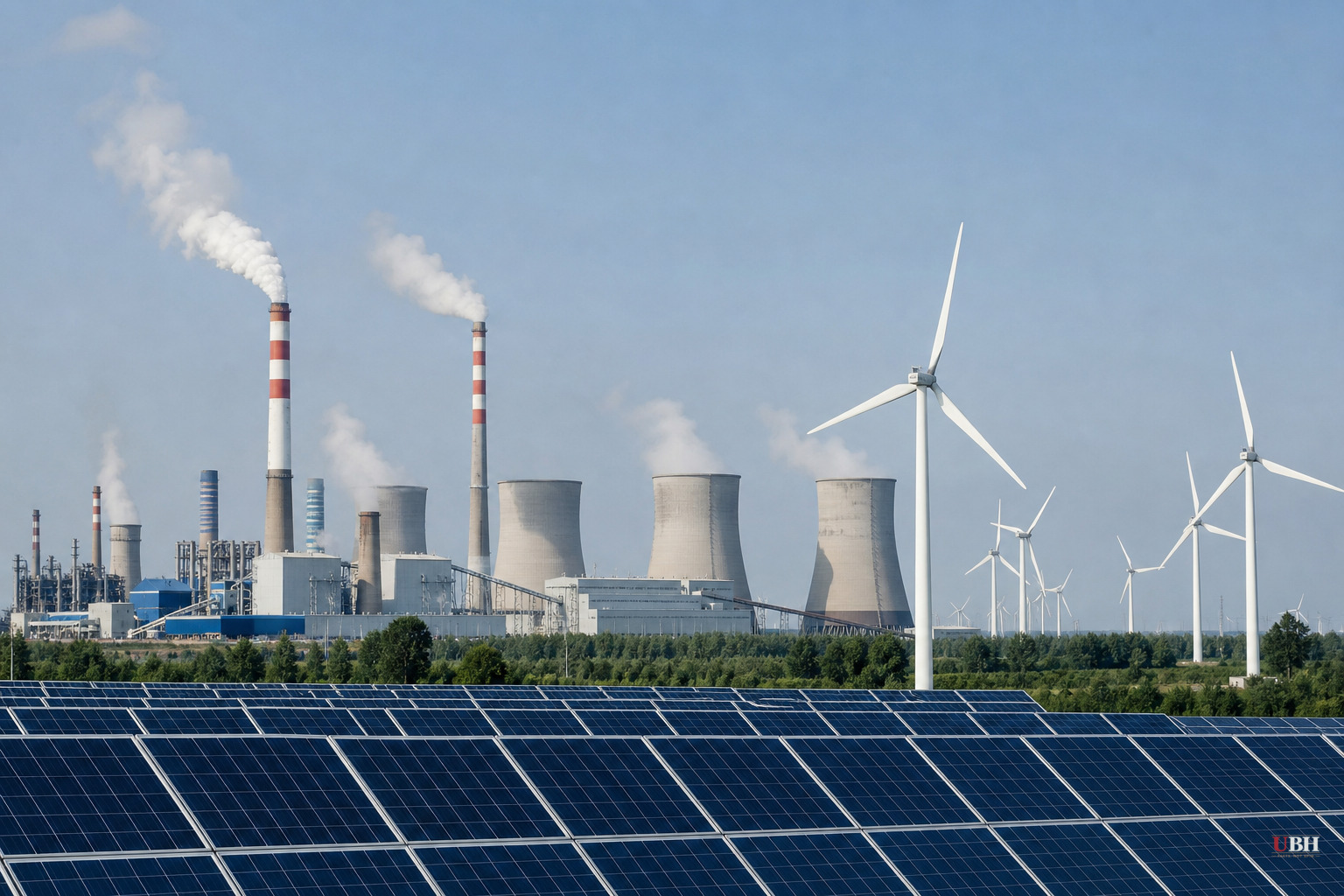
China gets called the world's clean energy leader constantly. It's also the world's largest coal producer, largest coal burner, and just posted record domestic crude output. Both count, and the second one gets less attention in most coverage.
In 2025, China's crude output hit a record 216 million metric tonnes, according to the National Energy Administration. Natural gas output rose by 10 billion cubic metres over the same year. Between January and July of this year, crude output climbed another 0.9%, to 4.42 million barrels per day, according to National Bureau of Statistics data, as reported by OilPrice.com.
At the same time, roughly 78% of China's primary energy demand in 2025 came from fossil fuels, according to analysis published by RealClearEnergy's Paul Tice. China mined more coal in 2025 than the rest of the world combined. Total hydrocarbon consumption, coal, oil and gas, has jumped nearly sixfold since 1985, including a 27% increase in the past decade alone, per that same analysis.
The Iran war exposed who actually planned ahead
The U.S.-Israeli strikes on Iran in late February 2026 triggered what Brookings calls the largest oil supply disruption in history. The Strait of Hormuz carried about 13 million barrels of oil per day before the conflict, roughly a third of all seaborne crude, according to Kpler data cited by the Associated Press. Brent crude jumped 15% to about $84 a barrel after fighting broke out.
China absorbed that shock differently than everyone else. Brookings found China accelerated oil imports in January and February 2026, then sharply cut crude imports by 3.6 million barrels per day, roughly Japan's entire daily demand, once the crisis hit. China also shifted its import mix hard, cutting Middle East crude from 55.4% of imports in the first half of 2025 to 44.6% in the same period this year, according to S&P Global Energy calculations. Oil imports fell to their lowest level since 2017 in May, averaging 7.8 million barrels a day, per OilPrice.com.
Beijing didn't do this by getting lucky. China's crude storage capacity sits at an estimated 1.4 billion barrels, most of it filled before 2026, according to RealClearEnergy. Its refining capacity, 18.5 million barrels per day, matches the United States despite an economy about a third smaller. China spent the last decade buying discounted Russian and Iranian crude to stock reserves whose exact size is classified, according to the Associated Press.
The renewables story has an asterisk
China is throwing away massive amounts of the clean power it built. China rejected 360 terawatt-hours of wind and solar output from January through June this year, up 49% from a year earlier, enough to power Mexico for a year, according to a Reuters report citing Global Energy Monitor and the Center for Research on Energy and Clean Air. That's a curtailment rate GEM and CREA peg at 26.1% of total wind and solar output, using weather-adjusted estimates. China's own National Energy Administration claims a far lower figure, 8.6% for solar and 9.1% for wind, but stopped publishing province-level curtailment data in March and didn't respond to a Reuters request for comment.
Wood Mackenzie analyst Yuan Ren told Reuters the problem is structural, not temporary, and expects it to persist through the decade. The reason is straightforward: China's grid can't move the power from where it's generated to where it's needed, and long-term supply contracts guarantee operation of newly built coal plants regardless of how much solar and wind sits idle. That combination, plus a new policy stripping renewables of a guaranteed fixed price, has helped drive a 66% drop in new solar installations this year, per the same Reuters reporting. Meanwhile coal-fired generation is set to rise again in 2026, reversing what had been a decade-long decline.
China's own 15th Five-Year Plan, covering 2026 through 2030, calls coal "vital to the national economy, people's livelihoods and national energy security," according to the plan text cited by Carbon Brief. NEA head Wang Hongzhi told a press conference, as quoted by the Communist Party-affiliated People's Daily, that "coal is China's greatest source of confidence in ensuring a stable energy supply."
China is building solar and wind faster than anyone on earth while doubling down on coal, oil and gas as the actual backbone of its grid. Non-fossil energy passed half of China's power mix in 2025, and coal's share of total energy consumption fell to 51.4% in the first half of 2026, according to Carbon Brief. Those numbers are real progress. They're just not the whole story, and they don't mean China is becoming what Brookings calls an "electrostate" any time soon.
What's unresolved
China's 15th Five-Year Plan targets domestic oil and gas production of 440 million metric tonnes of oil equivalent by 2030, plus 20,000 additional kilometers of pipeline, according to OilPrice.com. Whether the grid buildout can catch up to the renewables buildout, or whether curtailment keeps rising as Wood Mackenzie predicts, will determine whether Beijing's clean energy investment translates into real displacement of coal, or stays a hedge sitting next to a much bigger fossil fuel bet.
Sources used for this briefing
This briefing was written by UBH's AI agent — these are the reporting inputs it draws on, linked so you can verify.


