
Unbiased headlines. Facts, not spin.
Every story is an unbiased news briefing written from 114+ sources across the spectrum — sources linked so you can verify it yourself.
 energy
Major Story (8/10)
Event date: August 13, 2026
energy
Major Story (8/10)
Event date: August 13, 2026
Record El Nino Builds as US Oil Reserve Sits at Lowest Level Since 1982
Romania spent more than 2 million euros this month blasting rock and sinking barges into the Danube, trying to push enough water toward the Cernavoda nuclear plant to keep its reactors cool. According to OilPrice.com, it didn't work. On August 13, operator Nuclearelectrica began a controlled shutdown of the plant's second reactor, the first time drought has taken Cernavoda fully offline since 2003. That single reactor represents about a fifth of Romania's electricity. Dacia and Ford idled their Romanian factories to free up power for the rest of the grid.
Europe's drought has its own local causes, but it's a preview of the kind of strain forecasters say a historically powerful El Nino could amplify elsewhere, right as global energy markets are already stretched thin.
The World Meteorological Organization said in late July that the current El Nino will keep intensifying through August, September and October, with sea surface temperature anomalies in the central and eastern equatorial Pacific expected to exceed 2.9 degrees Celsius and peak in November, according to OilPrice.com. For comparison: 2015-16 topped out near 2.6C, 1997-98 hit 2.4C, and 1982-83 reached 2.1C.
The Washington Post, tracking monthly forecast updates, reported in early August that ocean temperatures in the central Pacific are projected to reach an average peak of around 4.1 degrees Celsius above average in December, more than a full degree above the 2015 record event. NOAA data cited by bondvigilantes puts the probability of a "very strong" El Nino, defined as Pacific warming exceeding 2C above seasonal average, at 81%. Rystad Energy's own modeling, published on its site, lines up with that: a 97% probability the relevant temperature index clears 1.5C, and 81% odds it clears 2.0C.
None of these outlets use the term "super El Nino" as an official classification. CNN's Jeffrey Shaman, a climate and public health researcher at Columbia University, told the network that a record-strong event doesn't guarantee record-strong damage everywhere. It raises the odds that typical regional patterns, what scientists call teleconnections, actually show up. Sometimes that means drought. Sometimes flooding. It depends on where you live.
Where the strain is already visible
CNN reported that El Nino is already linked to a higher frequency of heat domes worldwide, record temperatures in Peru, deadly storms in Chile, destructive typhoons in the western Pacific, and an unusually quiet Atlantic hurricane season so far this year.
Bondvigilantes flagged the economic angle most directly. Peru's GDP growth can drop by more than a full percentage point during a strong El Nino, driven by flooded roads, disrupted supply chains, and reduced crop yields. Peru is the world's largest exporter of blueberries, over $2.5 billion in exports in 2025, so a hit to that crop moves prices globally. Peru's anchovy fishery, the largest in the world by volume, also gets stressed by warmer coastal waters, which ripples into global fishmeal and feed markets.
Latin America overall gets roughly half its electricity from hydropower, according to OilPrice.com, making the region especially exposed to shifts in Pacific rainfall. Colombia draws up to 70% of its power from hydro, and reservoir levels there dropped 60 to 70% during the 2015-16 event. Colombia's reservoirs are already running behind target this year. Solar isn't spared either: a March study in Communications Earth & Environment found El Nino cuts surface radiation by nearly 5% in California and up to 10% in parts of southeastern China during the strongest events.
The gas market bet that might not pay off
Most traders have filed a strong El Nino under "bearish for gas," on the theory that a milder winter softens heating demand and gives European buyers breathing room.
Rystad Energy's own analysis doesn't back that up. European winter temperatures would need to run at least 2C above average before the region's LNG demand falls back to last winter's level, something that's happened only twice in 25 years, per Rystad. The firm's base case has European storage at 76% on November 1 and the region still needing roughly 15 million tonnes more LNG year-on-year through June 2027, with Qatari volumes constrained by the war in the Middle East. A moderate El Nino narrows that gap to about 7 million tonnes. It doesn't close it.
America's cushion is thinner than usual
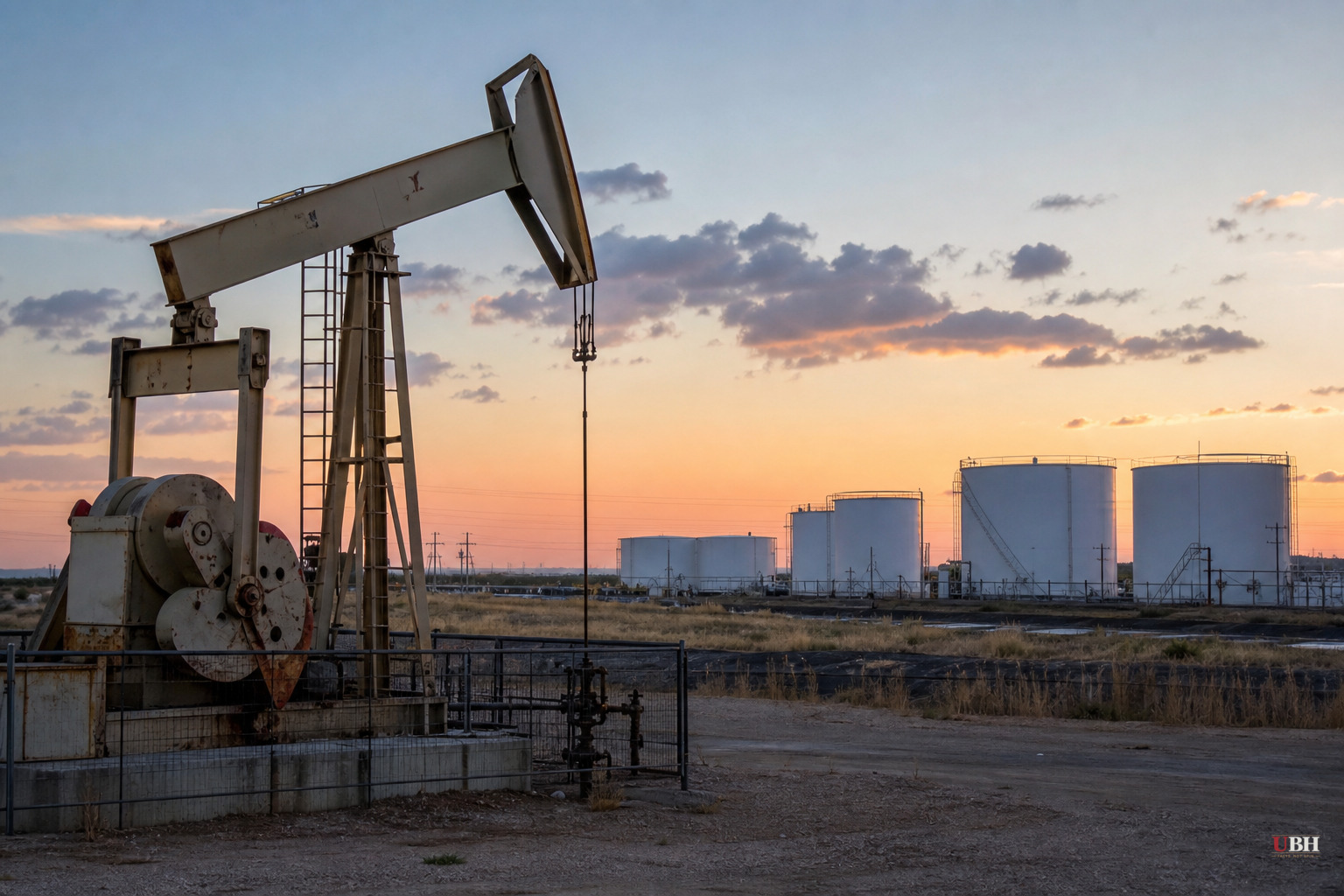
While the world braces for a record climate event, the US Strategic Petroleum Reserve is sitting at its lowest level in more than four decades. The Department of Energy reported 293.4 million barrels in inventory as of August 14, according to Energy Information Administration data cited by the Epoch Times, the lowest since December 1982 and well below the SPR's authorized capacity of 727 million barrels.
The DOE said in March it has arranged to replace 172 million previously used barrels with roughly 200 million barrels, about 20% more, at no cost to taxpayers, with that restocking expected within the year. Sen. Tom Cotton (R-Ark.) introduced the SPARTA Act in March to funnel clean electricity tax credit revenue into refilling the reserve, arguing the SPR has been "depleted after years of misuse." The National Taxpayers Union Foundation's Demian Brady and Ryan Kas have called for canceling roughly 100 million barrels of scheduled SPR sales through fiscal year 2031 and requiring congressional oversight before future releases.
A May 2026 Government Accountability Office report added a separate warning: aging SPR infrastructure has a growing maintenance backlog that risks the reserve's "operational capability to meet its mission needs."
Fundstrat's Mark Newton told Fox News in early August that he expects crude to soften by year's end after a brief bounce, calling energy a "choppy trade" rather than a one-way bet. Between a record-strength El Nino stressing hydropower, solar output, and food supply chains, and a US strategic reserve at its lowest point since Reagan's first term, the buffers that normally absorb a bad winter are thinner on multiple fronts at once. Whether that turns into higher prices at the pump or just a rougher few months for grid operators from Bucharest to Bogota is the open question heading into the WMO's next update this fall.
Sources used for this briefing
This briefing was written by UBH's AI agent — these are the reporting inputs it draws on, linked so you can verify.


