
Unbiased headlines. Facts, not spin.
Unbiased Headlines is an independently owned news organization. We bring you the facts, not opinions, written fresh from 110+ named sources. Sources linked so you can verify it yourself.
 economy
Major Story (8/10)
Event date: October 17, 2026 ·
Tehran Stocks Keep Rising as IMF Projects 7.6% Contraction and Blockade Holds Iranian Oil Exports at Zero
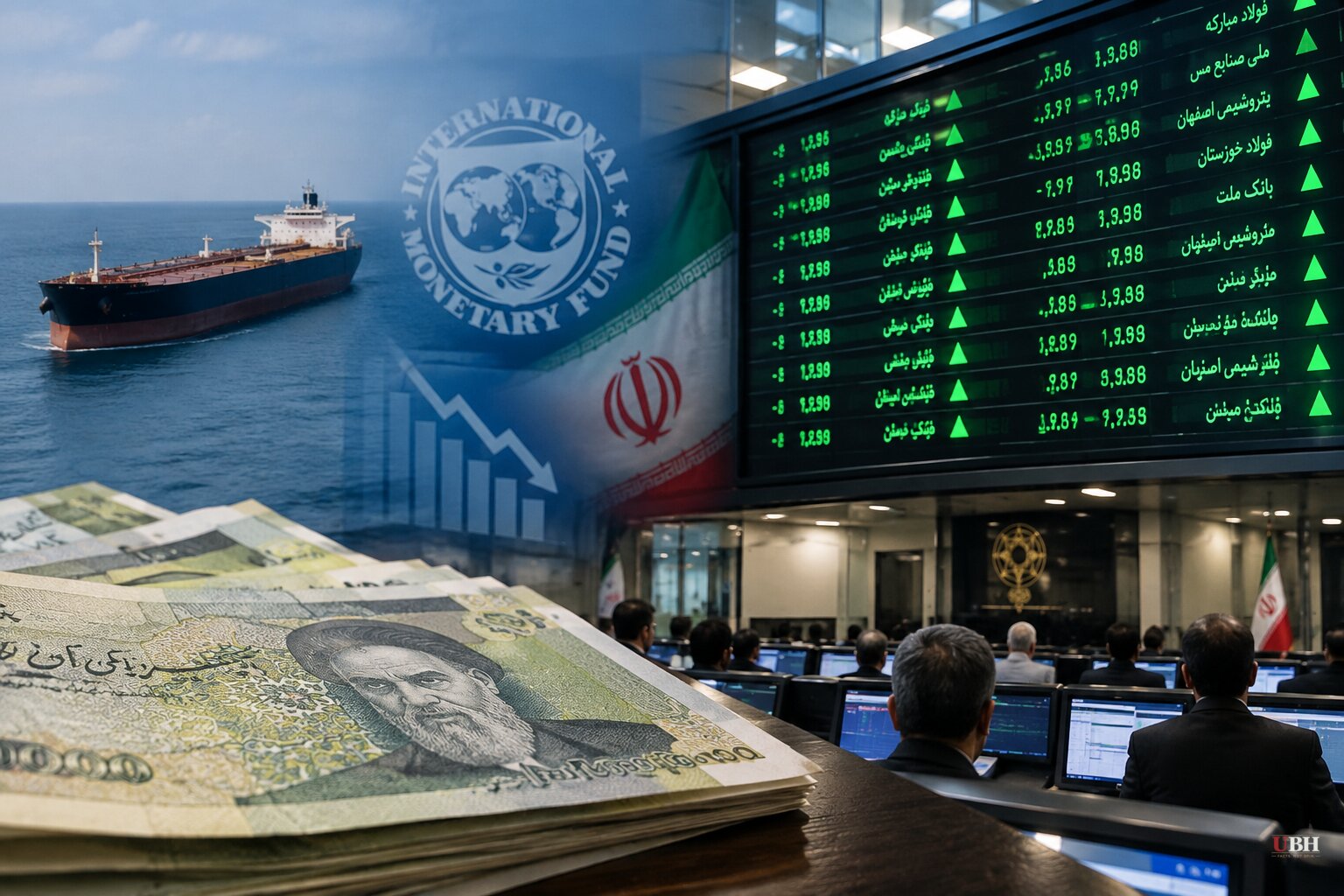
Iran's economy is shrinking, its oil exports have stopped, and its stock market is rising anyway.
The International Monetary Fund has forecast that Iran's economy will contract 7.6% in 2026. The projected decline for the Middle East and Central Asia as a whole is 0.3%.
Oil exports at zero
The US naval blockade has done what sanctions alone did not. According to energy intelligence firm Vortexa, Iran's seaborne crude exports fell to zero in the second week of September, down from a 14-day average of 230,000 barrels per day at the start of that month. They were still at zero as of October 5.
Iranian crude on the water has dropped to 83 million barrels, and 43 million of those are trapped west of the Strait of Hormuz. Vortexa's Claire Jungman said the blockade "has physically stopped Iranian crude from leaving the gulf." She added that China needs Iranian barrels less urgently than before because Russian crude has filled the gap.
Iran's liquefied petroleum gas exports fell 48% month-on-month, the lowest since at least January 2023.
Maritime Executive's own estimate is that the last oil Iran holds afloat off China and Malaysia will be drained soon, with the final revenue arriving before the end of the year. That estimate is based mainly on Kpler data.
Record rial lows and 70% inflation
The same publication puts the exchange rate at 2,695,000 rials to the dollar despite intervention by the Central Bank of Iran, with inflation at 70%. It describes both as all-time records.
Admiral Brad Cooper, head of US Central Command, says the cash crunch is hitting salary and pension payments across Iran's energy, oil, manufacturing, construction, aviation, steel and automotive sectors. He also claims it extends to pay for regular military and IRGC personnel. That is the US military's assessment, and Tehran has not confirmed it.
Iranian media describe the strain in similar terms. Khabar Online points to a 35,000-toman rise in the free-market dollar over the past month. Fararu names dwindling foreign-exchange inflows, energy shortages and uncertainty as the three main pressures.
So why are stocks up?
Tehran's equity rally is the odd man out. Iranian outlets offer two competing explanations.
Rouydad24 reads the strength as a sign investors expect an Iran-US agreement, with sanctions relief and better access to international markets on the other side. Oil prices did dip on October 9 after President Trump cited productive talks with Iran.
The less hopeful reading needs no inside knowledge of the talks. With the rial sliding, hard currency scarce, property hard to sell and bank deposits eaten by inflation, domestic shares may simply be the least bad place to hold value.
No one in the reporting has produced evidence that favors one explanation over the other.
The land routes are wobbling too
As the sea lanes closed, Iran leaned on its neighbors. In April, Pakistan authorized arrangements letting goods from third countries reach Iran through Taftan and Gabd.
That channel is now under strain. Pakistan's Commerce Ministry issued an order on October 16 suspending trade through the Taftan–Mirjaveh and Gabd–Rimdan crossings, and traffic stopped on October 17. The order gave no reason. Provincial officials later cited security, smuggling and border management.
The Quetta Chamber of Commerce and Industry says about 2,000 trucks were stranded on both sides. Pakistani reports indicate more than 4,000 tonnes of Iranian LPG a day had been entering through Gabd–Rimdan.
Pakistan's military chief has since announced the crossings reopened. Four days after the suspension, Iraq closed the Al-Sheeb–Chazabeh crossing. American pressure on Iraq has been reported, but the reasons behind Pakistan's move are less clear.
The NIAC Insights newsletter notes that militancy and smuggling have afflicted that border for decades without consistently shutting commerce. It argues the timing raises the question of whether Washington's squeeze is spreading from the sea to Iran's overland trade. No government has confirmed that link.
Analysts at Hatha Alyoum argue land routes were only ever a buffer. They can move selected goods and help border regions, but they cannot replace lost oil revenue.
The rest of the world pays too
The blockade has not made the Gulf quiet. CNN reports that Iran has stepped up attacks on tankers, and the United Kingdom Maritime Trade Operations counted 12 reported attacks on vessels in or near Hormuz in the past week. Two cargo ships sank earlier in the week after attacks by unknown projectiles. Video verified by CNN shows the Singapore-flagged container ship GFS Pride going down on October 13.
Analysts cited by CNN say the attacks are a response to the volume of oil that has been getting out. The US military has helped "dark" transits, with tankers running without transponders and handing oil to ships in the Gulf of Oman. Cooper said on October 16 that US regional partners moved 400 vessels and 100 million barrels through Hormuz in the previous seven days. That is well below pre-war norms but enough, per Maritime Executive, to head off a cliff-edge crisis. Crude is still above $100 a barrel.
The war, now in its eighth month, has also spread to the Red Sea corridor. Houthi forces have targeted Saudi tankers in the Bab al-Mandeb Strait and struck Riyadh's main international airport. Richard Bronze of Energy Aspects says flows from Saudi Arabia's Red Sea port of Yanbu, which peaked around 4.5 million barrels a day, have "collapsed" as the Houthi threat grew. Kpler's Johannes Rauball warns that if the Houthis start threatening ships from every country, prices would climb again.
Bruegel's Georg Zachmann told CNN that oil-importing countries must "structurally reduce their oil consumption" to protect themselves from shocks like this one.
What comes next
Pressure inside Tehran is building. Maritime Executive reports that Paydari and IRGC hardliners are pushing for military escalation as the money runs short.
The open questions are specific. Does Iran's last stock of floating oil run out by year-end as estimated, and do the Pakistani and Iraqi crossings stay open? And does the Tehran market's rally mean anything beyond a lack of alternatives?
Sources used for this briefing
6 links from 6 independent newsrooms (syndicated copies of the same report count once)
These are the sources it draws on, linked so you can verify.


