
Unbiased headlines. Facts, not spin.
Unbiased Headlines is an independently owned news organization. We bring you the facts, not opinions, written fresh from 110+ named sources. Sources linked so you can verify it yourself.
 economy
Major Story (7/10)
Event date: October 22, 2026 ·
White House Removes Paper, Machinery and Packing Crates From Canada Tariff List, Adds Valves, Carpets and Waste Products
Since trade talks between Washington and Ottawa collapsed in August, and the U.S. slapped 50% tariffs on $27.6 billion of Canadian goods on Aug. 22, the tariff list has stayed fixed. On Friday, Oct. 23, the White House changed it.
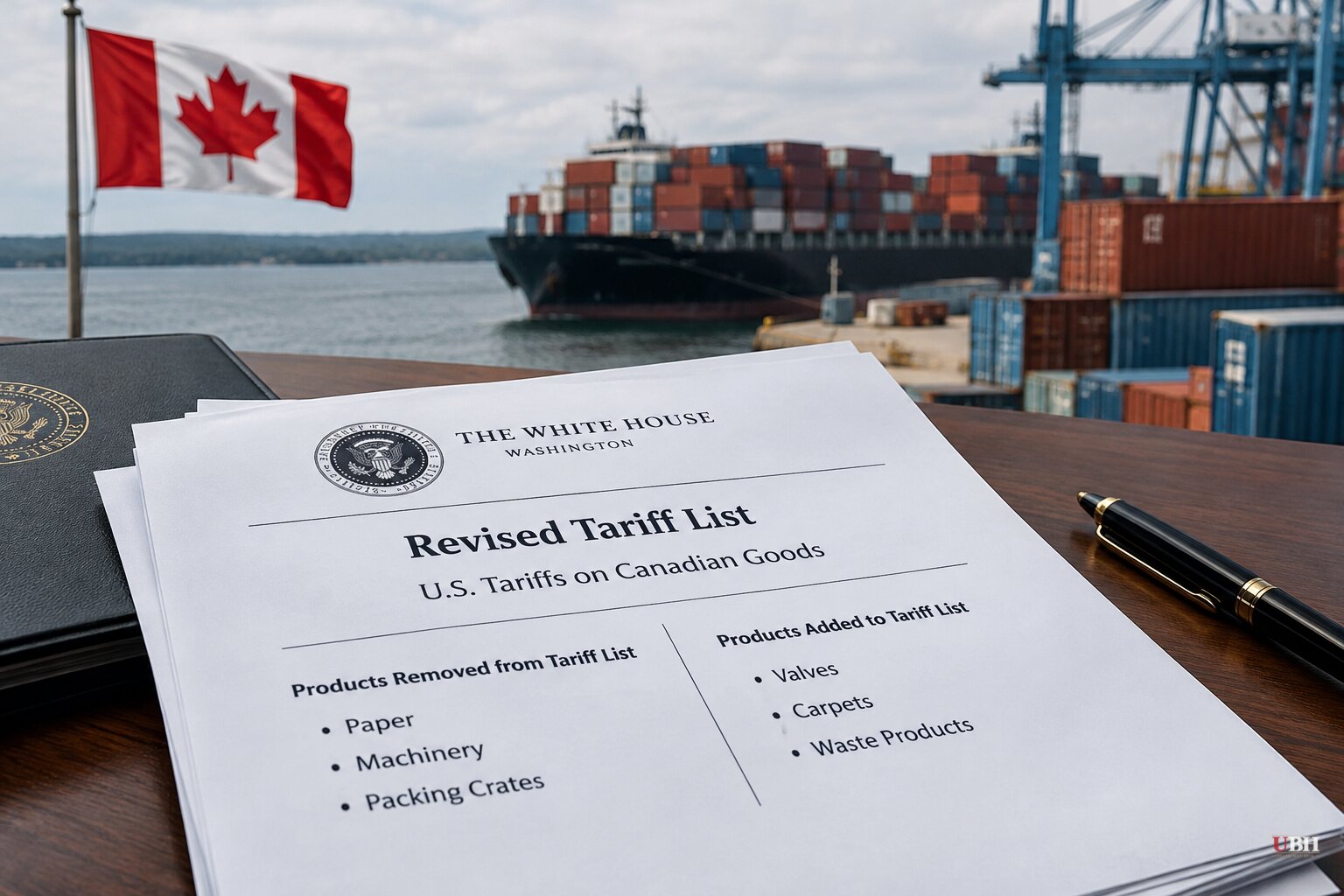
Products coming off the list include paper products, certain machinery and refrigeration equipment, and packing crates and boxes. Products going on include certain valves, carpets and waste products, the White House said. The list falls under Section 338 of the Tariff Act of 1930.
So this is a reshuffle, not a rollback. Some goods get relief. Others get hit.
What Collins says she got
Earlier Friday, Maine Sen. Susan Collins said she had secured exemptions covering nine categories of Canadian products used by Maine's agricultural industries. She said the changes would help blueberry, potato, apple and seaweed producers. The exemptions are reported to take effect Oct. 30.
Collins said farmers and growers depend on "specialized equipment, packaging materials, and other products from Canada that are either unavailable from American suppliers or cannot be replaced without incurring significant expense."
She said she repeatedly pressed U.S. Trade Representative Jamieson Greer, Commerce Secretary Howard Lutnick and other senior officials. She added that she will keep seeking more relief and "encourage a broader trade agreement with Canada, our neighbor, ally, and largest trading partner."
Collins has criticized the tariffs before. She warned that if they proceed, they "will increase costs for Maine families, as most businesses will have no choice but to pass on the tariffs to their customers through higher prices."
The political backdrop
The Wall Street Journal reported Friday, citing people familiar with the plan, that Trump was expected to ease tariffs on some Canadian agricultural and forestry products to help Collins win reelection. A White House official told the Journal that "any tariff announcements would come directly from the administration and any preliminary reporting is speculation." The White House has not stated a political motive for the changes.
Maine's economy is tightly tied to Canada, its largest trading partner. Collins' Democratic opponent, Troy Jackson, has made Trump's Canada trade policy a central theme of his campaign. A recent Washington Post poll has Jackson ahead 50% to 46% among likely voters.
Collins is not the only Republican in a tariff-sensitive state. Mike Rogers, the GOP Senate candidate in Michigan, called Trump's trade agenda a "mixed bag" on Oct. 22. He praised reshoring gains but said the Canadian tariffs were "not well thought through" and could hurt Michigan's integrated auto industry.
Trump and Carney trade positions
Trump told reporters in Washington on Friday that the U.S. is "very close to a deal with Mexico … the same thing with Canada. Canada is working very hard to make a deal with us." He added: "we hold all the cards."
Carney, speaking in Istanbul, described a different picture. He said Canada is willing to wait "months from now or longer than that" for a deal that benefits Canada, and said Ottawa could hold out until "another administration" takes power in Washington.
"We are continuing to engage with the U.S. government," Carney said. "We could sign it this afternoon if the U.S. were there."
The two leaders' accounts of how close a deal is do not match. Chief Canadian trade negotiator Janice Charette said on Oct. 22 that there is no timeline for returning to formal trade talks.
How the dispute got here
Washington blames Canada for the August collapse. Lutnick said in September that Canadian negotiators introduced new terms in the final hours of the talks. Canada answered the U.S. tariffs on Sept. 8 with its own duties of 15%, 25% and 50% on roughly $27.6 billion of American imports.
Separately, U.S. Ambassador to Canada Pete Hoekstra said in a podcast interview, reported on Oct. 14, that American officials are "closely watching" Canadian politicians for signs of midterm interference. He cited Ontario's World Series ad, and recent comments by Industry Minister Mélanie Joly and former Prime Minister Justin Trudeau. Joly said Canada would never engage in election interference. A former Canadian diplomat told CTV that Canada's retaliatory tariffs are not election interference.
What comes next
The exemptions are reported to take effect Oct. 30. Maine voters choose a senator in the Nov. 3 midterms. The valves, carpets and waste products now on the list will face the 50% rate, and the White House has not said how much trade those added categories cover compared with what was removed.
Collins says she will keep pushing for more exemptions. Carney says Canada is not in a hurry.
Sources used for this briefing
6 links from 6 independent newsrooms (syndicated copies of the same report count once)
These are the sources it draws on, linked so you can verify.


