
Unbiased headlines. Facts, not spin.
Unbiased Headlines is an independently owned news organization. We bring you the facts, not opinions, written fresh from 110+ named sources. Sources linked so you can verify it yourself.
 economy
Notable (6/10)
Event date: October 21, 2026 ·
UBS Downgrades Carrefour to Neutral After Profit Warning the Company Ties to French Riots
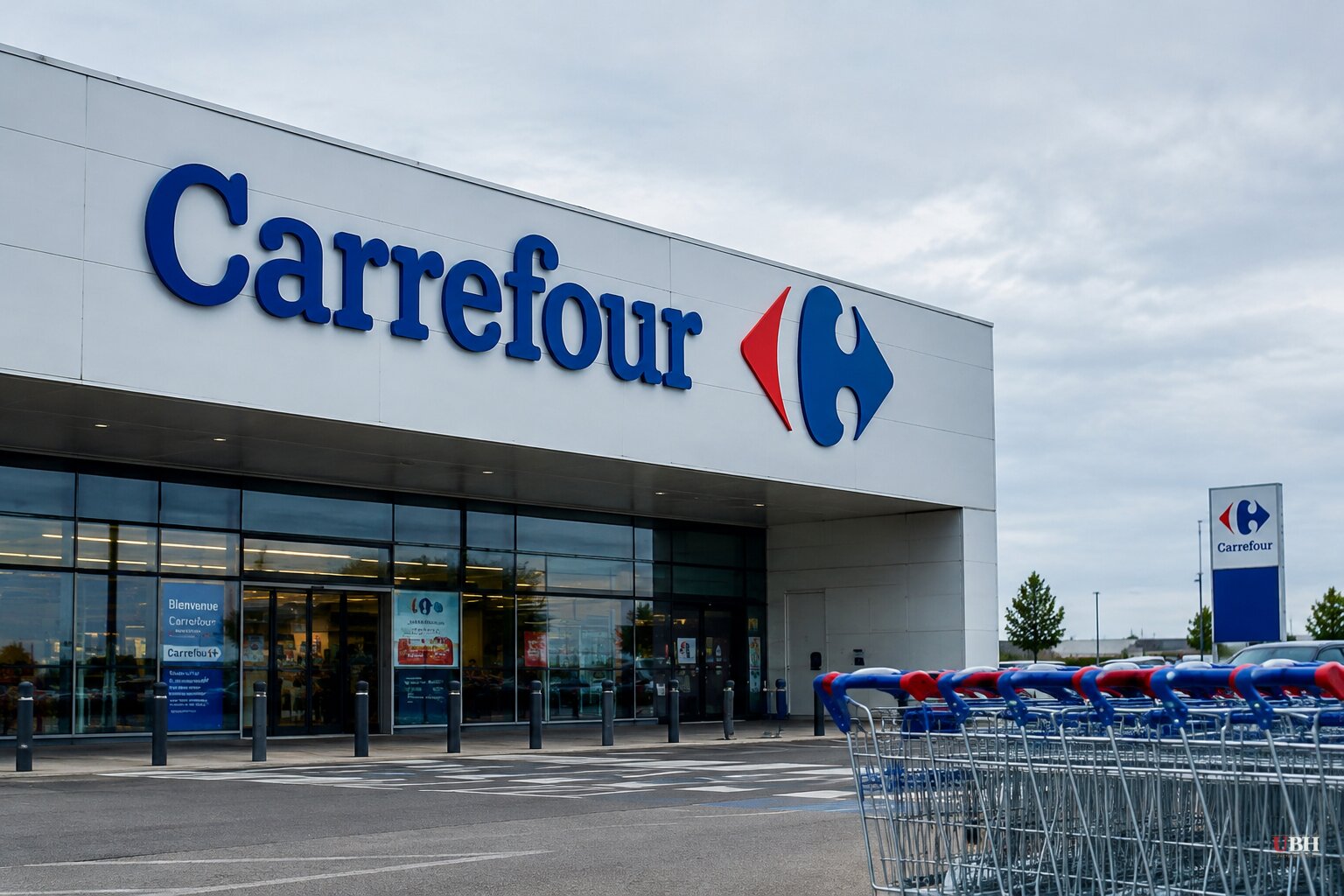
Since Carrefour cut its full-year forecast in a third-quarter earnings report published late Tuesday, citing riots and looting across France, the stock has kept sliding and the analyst downgrades have started. On Oct. 22, UBS moved the shares to "neutral" from "buy" and cut its price target to €15 from €19.
Bloomberg's tally puts the stock down 17% over five days, erasing more than €2 billion in market value and putting it on track for its worst week since the global financial crisis.
What UBS changed
UBS says the unrest could cost Carrefour between €80 million and €200 million in operating profit. That lands in the fourth quarter, when the retailer earns about one-third of its annual operating profit.
The bank cut its 2026 earnings-per-share forecast to €1.62 from €1.72, which is where consensus sits. It cut its 2026 group operating profit forecast by 5% to €2.20 billion. France absorbs all of that cut: the French forecast drops 10% to €1.03 billion from €1.14 billion.
Forecasts for 2027 and 2028 each fell 6%, as UBS expects a longer wait for improving momentum after a difficult fourth quarter. UBS models an operating margin of 2.8% in 2028 and 3.0% in 2030, below Carrefour's unchanged targets of 3.2% and 3.5%. It also forecasts cumulative free cash flow of €4.70 billion over 2026-2028, short of the company's €5 billion target.
The shares closed at €16.30 on Oct. 20 and were at €14.04 on Oct. 21, a one-day drop of about 14%. UBS's €15 target implies roughly 7% upside, with a downside case of €12.50.
What Carrefour said
Chief Financial Officer Matthieu Malige told journalists the direct costs add up to "several tens of millions of euros" in stolen or destroyed merchandise, damaged stores and equipment, and stores forced to close. Up to 50 stores were directly hit, he said. The company has not said how many remain shut.
Malige added that some stores will keep closing early because of curfews, and that Carrefour is in "a new situation marked by deep uncertainty for our customers." CEO Alexandre Bompard called it an "unprecedented situation."
The new guidance is blunt. Operating margin growth is now 0 to 15 basis points, down from a prior expectation of 25. Adjusted earnings per share are expected flat to slightly higher, versus earlier expectations of high-single-digit growth. Free cash flow is now expected to decline slightly, reversing a prior forecast of modest growth.
France matters here. It generated €11.9 billion in third-quarter sales, just over half of group revenue. French sales grew 1.2% in the quarter, and group like-for-like sales rose 2.3%, in line with FactSet expectations.
Is it the riots?
Not everyone accepts the company's explanation. JPMorgan said in a note that the update shows "a lack of underlying momentum" in Carrefour's key markets, citing weak volumes in France, Spain and Brazil. The bank said the downgrade looks broader than management indicated, noting Carrefour did not cut its outlook during the 2018-2019 Gilets Jaunes protests and has repeatedly fallen short of expectations in recent years.
Garry White, chief investment commentator at Raymond James, was sharper. "Never let a good crisis go to waste," he said, suggesting management may be using the riots to "kitchen sink" a significant sales slowdown caused by other factors.
UBS data points the same way. NielsenIQ figures show Carrefour lost 40 basis points of market share in the P10 period, with hypermarkets down 50 basis points against declines of 20 to 30 in recent months. Carrefour blamed part of that on a September anniversary promotion that delivered less uplift against tough comparisons.
UBS itself said customer experience trends in France have gradually improved and Carrefour's price position looks stronger, but that this has not yet turned into sustained market-share gains.
The unrest behind it
The riots followed nationwide protests in which hundreds of thousands marched over public services and the cost of living. Most protesters were peaceful. Around the Oct. 17 march, some turned to looting and arson, and the Interior Ministry counted 2,397 arrests by the evening of Oct. 18.
In a televised address on Oct. 18, President Emmanuel Macron blamed "seditious elements from ultra-left splinter groups, joined by many criminals." He said: "Those who destroyed must pay, those who looted must repay." He promised shopkeepers "will not be left alone."
The Paris police prefecture described those detained on Oct. 18 as "essentially young people from the suburbs looking for looting opportunities." Small business owners were hit too. Pharmacist Fabien Carême put his lost stock alone at close to €150,000.
Separately, a cyberattack on connected refrigeration systems hit hundreds of French supermarkets, according to the Paris prosecutor's office. Carrefour said about 80 of its stores were affected. The company has not tied that incident to its profit warning.
What comes next
UBS says better market-share trends and more resilient French execution could make it more positive, while further deterioration in coming months could make it more negative.
The test is the fourth quarter. It carries about a third of the year's operating profit and will show how much of the €80 million to €200 million range is riot damage and how much is a business that was already slowing.
Sources used for this briefing
7 links from 7 independent newsrooms (syndicated copies of the same report count once)
These are the sources it draws on, linked so you can verify.


