
Unbiased headlines. Facts, not spin.
Unbiased Headlines is an independently owned news organization. We bring you the facts, not opinions, written fresh from 110+ named sources. Sources linked so you can verify it yourself.
 economy
Notable (5/10)
Goyal Tells Berlin Audience 'The Problem Was Caused by You,' Says India Has Seen No Climate Finance
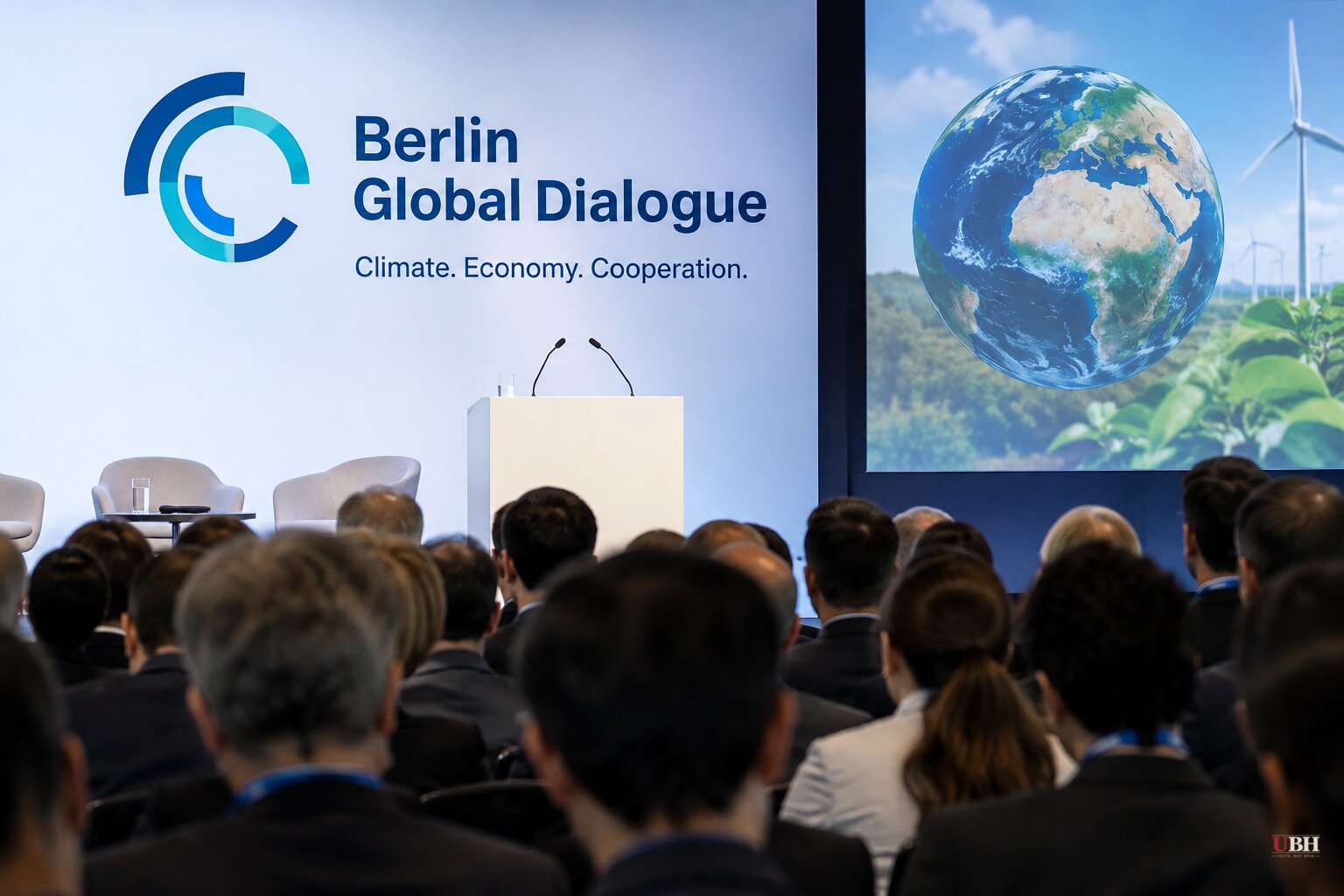
India's Commerce and Industry Minister Piyush Goyal used a roundtable at the Berlin Global Dialogue to go after Europe on climate responsibility, climate money and trade.
His message to the room: "The problem was caused by you."
The $100 billion claim
Goyal pointed to the 2015 Paris conference, where he said Prime Minister Narendra Modi helped bring the Global South together. Developed countries, he said, agreed to "pay a greater price" and support developing nations, including island states in the Pacific and the Caribbean.
"Just $100 billion a year. That was the commitment," Goyal said. "Eleven years later, we haven't seen a nickel or a dime of that. It's all promises."
The record is more tangled than that. Developed countries first committed at the 2009 UN climate conference in Copenhagen to jointly mobilise $100 billion a year by 2020. They missed it. India's Ministry of Environment, Forest and Climate Change said in a July 28, 2022 statement that the goal was extended through 2025 at COP21 in Paris, because developed countries had failed to keep the original commitment.
What the OECD says
The OECD has reported that developed countries collectively hit the $100 billion target in 2022, two years after the deadline. That directly contradicts Goyal's claim that nothing has arrived.
Developing nations dispute the quality of that money, not only the total. They have raised concerns about adequacy, accessibility and form, including the heavy use of loans rather than grants. Goyal did not cite a specific figure or a specific shortfall in the remarks reported. His "nickel or dime" line is a rhetorical claim, not a number he put on the table.
Loans have to be repaid by the countries receiving them. That is the substance behind the complaint, and it is a different complaint from "nothing was paid."
Carbon border tax
Goyal also went after the EU's Carbon Border Adjustment Mechanism, known as CBAM, which attaches carbon-related costs to certain imports. He said the EU and CBAM have "failed to respond adequately to the needs of less-developed countries or support them in their decarbonisation efforts."
He also warned the levy would raise industrial and infrastructure costs inside Europe and weaken European manufacturers. He told the audience the EU is inviting disaster through the carbon tax.
His argument ties two things together. Developing economies are being asked to absorb new carbon costs on exports, he said, while the financial and technological help they were promised remains inadequate.
India's numbers, in Goyal's words
Goyal laid out population and emissions comparisons. They were his own estimates, delivered in a speech, not audited figures.
"I represent 17% of the world's population, but my contribution to global carbon emissions is less than 3%," he said. He put Europe at "probably 3% or 4%" of world population and called its contribution to emissions "humongous."
On per capita terms, he said India's emissions are "probably less than 10% or 15%" of Europe's, and that Europe's per capita impact is "probably seven or eight times that of India."
He then turned to India's own obligations. "I also have to meet the needs of 1.4 billion people," he said. "I have to meet their energy needs, their food needs, and ensure that my nation remains secure." Even so, he said, India runs "one of the world's fastest-growing clean energy programmes."
The trade backdrop
A commerce minister delivering this speech in Berlin is not an accident. CBAM is a trade instrument, and India exports into the European market. Goyal framed the carbon levy as a fairness problem layered on top of an unpaid climate debt.
The European side of the argument rests on the OECD's accounting. By that count, the money was mobilised, just late. The Indian side rests on the form of that money and on who has historically emitted the most.
No document in the record settles the core disagreement. The OECD figure counts money mobilised toward the $100 billion goal, including loans. Goyal counts what developing countries actually received on terms they consider fair. Whether the loan-heavy mix qualifies as the support promised in Copenhagen and Paris is the question that will follow CBAM into every future trade and climate negotiation between India and the EU.
Sources used for this briefing
7 links from 6 independent newsrooms (syndicated copies of the same report count once)
These are the sources it draws on, linked so you can verify.


