
Unbiased headlines. Facts, not spin.
Unbiased Headlines is an independently owned news organization. We bring you the facts, not opinions, written fresh from 110+ named sources. Sources linked so you can verify it yourself.
 economy
Major Story (7/10)
Event date: October 20, 2026 ·
Airline CEOs Say Higher Fares and Fewer Routes Will Stay Even if Fuel Prices Fall
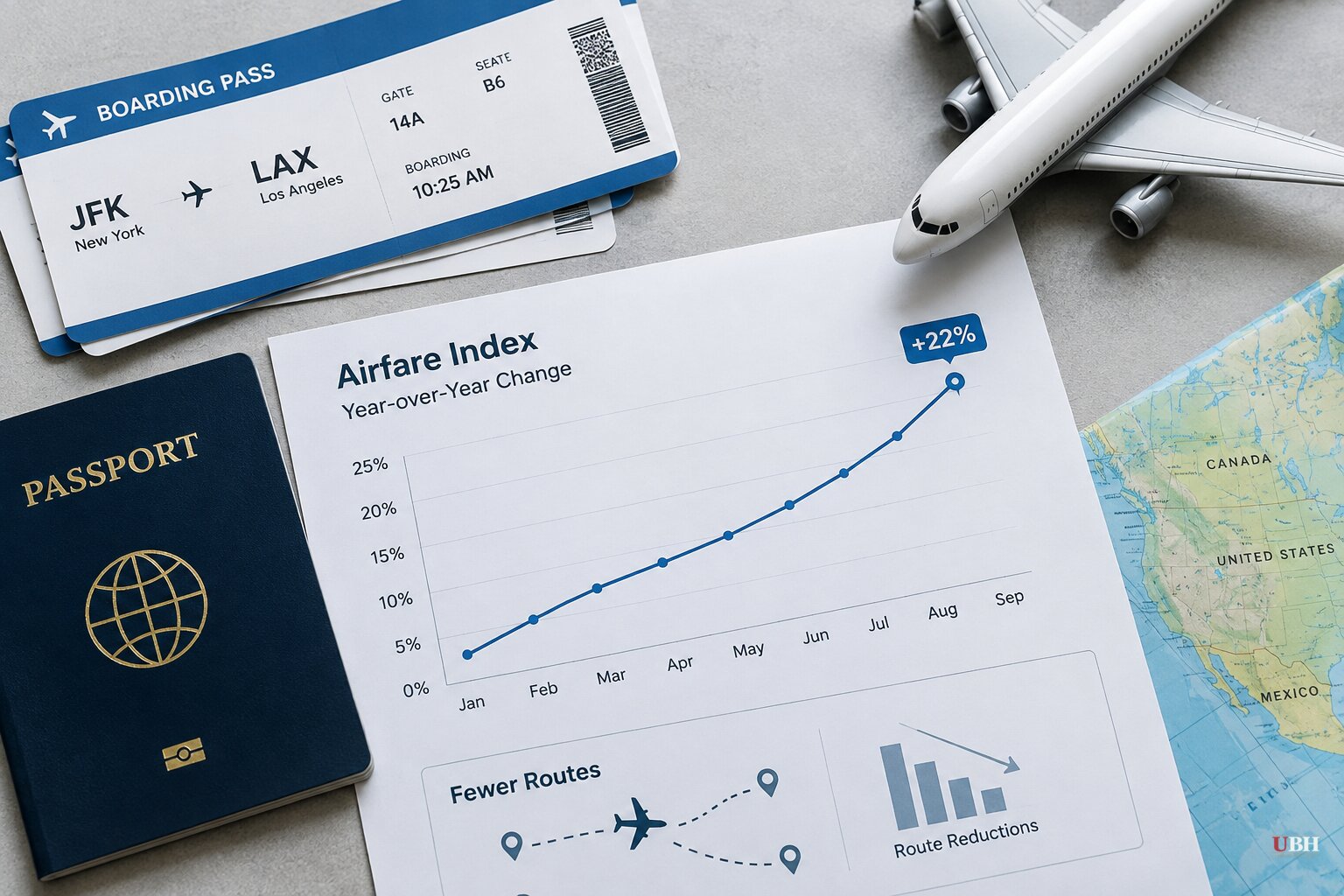
Since the Iran war began at the end of February and sent jet fuel to multi-year highs, airlines have leaned on fare increases to cover the damage. This week, the CEOs of United and American said the higher prices are not temporary.
The government's airfare price index rose 22% year over year in September. That was the 10th consecutive monthly increase, and the index hit a record high. August's reading was 23.4%.
The fuel bill
The cost side is not in dispute. American Airlines said its fuel bill rose nearly 70% in the third quarter from a year earlier, adding $1.9 billion in costs. United's fuel expense was up $1.8 billion, a 62% jump, and the company said it still landed within its guidance with adjusted earnings of $2.54 a share.
Delta expects its fuel bill this year to run $6 billion higher than last year. Southwest and United trimmed their profit forecasts this week, citing fuel.
Revenue is holding up. United reported record third-quarter revenue of $17.9 billion, up 17%, and said it expects fourth-quarter revenue growth of more than 20%, which would be another record.
Southwest's average passenger fare, excluding fees, climbed 26.9% to $231.69 in the quarter. Delta's premium-seat revenue rose 18% while its premium seat count grew 6%.
"Different this time"
The notable part is what executives say happens when fuel eases. United CEO Scott Kirby told investors on Oct. 21 that rising underlying costs, including airport fees, maintenance and engines, mean airlines have to change their economics.
"I'm pretty confident that we're not going to take steps backwards in pricing," Kirby said. "I think we're demonstrating this year that it's different this time."
Delta CEO Ed Bastian made a similar point on his company's Oct. 9 earnings call. This year's fuel spike only "accelerated" changes already underway, he said. Many carriers, in his words, were "struggling to earn their cost of capital well before the run-up in fuel."
American CEO Robert Isom described the fuel shock as "a catalyst to allow us to realize that there is value" in what customers are willing to pay.
Fewer flights, more premium seats
Pricing is half of it. Kirby said carriers are getting stricter about routes. "One golden rule: don't fly places that lose money," he said, adding that "there's going to be less loss-making flying." For travelers on thinner routes, that means fewer options.
American said in September it would raise premium seats on its Boeing 777-300ER from 116 to 144. It is also cutting traditional first class and expanding business class. Carriers across the industry have been adding pricier, roomier seats, sometimes at the expense of standard coach.
Flight-deal service Going.com founder Scott Keyes said airlines have few ways to offset fuel besides raising fares. "None of them are hedging fuel the way they used to," he said, "in large part because they had a pretty terrible experience with it." That leaves the carriers fully exposed to price swings.
Is demand really bulletproof?
The executives' bet rests on customers continuing to pay. There are some early signs of strain. A Sept. 23 Bernstein note put U.S. airport security screenings down 1% through Sept. 20 compared with the same period of 2025.
Still, travelers are booking. Hopper said that as of Sept. 24, domestic round-trip tickets for Thanksgiving averaged $402, up 31% from last year. Christmas averaged $452, up 23%.
Hopper economist Hayley Berg said holiday trips are essential to many families, so many flyers book even when they dislike the price. Many are locking in flights earlier than usual. That focus on year-end travel, she said, could leave deals on the in-between "filler" trips.
What stays unresolved
Nobody in this story is proposing government intervention, and none is on the table. This is a market adjusting to an energy shock, with airlines choosing to protect margins over capacity.
It is unclear how long the pricing will hold. Airlines have operated for years without covering their cost of capital, by Bastian's own account. A fuel-driven price reset gives them room to fix that, but only if demand does not crack. Qantas CEO Vanessa Hudson told CNBC last month that "you can't run the business on the hope that the Strait of Hormuz is going to open at a certain time," a sign that few carriers are planning for cheap fuel to return soon.
United's forecast of fourth-quarter revenue growth above 20% is the nearest hard test. The Thanksgiving and Christmas booking numbers will show whether travelers keep absorbing fares that are up 23% to 31% from a year ago.
Sources used for this briefing
6 links from 5 independent newsrooms (syndicated copies of the same report count once)
These are the sources it draws on, linked so you can verify.


