
Unbiased headlines. Facts, not spin.
Unbiased Headlines is an independently owned news organization. We bring you the facts, not opinions, written fresh from 110+ named sources. Sources linked so you can verify it yourself.
 economy
Notable (6/10)
Jobless Claims Fall to 194,000, Near a 57-Year Low, While Hiring Stays Weak
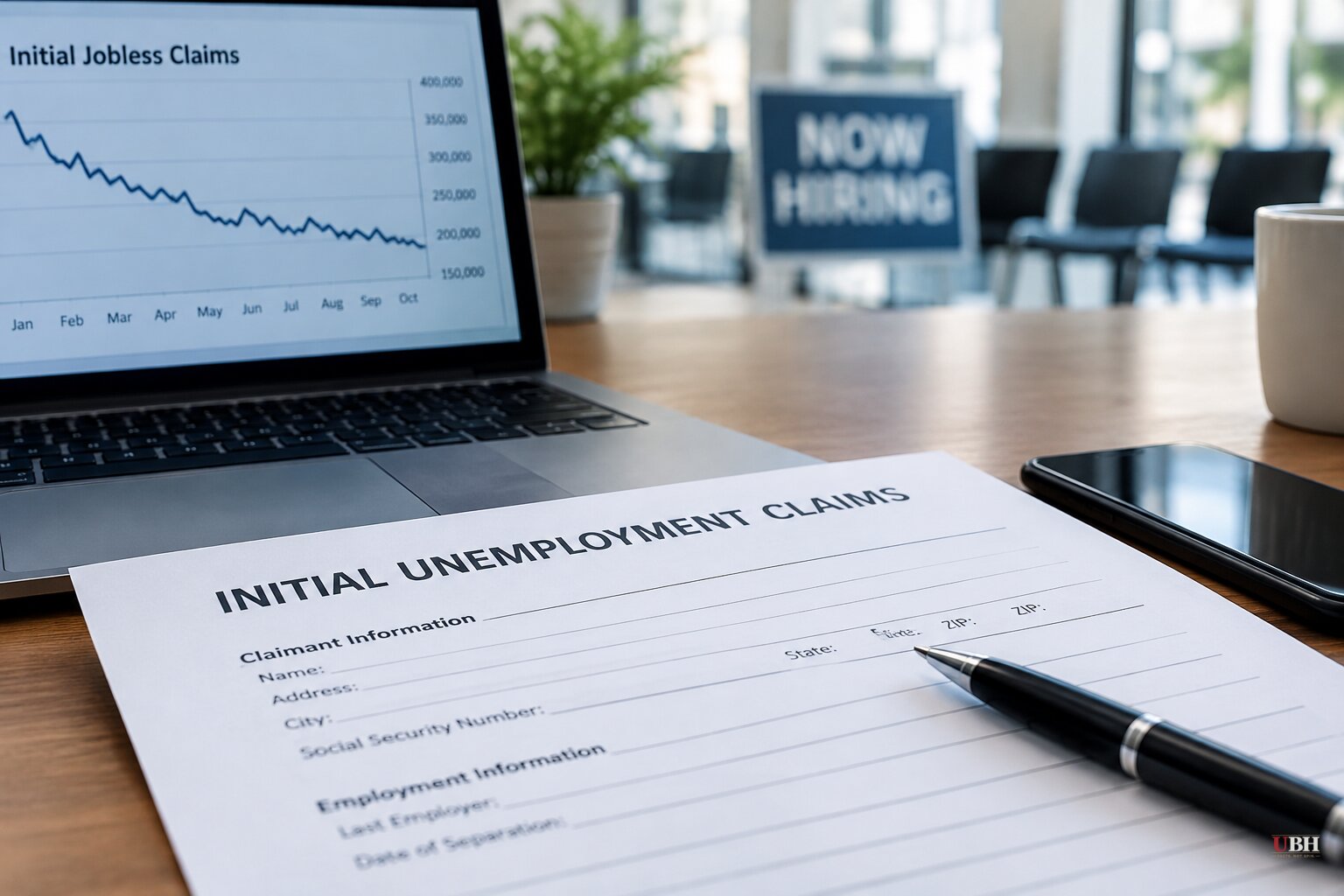
Americans filed 194,000 new claims for unemployment benefits in the week ended Oct. 17, the Labor Department said Thursday, Oct. 22. That was down 6,000 from a revised 200,000 the week before and below the 200,000 economists had forecast.
It is the lowest reading since mid-July, when claims hit 189,000, the lowest weekly figure since September 1969. It was also the sixth straight week at or below 200,000.
The four-week moving average, which smooths out weekly noise, fell to 197,750. Claims have not topped 230,000 in any week this year and have averaged 212,000 over the past 12 months.
Few layoffs, little hiring
The jobless claims number tracks layoffs. It says almost nothing about whether anyone is being hired.
Continuing claims, which count people still collecting benefits after the first week, rose by 25,000 to 1.728 million in the week ended Oct. 10. That is a six-week high, though still low by historical standards.
Hiring is the weak spot. Nonfarm payrolls grew by just 29,000 in September, after 133,000 in August. Job growth has averaged under 70,000 a month in 2026. The unemployment rate edged up to 4.2%, which CNBC reported was largely due to a jump in labor force participation.
The contrast with recent years is stark. Employers added an average of 166,000 jobs a month in 2023 and 2024, and 491,000 a month during the 2021-2022 rebound. Last year averaged only 9,700 a month, according to the Associated Press.
Why workers are staying put
Economists point to several reasons. Christopher Rupkey, chief economist at FWDBONDS, said the administration's immigration policies may have tightened labor markets to the point where companies cannot find help. "Workers are suddenly irreplaceable in many industries," he said.
Other economists cited strong corporate profits, robust domestic demand and a smaller workforce due to retirements.
Thomas Simons, chief U.S. economist at Jefferies, told clients that the claims data suggest stable conditions despite "extremely pessimistic views expressed in consumer confidence surveys," headlines about job cuts, and what he called the "phantom job-stealing power of AI."
The claims figures also show no material stress so far from the oil price shock tied to the war with Iran, which began Feb. 28. Higher energy prices have squeezed businesses and consumers since then.
The other side of the ledger
Not everyone reads the numbers as pure good news. The same economists who credit low layoffs warn that tightening financial conditions and higher interest rates from the drawn-out Middle East conflict could undercut the labor market next year.
Uncertainty from the war and from tariffs on imports has also held back hiring, according to Reuters. A labor market where employers hold onto staff but add few people is stable for those who have jobs. It offers less to anyone looking for one.
The immigration explanation cuts both ways. If companies are hoarding workers because replacements are hard to find, that protects current employees. It also means firms are short of labor in the industries Rupkey describes.
The data covers the reference week the Bureau of Labor Statistics uses for October payrolls. Economists cited by Reuters said the drop in the four-week average between the September and October survey weeks suggests a modest improvement in job gains. They also noted that September payrolls tend to underperform when Labor Day falls late in the month, as it did this year.
The Fed is watching inflation
Federal Reserve officials meet next week. Policymakers have recently described the labor market as a source of strength and shifted their attention to inflation, which remains well above the central bank's 2% target.
Wholesale inflation recently reached its highest levels since 2022, the Associated Press reported.
Markets expect the Fed to hold in October and raise rates by a quarter point in December, according to CNBC. Dow Jones Newswires reported that analysts broadly expect another hike this year, either at the October meeting or in December. Thursday's claims report gives the Fed little reason to move away from that path.
The October jobs report is due Nov. 6. Whether it shows hiring picking up, or another month of tepid gains under a 4.2% unemployment rate, will test whether low layoffs can keep carrying the labor market while the Fed keeps rates high.
Sources used for this briefing
8 links from 8 independent newsrooms (syndicated copies of the same report count once)
These are the sources it draws on, linked so you can verify.


