
Original briefings. Zero spin.
Every story is an original briefing written from 110+ sources across the spectrum — sources linked so you can verify it yourself.
 politics
Major Story (7/10)
Event date: April 20, 2026
politics
Major Story (7/10)
Event date: April 20, 2026
Supreme Court Lets Trump Ballroom Work Continue 5-4 as Roberts Calls Project Likely Unlawful
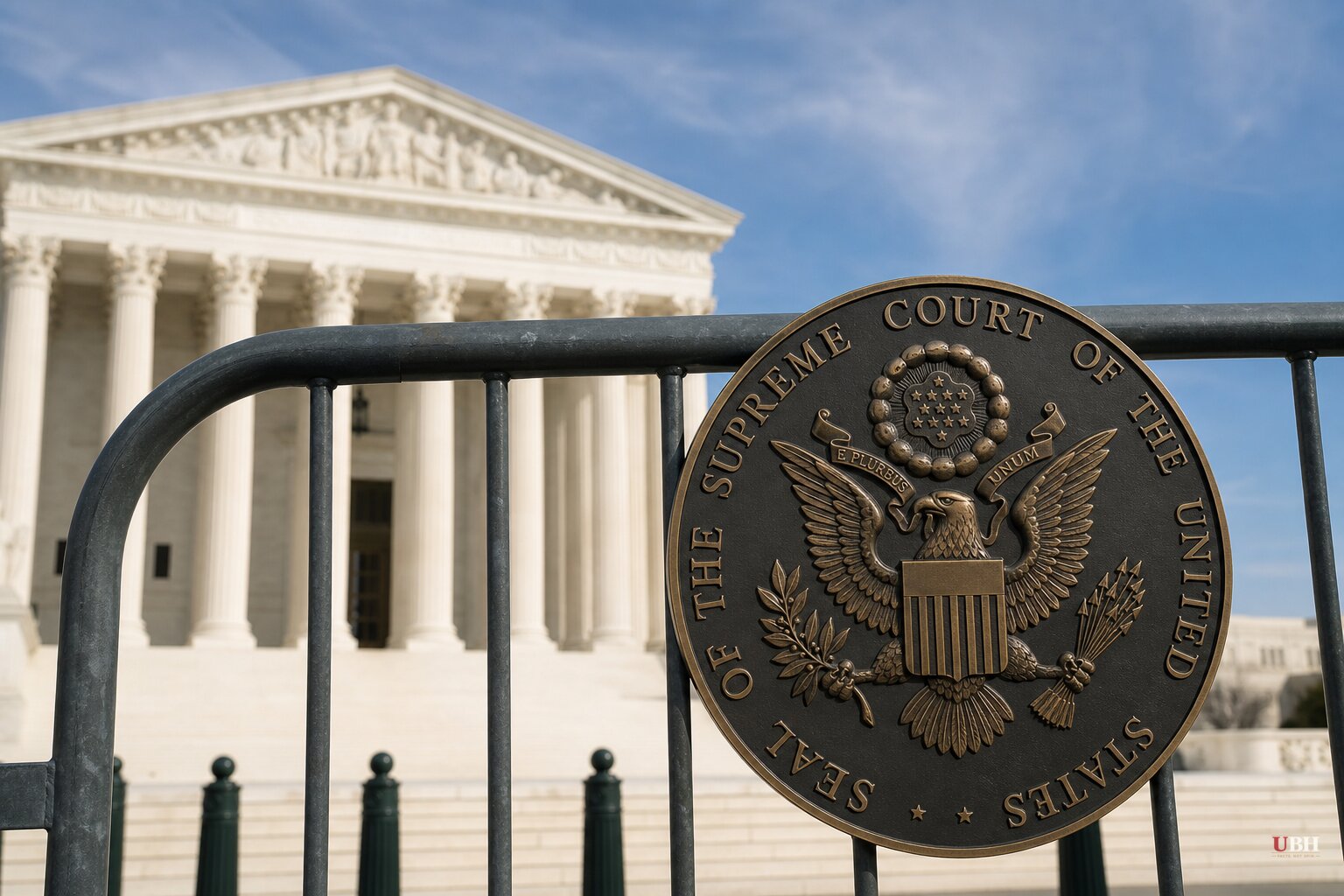
The Ballroom Ruling
The Supreme Court sided with the Trump administration in a 5-4 emergency order, allowing construction on the White House's new 90,000-square-foot ballroom to continue while litigation over the project proceeds in lower courts, according to Fox News.
The order replaced a temporary pause Chief Justice John Roberts had issued hours before a lower-court injunction was set to take effect. Court filings indicate key parts of the ballroom could be finished within months, according to Fox News, potentially wrapping up before the underlying legal case does.
Trump declared victory on Truth Social, saying the ruling cleared the project to proceed "without any further contingency, doubt, or threat" and predicting it would be "one of the Greatest ever constructed in Washington, D.C." He said the ballroom is expected to be completed by summer 2028 and insisted it is "totally funded by Great Patriots and Corporations" at "no cost to the American Taxpayer."
NPR's Deepa Shivaram reported that The Washington Post has found some costs will fall on the public, though NPR said it has not independently confirmed that reporting.
Roberts dissented from the majority, writing that the ballroom's construction "is likely unlawful" and warning it risks trampling on Congress's constitutional authority over federal buildings. "The President ordered the demolition of the East Wing of the White House to make way for a new, privately funded state ballroom in its place," Roberts wrote, according to Fox News. He cited federal law barring new structures on federal parkland in Washington.
The lawsuit, brought by the National Trust for Historic Preservation, argues the executive branch lacks authority to reshape the White House this way even under a national security rationale. The Trump administration has countered that the ballroom is really an "integrated military complex" containing a drone port, bomb shelters and medical facilities, according to NPR. Trump told reporters touring an adjacent helipad project that he envisions the space hosting foreign dignitaries, including a planned visit from China's Xi Jinping.
A Pattern at the Emergency Docket
The ballroom case is not the only Trump-related fight where the Supreme Court has stepped in on its emergency docket. Balls and Strikes, a legal commentary outlet critical of the administration, points to a separate fight over a March 2026 executive order directing the Department of Homeland Security to compile lists of eligible voters and the Postal Service to reject mail ballots that don't match those lists or lack a federally prescribed barcode.
U.S. District Judge Indira Talwani in Massachusetts ruled against the order twice, first on June 25 in California v. Trump and again on August 11 in League of Women Voters of Massachusetts v. Trump, writing both times that "the executive branch has no authority to regulate elections." Balls and Strikes reports the Supreme Court has lifted those lower-court blocks, and that an anonymous federal official filed a whistleblower disclosure alleging the Postal Service is moving "at a breakneck speed" to implement the directive regardless of court orders.
Balls and Strikes frames this as evidence the Court's Republican-appointed justices are running out the clock for Trump by delaying merits review. Roberts, a Republican appointee, dissented against the administration in the ballroom case, meaning the Court's conservative bloc is not uniformly siding with Trump on every emergency application.
Supporters of tighter mail-ballot verification argue that matching ballots against eligibility lists and requiring standardized barcodes is a reasonable safeguard, no different in principle than ID requirements used elsewhere in civic life. Critics, including the plaintiff coalition in League of Women Voters, argue the federal government has no statutory role in state election administration and that the rule could block eligible voters whose names aren't yet reflected on DHS's lists.
A Separate Loss in New York
On a different legal track, Trump lost a bid to move his New York hush money case into federal court. U.S. District Judge Alvin Hellerstein of the Southern District of New York ruled Friday that Trump's arguments for a transfer were "neither new nor legally sufficient," according to Clarín. It was the third rejection of the transfer request.
Hellerstein, applying the Supreme Court's 2024 immunity ruling, found that the hush money payments to Stormy Daniels and the related cover-up were personal acts outside the scope of the presidency. "An extramarital affair, or a cover-up of one, does not fall within the scope of official presidential responsibilities," he wrote. He also faulted Trump's legal team for seeking "two bites at the apple" by trying state court first. Trump's lawyers have already filed an appeal with the Second Circuit.
Three separate fights, three separate outcomes: a win at the Supreme Court on the ballroom, an open fight over mail-ballot rules ahead of the November midterms, and a loss in New York state court proceedings that stay alive pending the Second Circuit's next ruling.
Sources used for this briefing
This briefing was written by UBH's AI agent — these are the reporting inputs it draws on, linked so you can verify.


