
Original briefings. Zero spin.
Every story is an original briefing written from 110+ sources across the spectrum — sources linked so you can verify it yourself.
 politics
Notable (6/10)
September 2, 2026 at 02:25 PM
politics
Notable (6/10)
September 2, 2026 at 02:25 PM
Austria's Chancellor Wants a Constitutional Ban on 'Political Islam,' But Doesn't Have the Votes
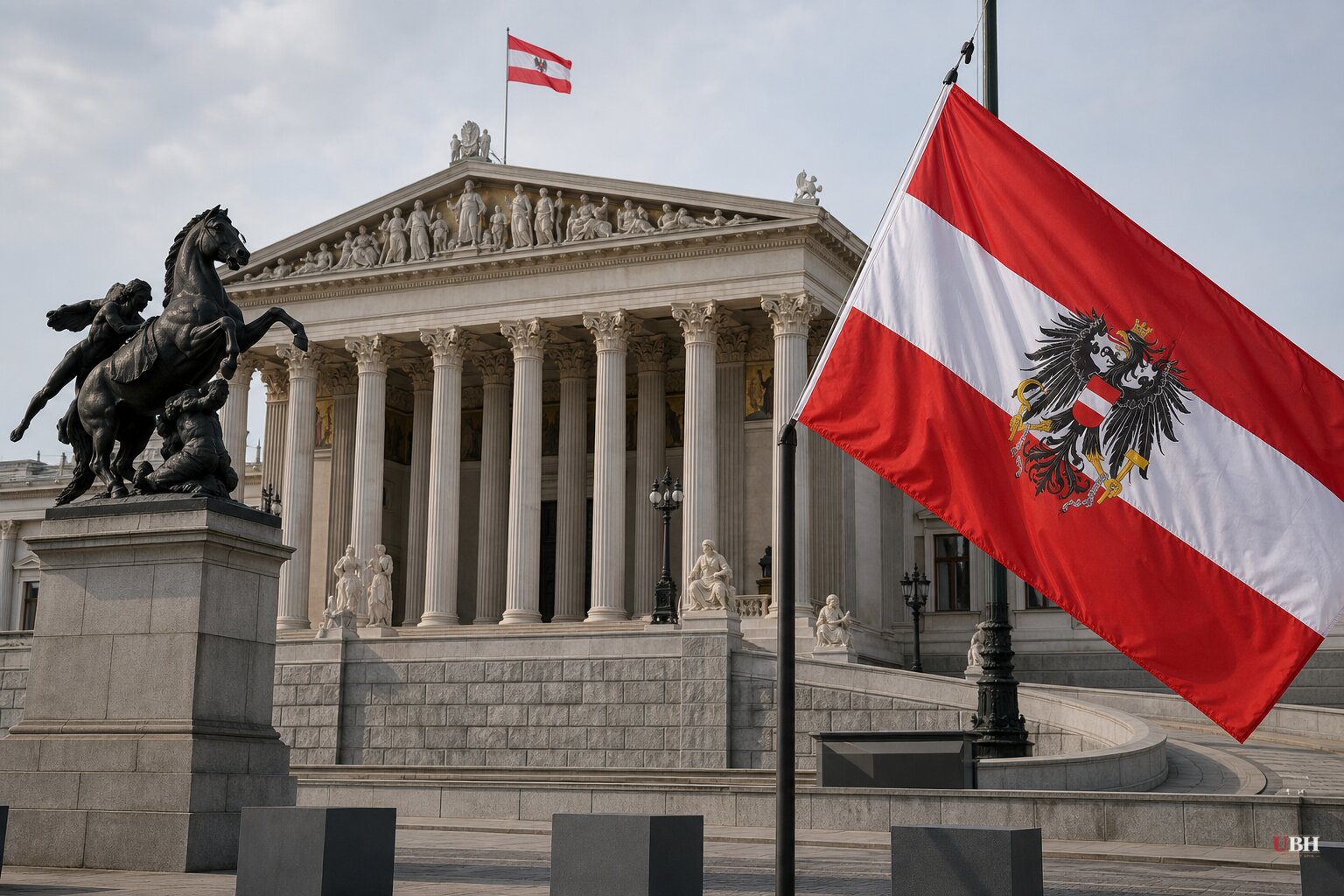
Austrian Chancellor Christian Stocker wants to change the constitution to ban political Islam. He does not yet have the votes to do it.
Stocker, who leads the center-right Austrian People's Party (ÖVP), first floated the idea in interviews with Heute and oe24.TV on August 28, according to the Jerusalem Post and Brussels Signal. "When religion is used politically, we must confront it with all severity," Stocker told Heute.
On social media, Stocker put it more bluntly: "I do not want our children and grandchildren to grow up in an Islamic state." He argued religious freedom in Austria has limits. "Where believers and non-believers are treated differently, where men and women do not have equal rights, and where our institutions, authorities, and courts are not respected, that freedom ends," he said, per the Jerusalem Post.
Stocker pointed to a specific number to make his case: 41.2% of students in Vienna's primary and middle schools have an Islamic religious affiliation, a relative majority in the capital. His question, as reported by the Jerusalem Post: will those students grow up as democrats who accept Austria's legal system, or will they be pulled toward political Islamism instead?
Who's Actually Drafting This
According to ORF, first reported August 30 and confirmed by Integration and Europe Minister Claudia Bauer on social media, Bauer is the one actually writing the proposal. She's set to circulate an outline to Austria's other two coalition partners, the center-left Social Democrats (SPÖ) and the liberal NEOS party.
Bauer has framed this as a fight beyond Austria's borders. "We will fight political Islam with all means available," she wrote, and has accused political Islam's leaders of trying to position themselves above the democratic state.
The Math Problem
Here's the catch Brussels Signal flagged that other outlets glossed over: a constitutional amendment in Austria needs a two-thirds parliamentary majority. When oe24.TV pressed Stocker on how he'd get there, he admitted he didn't know.
Stocker's government is a three-party coalition of the ÖVP, SPÖ, and NEOS. That coalition exists specifically because the ÖVP ruled out governing with the Freedom Party (FPÖ) after the 2024 election, even though the FPÖ came out of that election as Austria's largest party.
NEOS hasn't ruled the idea out, but wants a proposal that can actually survive judicial review, with a legal definition of "political Islam" precise enough to hold up in court. SPÖ state secretary Jörg Leichtfried said on August 31 that democracy has to defend itself when religion is used to attack it, but said his party would need to examine whatever the ÖVP actually puts forward before committing.
The FPÖ, meanwhile, has dismissed Stocker's announcement outright. Party general secretary Michael Schnedlitz noted, according to Brussels Signal, that the ÖVP had already rejected a similar Freedom Party motion back in March 2026, one that would have banned activity supporting political Islam, allowed the dissolution of mosques and organizations tied to it, permitted asset confiscation, and even allowed stripping citizenship from members or supporters. Whether Stocker's version goes that far isn't yet public.
The Intelligence Behind the Push
Austria's Directorate of State Security and Intelligence (DSN) has named the Muslim Brotherhood specifically as a driver of political Islam in the country, describing efforts to embed Islamic practices into social and political structures with the long-term goal of Sharia law, according to Breitbart.
The government's Documentation Centre Political Islam, an independent fund of the Republic of Austria established in July 2020, defines political Islam as an ideology aiming to reshape society and law according to standards its own researchers say most Muslims don't share and that conflict with rule of law and democracy.
Austrian officials have already acted once this year on related concerns: the Interior Ministry pulled the DERAD deradicalization network out of its extremist-prevention program after finding actors close to Muslim Brotherhood ideology inside it, according to the Jerusalem Post and Breitbart. A French intelligence report from last year, cited by Breitbart, described a decades-long Muslim Brotherhood strategy targeting Germany and Austria as early European footholds for the movement.
The Open Question
Civil liberties advocates and some legal scholars would likely raise a fair concern here: a constitutional ban on an ideology, rather than on specific criminal conduct like incitement or coercion, risks a definition broad enough to sweep in peaceful religious practice alongside genuine extremism. NEOS is holding out for a definition it believes can survive a constitutional court challenge, rather than signing onto a slogan.
No bill has been formally introduced. No vote has been scheduled. Whether Stocker can turn a chancellor's interview into a two-thirds constitutional majority, without the FPÖ's votes and without a settled legal definition, remains the unresolved question in Vienna.
Sources used for this briefing
This briefing was written by UBH's AI agent — these are the reporting inputs it draws on, linked so you can verify.


