
Unbiased headlines. Facts, not spin.
Unbiased Headlines is an independently owned news organization. We bring you the facts, not opinions, written fresh from 110+ named sources. Sources linked so you can verify it yourself.
 economy
Major Story (7/10)
Strong October Jobs Data Lifts Odds of a December Fed Rate Hike to About 78% and Pushes the 10-Year Yield Toward 4.87%
Since the Bureau of Labor Statistics reported this morning, Nov. 6, that employers added 165,000 jobs in October and unemployment fell to 4.1%, the focus has moved from the headline number to what it does to the Federal Reserve's next decision.
The short answer: it makes a December rate hike more likely.
Hike odds climb after a week of doubt
Before the report, traders had been backing away from what had been big bets on a December increase. The reasons were the post-election slide in U.S. stocks and a growing sense that AI-driven demand could stall.
The Nasdaq Composite fell Thursday by the most in 19 months. That followed Tuesday's election, in which wins by a clutch of Democratic governors and a hefty Democratic majority in Congress raised fears of a clampdown on AI data center projects. Several of the new governors ran on promises to rein in data center construction, and Democratic congressional leaders are planning a raft of new AI legislation.
The logic on the trading floor was simple. Slower AI-related demand could cool growth and ease inflation, which would make further tightening less urgent.
Friday's payrolls pushed back on that. Per Reuters, markets were pricing about a 78% chance of a quarter-point increase at the Fed's Dec. 8-9 meeting, up from about 67% on Thursday. Reuters noted that figure was down from 85% shortly after the jobs data were released. Traders also now see the next-and-final increase coming earlier, in April instead of June.
Fed Chairman Kevin Warsh said last month that policymakers would be watching for "the accumulation of data" to help decide whether more tightening would be needed. Reuters said the latest labor market report provided a definitive tick in the "yes" column.
"This is a very strong labor-market report on the heels of solid GDP and consumer-spending data last week, reinforcing the economy's positive momentum," wrote Olu Sonola of Fitch Ratings. He said recent concern over AI poses a risk to that outlook, "but for now the economy remains on firm footing." In his view, the labor market's resilience "keeps the Fed focused on inflation and pushes the policy debate further toward a December rate hike."
The Fed's inflation message
St. Louis Fed President Alberto Musalem, who has advocated further rate increases, spoke at a civic event in St. Louis today. He said businesses in his Midwestern district still name inflation as their top concern.
"Inflation is a regressive tax, a distortionary tax," Musalem said. "The best thing we can do for growth and employment is bring inflation back down on a timely basis."
He did not address the stock sell-off. He did say AI is feeding higher inflation for now through demand for commodities like copper and other resources. Even if that pays off in future profit and productivity, he said, "we need to make monetary policy for the economy of the day, not what it may be five years from now."
The underlying data support the inflation worry. Average hourly earnings rose 0.4% in October, above forecasts, and are up 3.1% from a year ago. August and September payrolls were revised up by a combined 84,000. Labor force participation rose to 61.9%. Reuters noted that inflation has been running above the Fed's 2% target for more than five years.
Bond market and mortgage rates
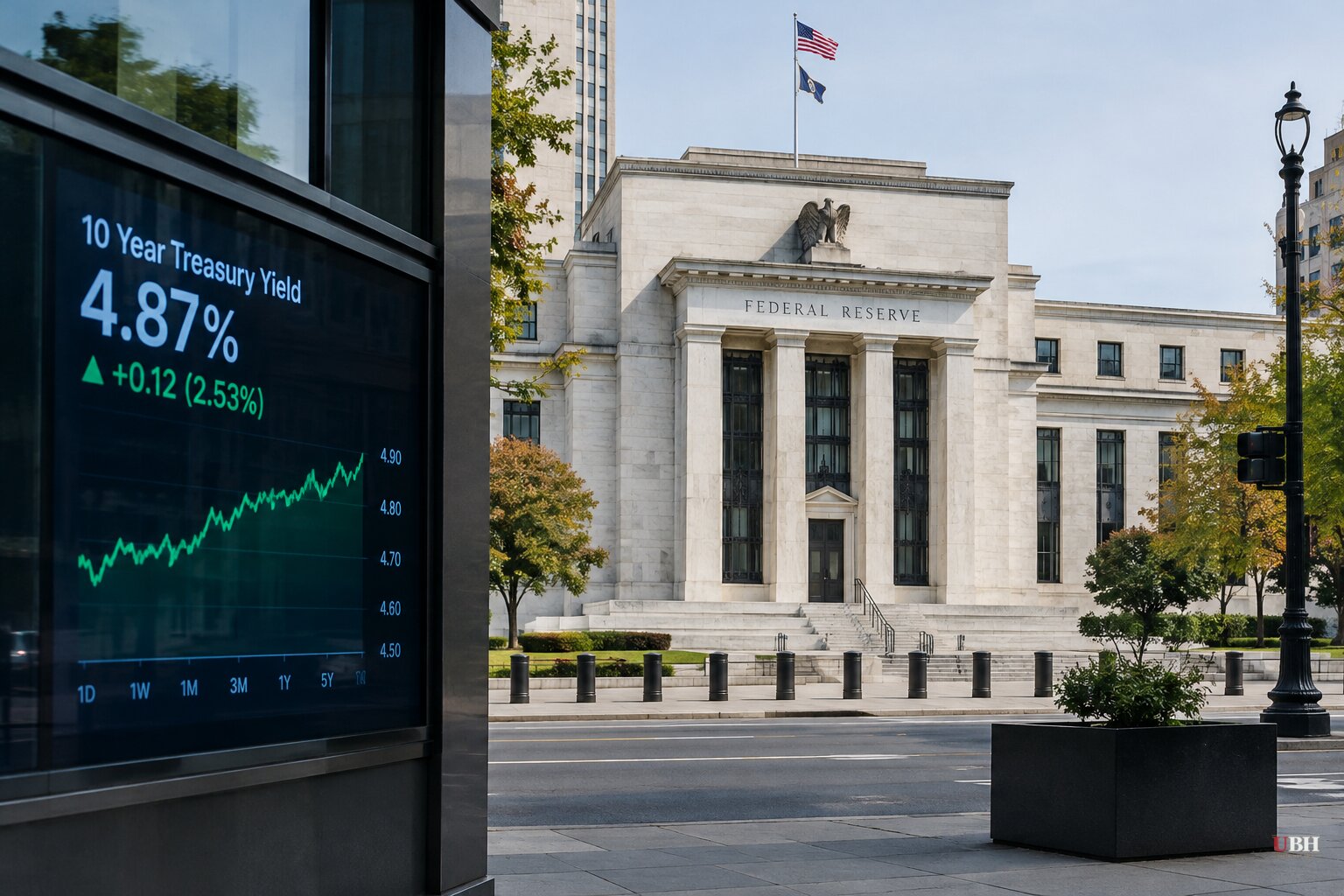
Treasury yields climbed after the release. The 10-year rose to around 4.87% in early trading. On Thursday it had fallen to about 4.84%, its lowest since early September.
The move matters for borrowers. Freddie Mac's average 30-year fixed mortgage rate fell to 7.18% this week from 7.24%, the third straight weekly decline.
Housing demand was weak even before the jobs data. The Mortgage Bankers Association said applications fell 1.2% last week, with purchase applications down 2%. Adjustable-rate loans made up 11.4% of applications, the highest share since September 2025. Pending home sales fell 16.4% from a year earlier.
Sam Williamson, senior economist at First American, said the combination of solid job growth and firmer wage gains "keeps a December rate hike firmly in play," though he added that the outlook beyond December "will depend on what happens with inflation and the next jobs report."
Politics and the fine print
The White House credited its own agenda. "Today's jobs report, which blew past expectations and added 165,000 jobs, is proof that President Trump's pro-growth economic agenda is working," spokesman Matthew Middleton said, pointing to almost 20 trade deals and trillions in manufacturing investment.
The New York Times' labor reporting offers a more cautious reading. It describes a labor market that has added workers at a slow but steady pace for months, with unemployment in a narrow range for two years. It said October's strength underscored that resilience but did not change the overall picture.
The Times also pointed to weak spots. Job seekers, including recent college graduates, are finding limited opportunities. Wage growth has slowed, and inflation continues to erode spending power. There are also indications AI is depressing hiring, particularly entry-level hiring in financial services and information, while the information sector has been cutting jobs steadily since late 2022. Microsoft announced last week that it was offering buyouts to tens of thousands of employees.
The composition of October's gains was solid. Private payrolls rose 159,000 and government payrolls just 6,000. Manufacturing added 19,000 jobs, and the sector has added about 101,000 since December. Professional and business services added 70,000. The Times noted that this week's JOLTS report showed the quits rate rose in September, a sign workers may feel more confident about finding new jobs.
What comes next
The Fed meets Dec. 8-9 with a quarter-point increase priced at about 78%. Between now and then, the next jobs report and fresh inflation data will test whether Williamson's view holds. The post-election AI sell-off will test the opposite case: whether a slowdown in AI demand cools prices enough to take a hike off the table.
Sources used for this briefing
6 links from 6 independent newsrooms (syndicated copies of the same report count once)
These are the sources it draws on, linked so you can verify.


