
Unbiased headlines. Facts, not spin.
Unbiased Headlines is an independently owned news organization. We bring you the facts, not opinions, written fresh from 110+ named sources. Sources linked so you can verify it yourself.
 economy
Notable (5/10)
Bezos Predicts AI Will Let Some Families Live on a Three-Day Workweek, While Amazon Cuts Corporate Jobs
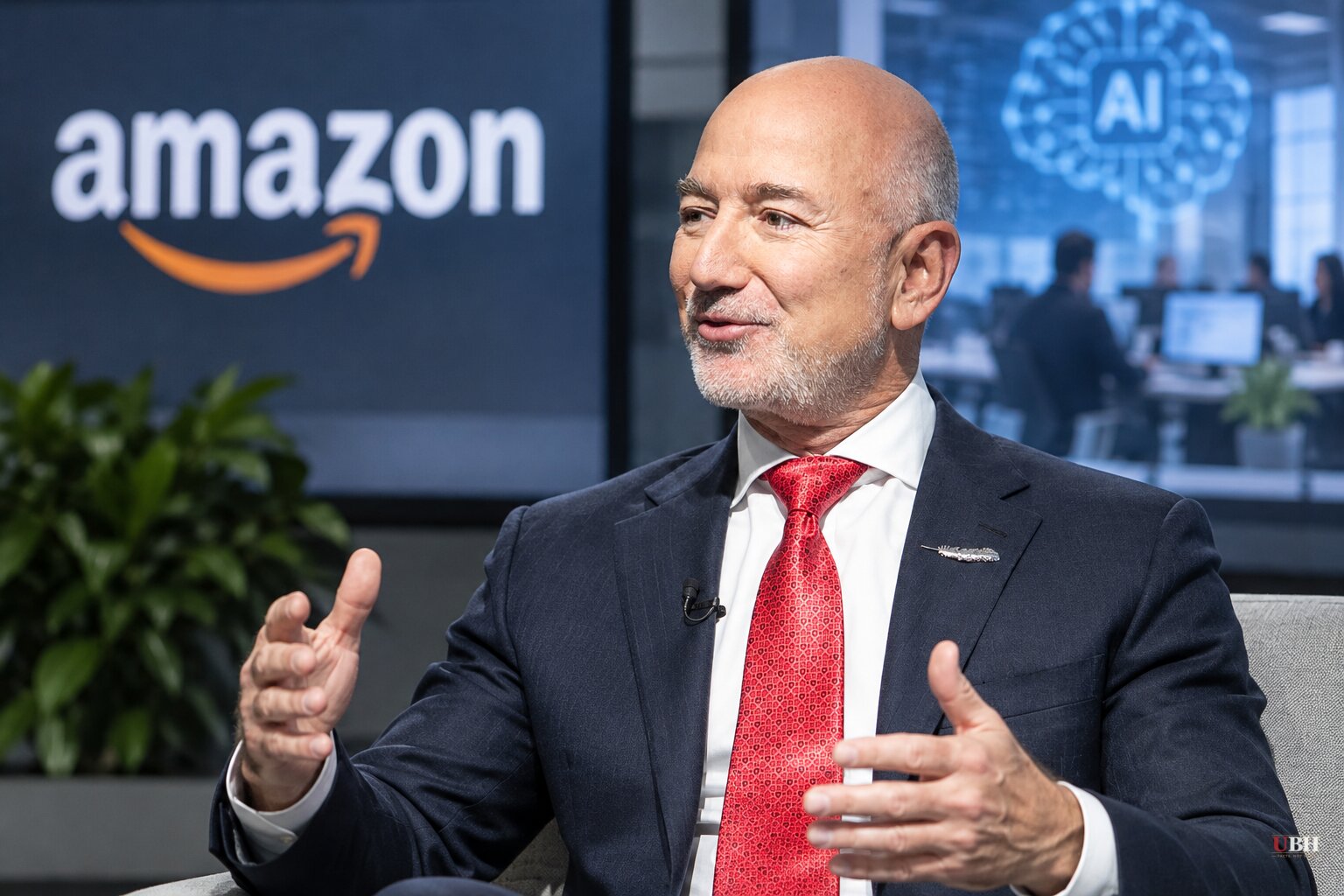
Jeff Bezos thinks AI will make work optional for a lot of people. He did not say when, or for whom.
In a recent interview with Fox News, the Amazon founder said gains in productivity could let workers earn a living in fewer hours. "Some people will decide, 'I can support my family working three days a week.' That's what productivity in the economy means," Bezos said.
A labor shortage, not a jobs crisis
Bezos went further than a shorter week. He said the two-income household may stop being a financial necessity.
"You're not going to need to have a two-earner household. If you want it, fine. If you don't want to have it, one of the people might drop out," he said.
That shift, in his telling, would make hiring harder. "It's going to be difficult to hire people, because the productivity in the economy will make it so that [if] people don't want to work two jobs, they won't have to," Bezos said.
The argument rests on choice. Bezos framed the outcome as families deciding how much to work, not workers being pushed out. He did not offer a timeline, a wage estimate or any figure for how much productivity would have to rise.
The bubble question
Asked whether the AI boom is a bubble, Bezos said it is "hard to know." He separated the technology from the money chasing it.
"What I do know is the technology is real. I think this is a good thing for society," he said. "It's tricky for investors. Every experiment gets funded—the good ideas and the bad ideas. In the moment, in the tussle of this, it's hard for investors to know the difference between the good ideas and the bad ideas."
What Amazon is doing now
Amazon plans to spend more than $200 billion on capital expenditures this year, largely on data centers. The company has also cut an estimated 30,000 corporate roles since late last year.
Those are the current facts at the company Bezos founded in 1995. The leisure-rich economy he describes has not shown up in Amazon's own headcount decisions. Bezos did not address the layoffs in the comments reported so far.
Bezos also has a direct stake in the AI buildout beyond Amazon. His space company, Blue Origin, wants to build data centers in space and expand human activity to the Moon and beyond. Its latest funding round reportedly raised $10 billion at a $140 billion valuation, which has reportedly pushed Bezos's net worth to $365 billion.
Not everyone in tech is this relaxed
Bezos's optimism sits apart from the tone of some of his peers. Anthropic CEO Dario Amodei and OpenAI CEO Sam Altman have both warned about the technology's potential risks.
Other prominent executives, including JPMorgan Chase CEO Jamie Dimon and Elon Musk, have also predicted AI will shorten the workweek. They disagree on by how much.
The prediction itself is not new. Economists have forecast shorter hours from every major productivity jump for roughly a century, and the actual path has been uneven. Higher output has to be turned into higher pay before anyone can afford to work fewer days. That depends on who captures the gains: workers, shareholders or the companies building the machines.
What to watch
The test is empirical. If AI lifts productivity as Bezos expects, wages and hiring data should show it well before anyone drops to three days. Amazon's $200 billion spending plan and its corporate headcount are the nearest measurable signals from the man making the prediction.
Bezos himself concedes that investors cannot yet tell which AI bets are good ones. That uncertainty covers workers as well.
Sources used for this briefing
2 links from 2 independent newsrooms (syndicated copies of the same report count once)
These are the sources it draws on, linked so you can verify.


