
Unbiased headlines. Facts, not spin.
Unbiased Headlines is an independently owned news organization. We bring you the facts, not opinions, written fresh from 110+ named sources. Sources linked so you can verify it yourself.
 economy
Notable (6/10)
Event date: November 1, 2026 ·
US Airfares Up About 25% This Summer, and Airline CEOs Say the Prices Are Staying
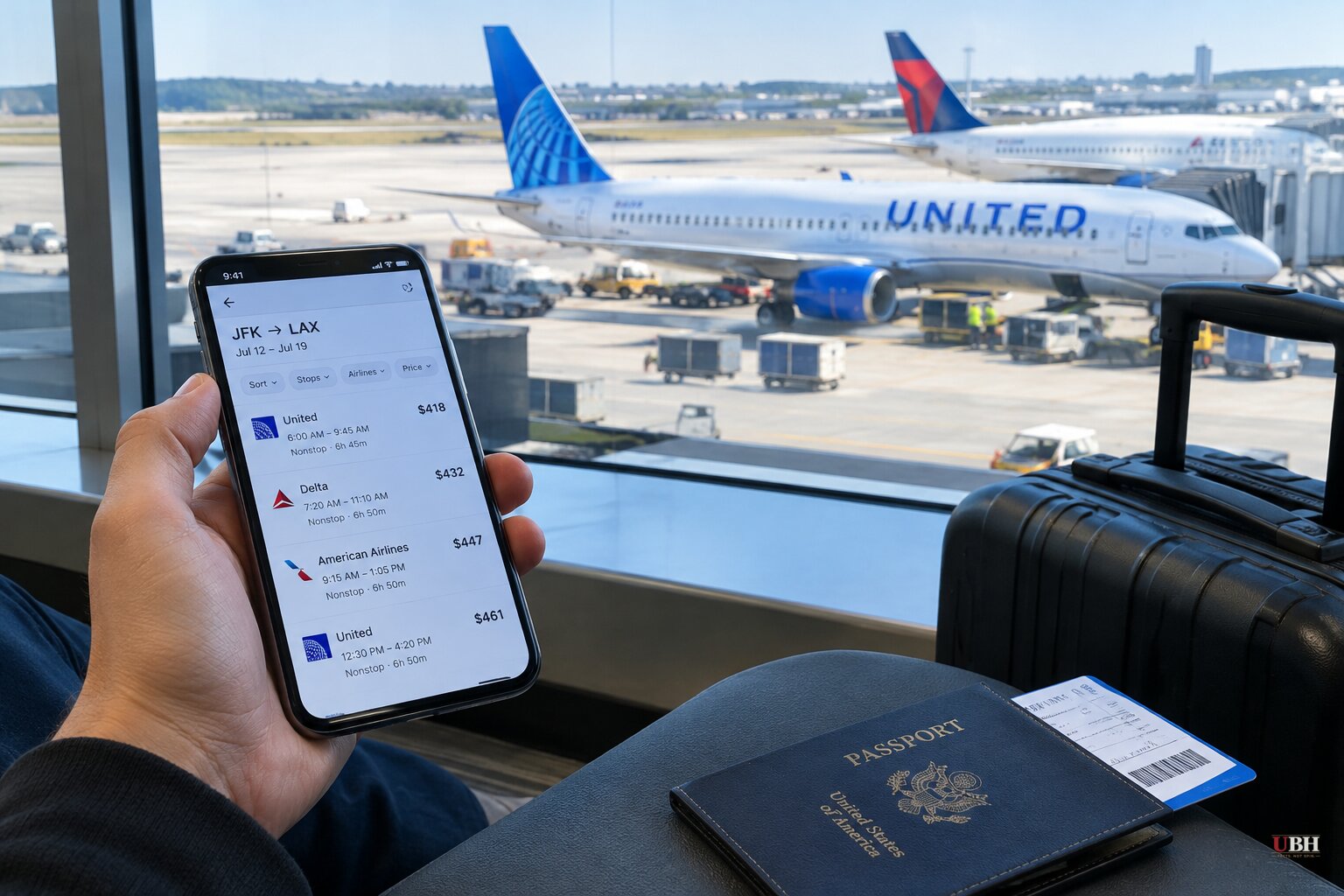
Flying costs a lot more than it did a year ago, and the people who set the prices say that is not changing soon.
US airfares jumped about 25% this summer compared with 2025, according to Consumer Price Index data. The Bureau of Labor Statistics figures show September fares up 22% from a year earlier.
Holiday fares are already higher
Hayley Berg, lead economist at Hopper, says Thanksgiving tickets are averaging $389, up 39% from this time last year. Christmas-period tickets average $452, up 22%.
Berg says travelers are booking earlier this year. That early rush is itself pushing prices higher.
United CEO Scott Kirby told analysts on the company's earnings call that "pricing is going to stay." He said fares could rise even more than expected next year.
The fuel bill
Airlines point to jet fuel. Third-quarter jet fuel costs rose more than 60% from a year earlier because of the war in Iran. The four biggest US carriers (United, Delta, American and Southwest) spent $6.3 billion more on fuel in the quarter than in 2025. That works out to $69 million more per day.
Higher fares and bag fees have not yet covered the gap, according to the airlines. They expect they will. Kirby said United is assuming fuel stays expensive through all of 2027.
The global picture is worse. IATA projects the industry's net profit margin will fall from 4.2% to 2.0% this year. Global net profit is forecast to drop to $23 billion from $45 billion in 2025. IATA puts the 2026 average jet fuel price at $152 a barrel. Hostilities began Feb. 28, according to AeroTime, and northwest European jet fuel hit a record $1,840 per metric ton on April 3.
IATA expects airline operating costs to grow 13% to $1.117 trillion. Revenue is forecast to grow 9.4% to $1.165 trillion. Costs are outrunning revenue.
American Airlines posted a net loss for the third quarter. Its executives cited the fuel spike.
Fuel is not the only reason
The airlines' story is that fuel forced the hike. Their own executives say it is not the whole story.
Delta CEO Ed Bastian told investors that fuel costs were the reason for raising ticket prices and baggage fees. Because travelers have accepted the new prices, he said, he believes they are "sustainable" even if fuel falls.
Zach Griff, who writes the airline newsletter "From the Tray Table," says carriers do whatever they can to maximize revenue. In his view, a drop in fuel prices will not automatically bring fares back down.
Airlines have also trimmed cheaper flights, including midweek, Saturday, early-morning and late-night departures. Those are the ones bargain hunters use, and they can lose money when fuel spikes.
There is a limit. Oliver Wyman's analysis shows US average airfares rose every month of the conflict, hitting plus 21% in April. It says the pool of travelers who can absorb that is narrower than before. IATA forecasts global GDP growth slowing to 2.5% from 3.4%.
The money is up front
Airlines are leaning harder on the front of the plane.
American says premium products produce about half its ticket revenue on roughly 30% of its seats. Its third-quarter premium revenue rose 22.9% from a year earlier, ahead of 19.5% growth in the main cabin, according to its earnings report. The airline says it is adding premium seats with every new aircraft and retrofitting existing planes. Its AAdvantage loyalty enrollments rose 27%.
Delta reported that quarterly premium ticket revenue passed main cabin sales for the first time, according to a report from Briefs Finance. That same report says Delta trimmed its full-year earnings outlook.
Purdue aviation economist Volodymyr Bilotka explains the appeal. A business-class seat can take the floor space of up to four economy seats but may sell for five or six times the price. "The profit margins are significantly higher," he told AFP.
Premium seats on US flights are up 33% since 2020, more than twice the growth in mainline seats, according to Skift. United says it more than doubled premium capacity between 2015 and 2026. Delta's new Airbus A350s are planned with about 150 premium seats and 161 economy seats.
Economy is being sliced up too. Passengers can pay as much as $200 for extra legroom or a seat near the front. United announced in July an Economy Plus option that keeps the middle seat empty, expected on select flights around the end of 2026. JetBlue announced its BlueFirst domestic first-class product in September.
Airlines expect as much as 70% of passengers could eventually buy enhanced seating or fly business or first class, according to AFP.
What to watch
IATA's own figures show industry profits roughly halved. A war-driven fuel shock is hitting both the airlines and the people who fly them.
It is unclear what happens if oil comes down. Bastian and Kirby are telling investors that prices are staying either way. Whether travelers keep paying them through the holidays and into 2027 will be answered at the ticket counter.
Sources used for this briefing
7 links from 5 independent newsrooms (syndicated copies of the same report count once)
These are the sources it draws on, linked so you can verify.


