
Unbiased headlines. Facts, not spin.
Unbiased Headlines is an independently owned news organization. We bring you the facts, not opinions, written fresh from 110+ named sources. Sources linked so you can verify it yourself.
 economy
Notable (5/10)
FAA Says Digital Towers Now Operational at Bartow, Florida, and Kenai, Alaska
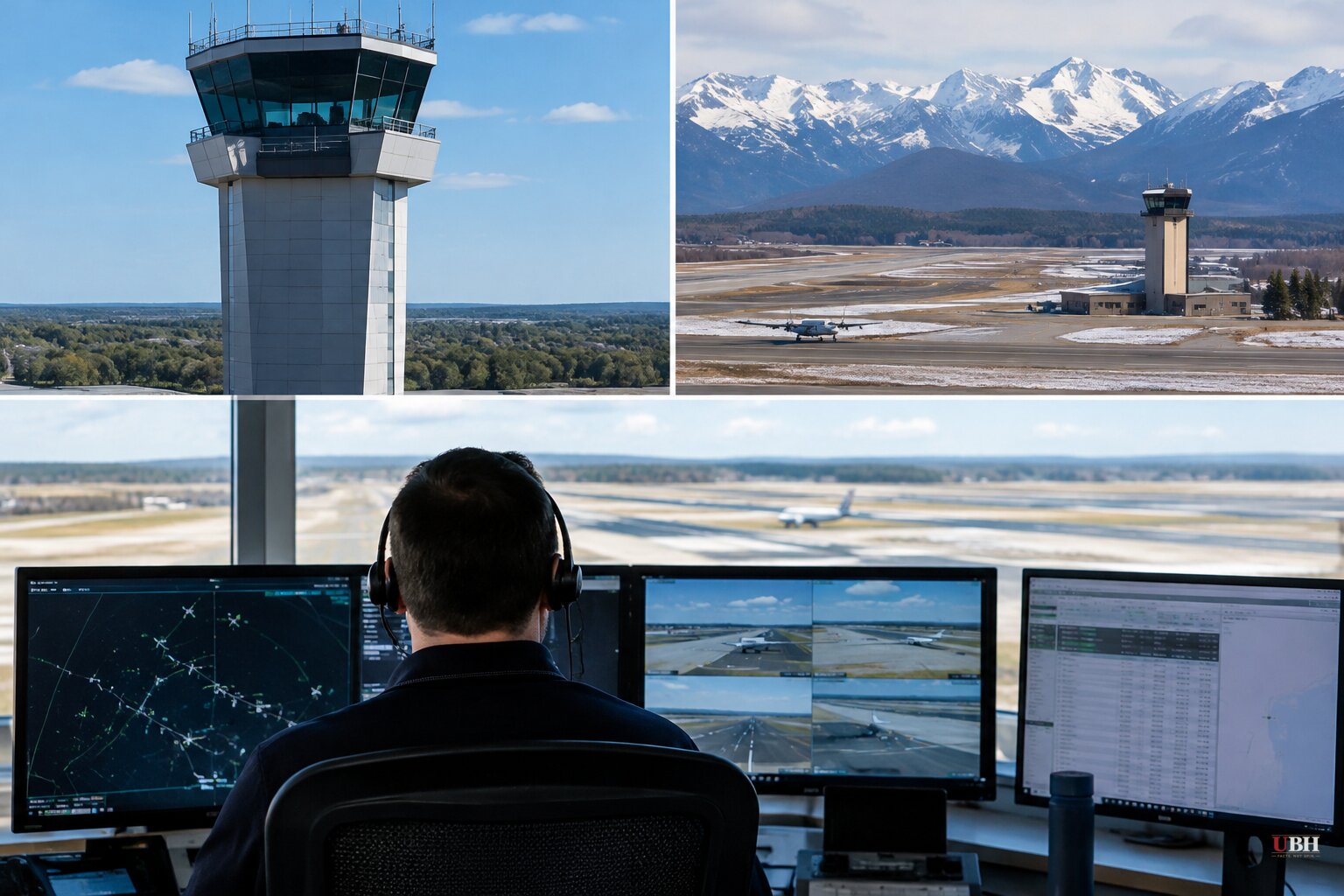
The Federal Aviation Administration announced Friday, Nov. 6, that digital air traffic control towers are operational at Bartow Executive Airport in Florida and Kenai Municipal Airport in Alaska. The installations are the first under the agency's newly approved digital tower program.
They are not the first camera-based tower in the country. Leesburg Executive Airport in Virginia ran a camera-based remote tower starting in 2018. The FAA found that system operationally viable in 2021, then dropped the program in June 2023 after developer Saab withdrew from the design approval process.
What the systems do
Digital towers use high-definition cameras, sensors and screens to give controllers a continuous 360-degree view of runways, taxiways and the surrounding airspace. The systems can also add infrared cameras, aircraft identification tags and microphones that pipe airfield sound into the control room.
The FAA picked Frequentis as the supplier. In September, the agency issued its first system design approval to Frequentis for its smartVISION system, initially covering single-runway airports in Class D airspace. Bartow began operating its system that month, so Friday's announcement marks the FAA's formal declaration, not a fresh switch-on.
Human controllers still direct the traffic. "Our air traffic controllers continue to do the critical job of keeping aircraft safely separated, and we're giving them better technology to do that," Bedford said in the announcement. "Digital towers provide controllers with greater visibility of airport activity and more information to make critical decisions."
The FAA says its testing at the William J. Hughes Technical Center in Atlantic City, New Jersey, and other sites established the technical baseline for certifying these systems.
Five more airports, $50 million
The FAA named five more airports in line for digital towers:
- Winter Haven Regional Airport, Florida
- Venice Municipal Airport, Florida
- Montgomery County Airpark, Maryland
- Johnston Regional Airport, North Carolina
- Durango-La Plata County Airport, Colorado
The announcement gives no individual deployment dates.
The money comes from the Working Families Tax Cut Act, which set aside $50 million for digital tower deployment, according to the FAA. The agency says the technology could be a lower-cost alternative to building conventional towers and could extend air traffic control service to smaller airports. It has not published a per-airport cost comparison.
Taxpayers have already funded one camera-tower experiment that ended with a vendor walking away. Whether Frequentis delivers lower costs at scale is unproven.
The Leesburg history
The Leesburg shutdown was not popular. After the program ended, controllers moved into a temporary mobile tower while the town pursued a permanent facility. The decision drew opposition from aviation organizations and elected officials, according to the record of that dispute.
That history is the context for the current rollout. The technology has now cleared a formal design approval it did not get the first time.
The larger modernization fight
Digital towers sit inside a broader overhaul of a system that still relies on copper telecommunications lines, floppy disks and paper strips to track aircraft. Congress approved $12.5 billion over five years in June 2025 for air traffic control reforms. The Trump administration is asking for another $30 billion.
In September, the FAA also rolled out an AI-based software tool called the Strategic Management of Airspace, Routes and Trajectories, or Smart. The Guardian reported that concerns about the types of technology going into air traffic control have grown alongside broader unease about artificial intelligence. The FAA's stated position is that digital towers add visibility for controllers and replace no one.
The pressure behind all of this is staffing and safety. The Trump administration has been heavily criticized for its handling of the national controller shortage after last year's government shutdown. Scrutiny of towers and related safety systems has been intense since the 2025 midair collision between a passenger jet and a military helicopter near Washington, which killed 67 people. Authorities later called that crash "100% preventable."
A digital tower is a visibility tool. It does not add controllers, and the FAA has not said it will.
What comes next
Bedford is scheduled to appear before the House Transportation and Infrastructure Committee next week. He is expected to take questions on progress and obstacles in the $12.5 billion modernization effort. Lawmakers will also be weighing the administration's request for the additional $30 billion.
The open questions are specific: when the five remaining airports go live, what each installation costs compared with a conventional tower, and whether the FAA's cost-saving claim survives contact with actual numbers.
Sources used for this briefing
7 links from 7 independent newsrooms (syndicated copies of the same report count once)
These are the sources it draws on, linked so you can verify.


